BUYER'S GUIDE - 12 MIN READ
Earmuff Cushions and Hygiene Kits: A Procurement and Maintenance Guide
Editorial information, sources and corrections
Source earmuff cushions and hygiene kits by approved model, part reference and maintenance instructions, with packing and receiving controls.

Illustrative image, not evidence of testing or a documented customer project. Procurement guidance does not replace product instructions or competent workplace assessment.
Primary topic: earmuff cushion sourcing
Introduction
Earmuff cushion sourcing should follow the exact hearing-protector model and manufacturer’s approved replacement parts. Cushions and internal inserts can be part of a documented hygiene kit, and apparently similar components may not be interchangeable. Buyers should identify the complete kit, current instructions and compatibility before treating it as routine maintenance stock.
This guide is for distributors supporting customers after a bulk earmuff purchase and employers managing replacement parts. It focuses on identity, supply continuity and controlled maintenance. It does not establish a universal replacement interval or authorize improvised repairs that could affect the protector’s approved construction.
The practical question is whether staff can obtain and install the correct parts when condition or instructions require replacement. A cheap initial earmuff purchase may create avoidable problems if its approved cushions cannot be identified later. Plan the maintenance range at the same time as the main product.
Quick answer: Purchase earmuff cushions and hygiene kits by approved model and part reference, confirming every included component. Follow manufacturer replacement and care instructions, preserve stock identity and inspect condition at receipt. Similar size or appearance does not establish compatibility. Keep maintenance decisions connected to the workplace hearing-protection program.
Identify the installed protector population
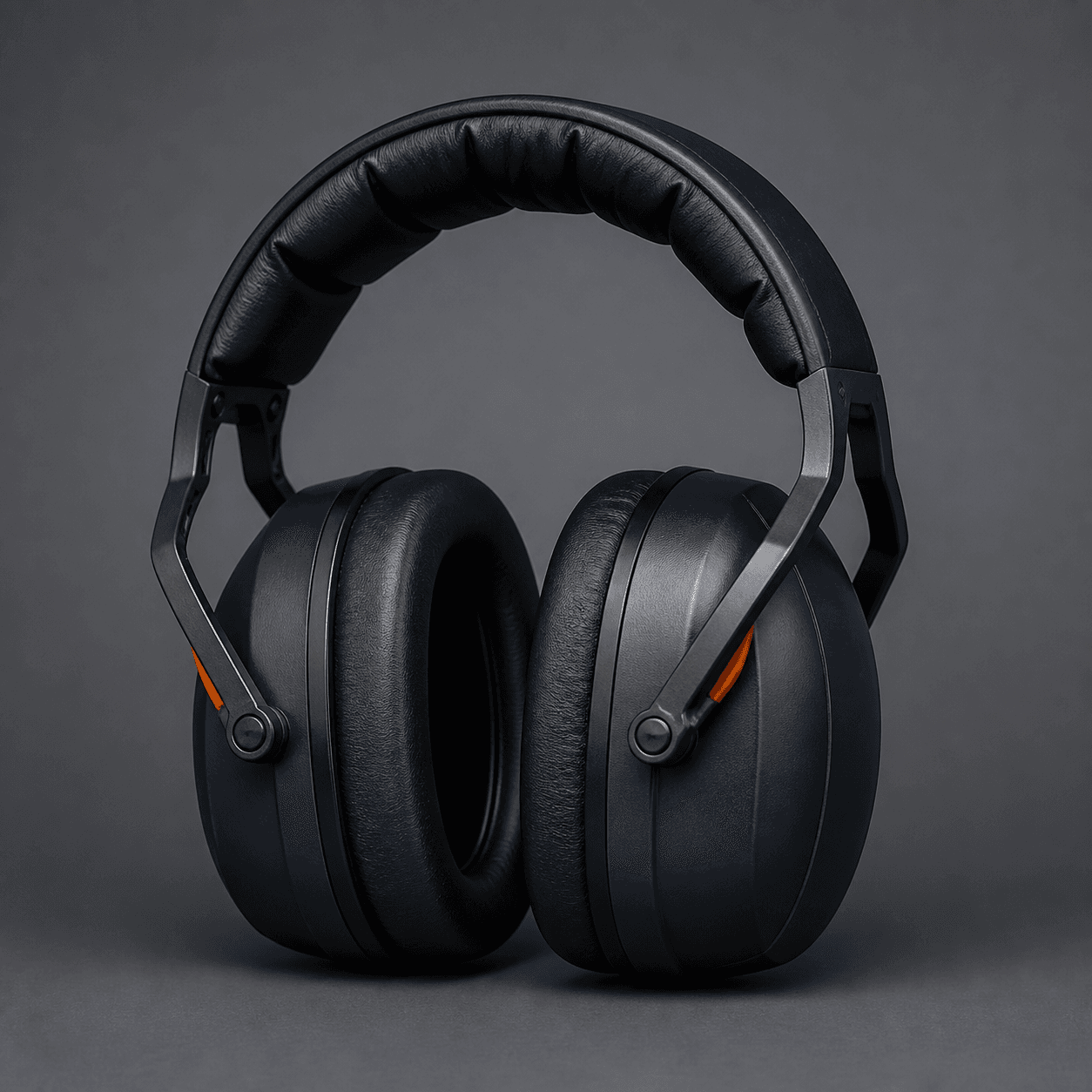
Record manufacturer, model, headband or helmet-mounted configuration and relevant revisions. Photograph the product marking and original kit reference where available. Similar cup shapes or colors can belong to different constructions. A stores list that simply says earmuffs does not support controlled spare-part issue.
Distinguish spare cushions, internal inserts and complete kits. Ask which parts are replaceable and whether the manufacturer requires a kit rather than an isolated item. Record any components that users should not remove or service. Procurement should not turn a visible assembly into an assumed repairable design.
Link the kit to the hearing program
The Health and Safety Executive’s hearing-protection guidance addresses maintenance and effective use in its jurisdiction. The exact manufacturer’s instructions establish the part and procedure. Keep the site’s technical owner involved when selecting replacements rather than leaving compatibility to a warehouse guess.
Our hearing-protection buying guide provides broader procurement context. The spare-parts list should travel with the accepted model documents. It is easier to maintain that relationship at initial approval than to reconstruct it after cartons and instructions have been discarded.
Confirm approved kit contents
Ask for the kit part number and a complete contents list. Specify whether the order includes a pair of cushions, internal inserts, instructions or other approved components. Normalize the commercial unit. A price per individual cushion is not directly comparable with a price per complete paired kit.
Request photographs and, where useful, a sample kit. Check that individual packaging retains part identity after the outer carton is opened. Unlabeled components can become difficult to distinguish in mixed-model stores. A label on a large shipping carton is not enough if staff later issue one kit at a time.
Review superseding references
A new kit reference may replace an earlier one, but the supplier should state which models and versions it supports. Record exclusions and the evidence for the relationship. Keep historical references searchable. This helps maintenance staff identify whether a replacement was approved for a particular installed protector.
Do not accept the phrase universal cushion as the complete specification. Ask for the approved model list and instructions. If compatibility remains unresolved, involve the technical team and consider an identified complete protector through the normal selection process rather than assembling an uncertain combination.
Evaluate condition and care requirements
Manufacturer instructions may describe inspection of cushions, seals, inserts and other parts. Follow those criteria and ask for clarification where needed. Do not create one replacement timetable for every model or environment. Condition, use and the instructions can lead to different decisions.
The National Institute for Occupational Safety and Health’s hearing-protection guidance provides the wider program context. Maintaining parts does not replace correct wearing, selection or individual evaluation. Procurement should support those steps with approved stock and current information.
Separate cleaning from replacement
Ask which cleaning agents and methods are permitted for the protector and components. A material that looks washable is not automatically approved for every process. Do not insert a locally chosen foam or use an unapproved adhesive as a substitute for the specified part. Record whether cleaning is part of routine care and when replacement is required.
Hygiene arrangements for shared or individually issued equipment should follow the site’s approved procedure. Procurement can supply suitable kits and care materials, but should not make unverified medical claims about sanitation. Keep the instructions available to staff carrying out maintenance.
Review fit after approved maintenance
An approved replacement needs correct installation and a condition check according to instructions. Confirm that parts are seated as intended and that the protector remains correctly assembled. If the site uses fit evaluation, follow its program for any review needed after maintenance or configuration change.
The NIOSH fit-testing recommendation addresses individual attenuation evaluation. A visual maintenance check is not a personal attenuation measurement. Keep each record clear about what was inspected or tested and who is responsible for interpreting the result.
Check the actual equipment combination
Earmuffs may be worn with glasses, helmets or other items. Review the approved combination and any relevant changes. Maintenance should not become an opportunity to substitute a different mounting component unnoticed. Our hearing-protection compatibility guide helps organize the model list.
For an illustrative check, record protector reference, kit reference and the relevant head-mounted PPE. These are example identity fields, not a complete performance test. The workplace technical owner should decide the appropriate verification within its program.
Create a clear spare-parts RFQ
State the installed model, approved kit reference, expected quantity and any acceptable documented supersession. Include packaging, instructions, delivery requirements and change-notification expectations. Ask the supplier to identify exceptions explicitly. A vague offer for similar cushions gives little basis for technical or commercial approval.
| RFQ field | Required clarification | Benefit |
|---|---|---|
| Protector model | Exact configuration and revision | Defines intended use |
| Kit reference | Approved part and supersession | Controls compatibility |
| Contents | Named components and quantities | Prevents incomplete kits |
| Care | Installation and maintenance instructions | Supports correct replacement |
| Supply | Lead time and availability | Enables stock planning |
Ask whether the kit is sold individually or in bulk multiples. Compare delivery basis and cost after normalizing units. Include sample and documentation needs in the same request. Availability over the intended maintenance program can matter more than a small difference in the first quotation.
Ask for Product Catalog: Send PPEgen the earmuff markings, approved kit reference if known, quantity and destination market. Request identified kit contents, current instructions and availability. Your technical team can then review the offer against the installed protector population.
Forecast kit stock using maintenance records
Track kit issue by protector model and reason. Separate routine instructed replacement, condition damage and model transition. Without this separation, a stores team may overstock one reference while another program runs short. A simple model-specific record is usually more useful than a total monthly spending figure.
For illustration, demand of 12 kits per month with a 3-month replenishment period creates a planning requirement of 36 kits before any separately justified buffer. Those values explain the calculation; they are not a recommended inventory level. Review lead time and demand reliability before setting the actual order.
Plan discontinuation and transitions
Ask suppliers to notify the buyer if a part is discontinued or materially changed. Confirm whether an approved successor exists. A transition can affect multiple customer locations and should include updated instructions and stock identifiers. Do not mix old and new kits under a generic SKU that hides the change.
Our PPE replacement-parts continuity guide supports that planning. If the installed model cannot be maintained as instructed, the responsible team may need a complete protector replacement plan. An unapproved spare is not a reliable continuity solution.
Inspect incoming kits
Check kit reference, quantity, contents, labeling and visible condition. Compare with the accepted sample and document list. Look for packaging damage or unexplained component differences. Keep uncertain stock separate until the technical team verifies it. A cushion fitting into the cup during receiving does not by itself establish approved compatibility.
If factory testing supports an agreed component claim, identify the method and exact reference. Shipment inspection verifies the commercial lot against the approved plan. It does not determine each worker’s attenuation. Avoid using one broad tested label for all these different evidence types.
Define defect reporting clearly
Record whether a kit is incomplete, incorrectly identified, damaged or visibly different. Photograph contents alongside the pack label and retain the lot reference. This makes supplier investigation more useful. An unsupported complaint such as poor quality may not distinguish a packing mistake from a material change.
Agree corrective action and reinspection where appropriate. Do not release a mixed-reference shipment merely because the supplier offers a credit. Commercial compensation does not resolve part compatibility. Keep acceptance criteria tied to the exact approved maintenance configuration.
Set up a controlled maintenance station
Installation preparation should include the correct kit, identified protector and current instructions. Use a suitable clean area and the permitted procedure. Avoid modifying components or adding locally sourced fillers. Have the responsible person complete the required checks before the protector returns to issue.
Record maintenance information appropriate to the program. A form might include protector asset or model, kit reference, date and responsible person. Keep it simple enough to maintain. The purpose is to preserve identity and accountability through replacement rather than create an inaccessible paperwork process.
Keep technical holds visible
If a protector or component is damaged beyond the permitted maintenance scope, use the site’s hold or retirement route. Stores availability should not determine technical acceptance. Keep rejected or unresolved components out of usable stock and explain the reason to staff who issue equipment.
Review recurring maintenance observations at repeat-order planning. Frequent damage, incomplete kits or inaccessible instructions may call for supplier or process changes. Keep those observations distinct from individual fit results so that the purchasing response addresses the actual problem.
Compare maintenance cost transparently
Include approved kit cost, handling, instruction and supply availability in the decision. Compare complete usable kits on the same basis. For illustration, USD 240 divided by 40 accepted kits gives USD 6 per accepted kit. It does not show cost per month without actual maintenance and use records.
Avoid claiming that a replacement kit restores every protector regardless of condition. The product instructions determine the permitted maintenance scope. A cost model should exclude equipment requiring retirement rather than counting an unapproved repair as a saving. Accurate maintenance data helps distinguish reusable stock from obsolete or unsuitable equipment.
Example: investigate an incomplete hygiene-kit delivery
Suppose receiving finds that a pack described as a hygiene kit contains cushions but lacks an insert included in the approved contents list. Keep the item identity and packaging evidence together. The outer carton count may be correct, but the commercial unit is incomplete against the accepted specification.
Ask whether the supplier offered a different reference, made a packing error or changed the kit contents. These possibilities require different corrections. Do not accept a verbal statement that the missing part is unnecessary unless the manufacturer’s approved procedure and technical owner support that conclusion.
Compare the quotation, order acknowledgment, sample pack and delivered labels. A mismatch may have begun before packing. If the buyer approved a sample without recording its contents, the record needs correction, but that does not justify inventing an agreement after receipt. Resolve the commercial and technical questions explicitly.
Define how affected stock will be held and corrected. If components are added, ensure they are the approved references and remain identified. If packs are replaced, reconcile the returned and received quantities. Avoid creating loose mixed components that leave future maintenance staff unable to reconstruct the kit.
Verify a representative corrected pack against the contents list and instructions. Record the outcome and update the supplier’s packing requirement for repeat orders. A photograph of one complete replacement kit does not establish that every affected carton was corrected; the agreed verification plan should address the actual scope.
Use the incident to improve unit descriptions and receiving checks. The useful lesson is not that every kit requires a complicated process, but that the named contents and commercial unit must be clear. A stable approved reference, practical internal label and concise inspection record can prevent a simple packing mistake from becoming an uncertain maintenance configuration.
FAQ
Can cushions from different earmuff models be mixed?
Only use combinations supported by the manufacturer’s approved model and part information. Similar appearance or size is insufficient. Check current instructions and superseding references. An unresolved alternative should remain under review rather than entering maintenance stock as a universal component.
Does a hygiene kit always include internal foam inserts?
No universal contents list applies. Ask for the exact approved kit reference and its named components. Confirm whether the commercial unit includes individual or paired parts and instructions. Inspect received contents against that list so that a low quoted price does not conceal an incomplete maintenance kit.
How often should cushions be replaced?
Follow the exact product instructions and the workplace’s condition assessment. Avoid applying one interval to every model and environment. Keep maintenance records and manufacturer guidance accessible, and ask for clarification if the criteria are unclear rather than inventing a schedule from a generic online recommendation.
Does replacement remove the need for fit evaluation?
No. Correct maintenance and individual fit evaluation answer different questions. Follow the hearing-protection program and the chosen fit-test method where applicable. A visual assembly check does not measure individual attenuation. Keep model, parts and configuration changes visible to the responsible technical team.
What should be done when approved kits are discontinued?
Request a documented successor and its compatibility scope. If no suitable approved maintenance option exists, the technical team may need a complete protector transition. Plan stock and instructions before a shortage occurs. Do not solve discontinuation by issuing unidentified cushions that merely appear to fit.
Conclusion
Earmuff cushion sourcing requires exact references, complete kit contents and controlled maintenance. Build the parts register at initial purchase, plan demand, inspect received stock and follow the manufacturer’s procedure. This supports the hearing-protection program while making correct replacement easier for staff and customers.
Request an earmuff maintenance-parts quotation
Browse PPEgen hearing protection and send your requirements. Include the installed model, part references, kit quantity and current instructions. Ask for clear compatibility and availability information before approving a maintenance-stock order.
BUYER RESOURCES
Continue your PPE sourcing research.
Explore relevant PPE categories and a primary safety reference alongside this guide.Use this source alongside destination-market requirements for the exact product and application.
READY TO DISCUSS YOUR REQUIREMENT?