BUYER'S GUIDE - 12 MIN READ
Hard Hat Replacement Suspensions and Sweatbands: A Sourcing Guide
Editorial information, sources and corrections
Source hard hat replacement suspensions and sweatbands using exact model compatibility, part identification and controlled receiving checks.

Illustrative image, not evidence of testing or a documented customer project. Procurement guidance does not replace product instructions or competent workplace assessment.
Primary topic: hard hat replacement suspension sourcing
Introduction
Hard hat replacement suspension sourcing should begin with the exact helmet model and the manufacturer’s approved parts. A component that attaches to a shell is not necessarily an approved replacement. Suspension geometry, attachment interfaces, adjustment systems and accessories form part of the complete product configuration. Sweatbands also need identification and compatible care instructions rather than a generic description such as universal padding.
This guide is for distributors planning after-sales stock and industrial buyers maintaining an issued helmet population. It explains how to build a parts register, review compatibility, estimate demand and inspect replacements. It does not authorize repairs or changes outside the helmet manufacturer’s instructions.
Reliable maintenance supply begins before the first bulk helmet order. Buyers should know which parts are replaceable, who supplies them, and how the part remains identifiable over time. A low shell price can be a poor commercial choice if approved replacements disappear while helmets are still in service.
Quick answer: Order replacement suspensions and sweatbands by the approved helmet model and part number. Obtain written compatibility and replacement instructions, inspect condition and identity, and keep spare stock traceable. Physical fit alone does not demonstrate approval. Follow manufacturer criteria for retiring the complete helmet rather than assuming every defect can be repaired with a new part.
Build an installed-helmet register
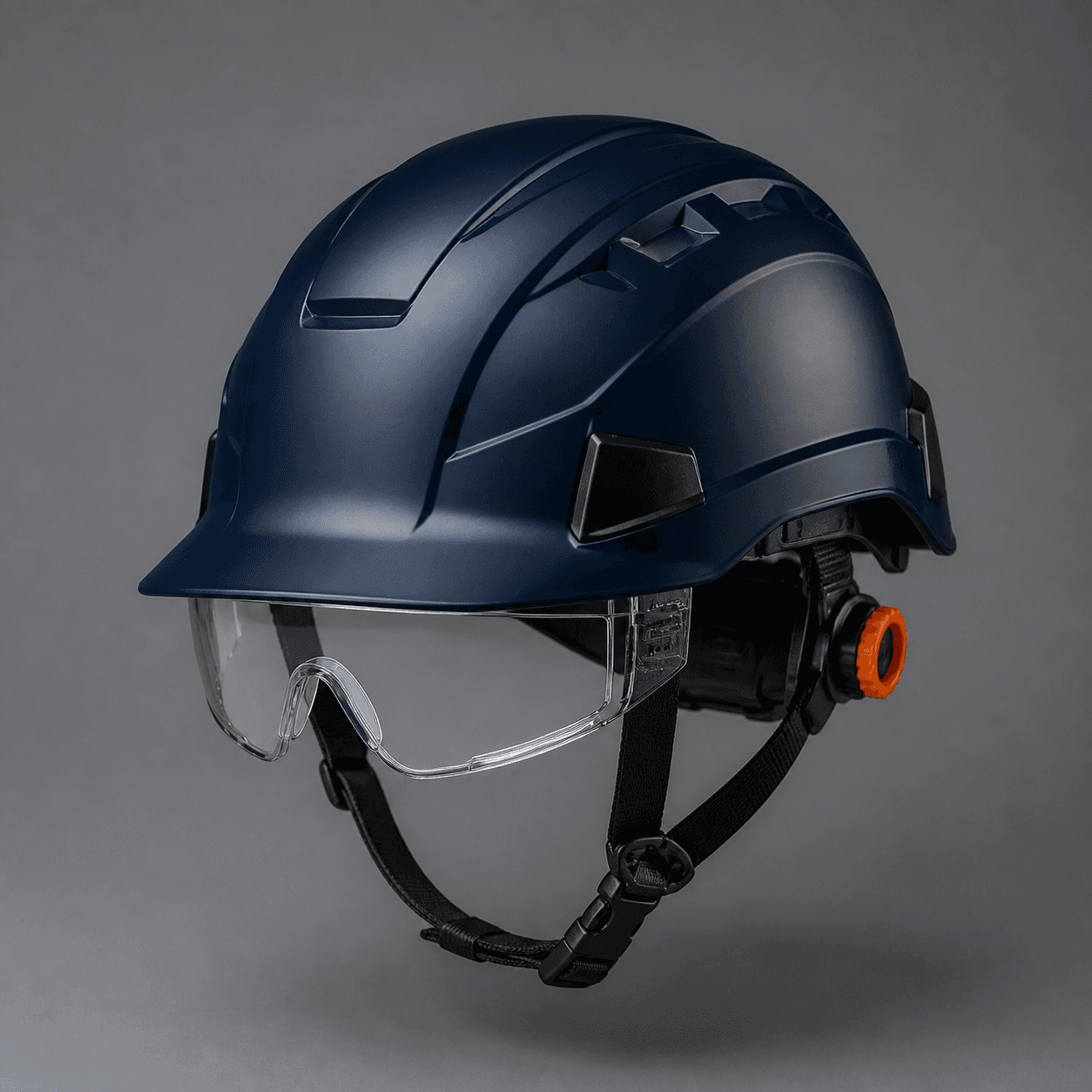
Identify the helmets already issued and those planned for purchase. Record manufacturer, model, configuration, size or adjustment range, and relevant accessories. Include the shell marking and any revision details that affect replacement parts. Avoid recording only color or the distributor’s informal catalog name.
Photograph the actual markings and attachment interface on a representative unused or appropriately handled helmet. Link the images to the technical record. Different generations may share a sales name while using different parts. An accurate register allows a supplier to answer a precise compatibility question.
Separate shell, suspension and accessory identity
List the shell model, suspension reference, sweatband reference and any approved chin strap or mounted accessory separately. State which items the manufacturer permits to be replaced. Do not assume that every visible component is user-serviceable. Maintenance instructions should identify the authorized operation and the person competent to perform it.
Our hard-hat suspension selection guide provides initial fit context. Replacement purchasing needs an additional layer: a stable parts identity that follows the model throughout its service program. Keep both selection and maintenance records accessible to the stores team.
Request approval evidence for each replacement
Ask the helmet manufacturer or authorized supplier to identify the intended model and replacement reference. Request current instructions describing removal, installation and inspection. If an offered alternative is described as compatible, ask for the manufacturer’s documented approval basis. A supplier photograph showing attachment is insufficient on its own.
The Occupational Safety and Health Administration’s head-protection rule establishes the workplace protection context. The exact product instructions govern its approved components and care. Do not infer that purchasing a listed type of helmet makes every aftermarket suspension suitable for it.
Evaluate revision changes explicitly
A replacement can change its part number or design over time. Ask whether the new reference supersedes the old one for every installed model or only certain revisions. Record any exclusions. Without that detail, an inventory team may issue a newer-looking part to an older shell that has not been approved for it.
Keep original and superseding references in the stock system, with the authorized relationship documented. Avoid deleting the old part identifier from historical maintenance records. The aim is to reconstruct what was installed, not simply to make the current catalog look tidy.
Define replacement limits and retirement decisions
Manufacturer instructions may identify circumstances requiring replacement of the entire helmet. Damage, a relevant incident, deterioration or an expired permitted service period cannot automatically be resolved by changing the suspension. Do not advertise a universal shell or suspension replacement interval across products without the model-specific basis.
Maintenance personnel need a clear route for a hold or retirement decision. Stores staff should not decide that a damaged shell is acceptable because a new suspension is available. Keep spare-parts purchasing separate from the technical authority to return a helmet to use.
Document condition rather than only age
Record issue information where the program maintains it, but also inspect condition according to instructions. Storage and exposure can matter. A part left unused in inappropriate conditions may not be equivalent to correctly stored stock. Ask for manufacturer storage guidance and any date or shelf-life identification relevant to the component.
The Health and Safety Executive’s PPE program guidance provides a broader maintenance reference. Apply its general context through the specific helmet instructions. A generic online replacement calendar should not override a requirement attached to the actual product.
Specify sweatbands with the same care as suspensions
Identify attachment style, material description, dimensions where relevant and approved cleaning. Confirm whether the sweatband is disposable, reusable or replaceable under the instructions. A soft-looking alternative can alter attachment, adjustment or user acceptance. Request a sample linked to its part reference.
Separate hygiene requirements from product compatibility. A workplace may need individual issue or a cleaning system, but those practices should use permitted products and methods. Do not assume that disinfectants suitable for another item are suitable for the helmet’s padding or plastic components.
Trial comfort without modifying the system
Have representative users evaluate the approved sweatband and suspension combination within a safe fitting session. Record pressure, adjustment accessibility, stability and interaction with eyewear or hearing protection. Do not add unauthorized padding to relieve a fit complaint. An approved alternative size or model may be needed.
For an illustrative trial, compare 2 approved configurations across several relevant users and record 4 fit observations. These are example planning quantities, not a certification test. The trial helps identify acceptance issues while preserving the manufacturer’s approved system configuration.
Create an RFQ for a maintainable parts range
The RFQ should state the installed helmet population, exact parts, required quantity and delivery expectations. Ask for the supplier’s authorization or compatibility evidence, packaging, part labeling and any revision notices. Request an explicit answer about future availability rather than assuming the component will remain in stock indefinitely.
| Purchasing field | Information to request | Why it matters |
|---|---|---|
| Helmet identity | Manufacturer, model and revision | Defines the intended system |
| Spare part | Approved reference and description | Prevents generic substitution |
| Compatibility | Written model relationship | Supports the replacement decision |
| Instructions | Current installation and inspection method | Enables controlled maintenance |
| Packaging | Quantity and part label | Supports accurate stores issue |
Ask whether suspensions and sweatbands have different minimum order quantities. Confirm whether parts are sold individually, in kits or in bulk packs. A quotation for a kit cannot be compared directly with a price for one component. Normalize the commercial unit before assessing the complete maintenance cost.
Ask for Product Catalog: Send PPEgen the installed helmet model, required approved parts and anticipated maintenance demand. Request a parts list and sample references for review. A useful quotation should make compatibility and availability clear enough for your technical team to assess.
Forecast spares from actual issue patterns
Use maintenance and replacement records to estimate demand by model. Different helmet populations may need separate spare stocks. Record whether replacements arise from routine approved maintenance, user damage, hygiene requirements or another reason. Combining every event into one count can conceal a model-specific availability problem.
Keep a limited buffer appropriate to lead time and the consequences of a shortage. An illustrative calculation of 20 replacements per month over 2 months of replenishment time gives 40 components before any separately justified buffer. These numbers demonstrate the method, not a recommended stock level for every operation.
Avoid a mixed-model stock shortcut
Reducing inventory to one “universal suspension” is only acceptable where the manufacturer documents the intended compatibility. Otherwise, keep separate bins and identifiers. Similar shapes or colors can confuse issue staff, especially when parts arrive without individual labels.
Our replacement-parts continuity guide can help structure availability planning. Include what happens if a part is discontinued. A planned transition to another approved helmet range is easier to manage than an emergency substitution after stock is exhausted.
Inspect replacement parts at receipt
Check labels, part numbers, quantity, packaging integrity and visible condition. Compare attachment points and adjustment features with the approved reference without treating appearance as proof of compatibility. Review any supplied instruction revision and record it against the lot. Segregate unexplained alternatives until the technical team resolves them.
If factory testing is relevant to an agreed component claim, request the method and exact sampled reference. Receiving staff should not improvise a destructive test and describe it as certification. Their role is to verify identity and agreed inspection criteria, then escalate unresolved technical questions.
Make packing mistakes easy to detect
Specify how individual parts or kits are identified. A carton label may be insufficient once the carton is opened and contents enter stores. Request practical internal labels or a controlled issue arrangement. Check that a kit contains every named approved component rather than assuming a sealed bag is complete.
During shipment inspection, include different part references and carton locations under the agreed plan. Count the correct unit and inspect a representative sample for damage. Link findings to the supplier’s packing list so that corrective action can identify which reference and lot were affected.
Prepare replacement work instructions
Installation preparation should include the current manufacturer instructions, a clean working area, the correct approved part and an identified helmet. Have the responsible person inspect the helmet before and after the permitted operation. Do not force attachments or modify the shell to make an incorrect part fit.
Record the part installed and any required maintenance information. A practical record can include helmet asset reference, part reference, date and responsible person. Use the level of detail appropriate to the program. The purpose is controlled maintenance, not a paperwork burden that prevents staff from replacing a worn approved component promptly.
Confirm compatibility with the whole PPE set
Adjustment and fitted accessories should be reviewed after an approved replacement. Eyewear temples, earmuff attachments or other items can affect comfort and use. Our helmet accessory compatibility guide supports that discussion. Keep the exact approved configurations visible in the maintenance record.
The PPEgen quality information page is a starting point for requesting model documents. Ask for clarification when a replacement offer lacks a stable reference or current instructions. A transparent hold decision is preferable to making an unsupported assumption about an installed protective system.
Example: consolidate spare stock without losing compatibility
Consider a distributor supporting several helmet models that appear similar. Before combining spare bins, create a list of installed references and ask the manufacturer which approved parts serve each one. Some relationships may be shared and others may differ. The consolidation decision should follow that evidence rather than the visual resemblance of the components.
Record the approved relationship as a matrix. One row can identify the helmet and another field can name the suspension and sweatband references. Include revision limits and superseding numbers. If a field is unresolved, keep the related stock separate until the responsible team has an answer. A blank is more honest than labeling every component universal.
Review how the parts are packaged after the shipping carton is opened. If individual kits lose identity, ask for practical labels or establish a controlled issue arrangement. A bin can retain the part reference, but it also needs a way to distinguish changed lots or revisions when the program requires that information.
Plan a sample replacement session using approved instructions and competent staff. The purpose is to confirm that the operational process can identify and install the intended parts correctly. It is not a new product qualification. Record any instruction gap, missing component or confusing reference that would make routine maintenance unreliable.
If consolidation is accepted, update stores labels and the purchasing catalog at the same time. Keep the approved model relationship visible so that a future supplier change cannot quietly break it. Do not delete historical references simply because the active inventory now uses fewer SKUs.
Finally, review the commercial impact through actual demand and lead time. A shared approved reference may simplify stock, but a larger minimum order could create surplus. Balance usable availability with obsolescence and storage requirements. The correct purchasing outcome is a maintainable identified range, whether that consists of one approved shared component or several model-specific parts.
FAQ
Is a suspension compatible if it clips into the shell?
Physical attachment alone does not establish approval. Confirm the helmet model, part reference and manufacturer’s documented compatibility. Suspension geometry and adjustment are part of the complete product configuration. Use the current replacement instructions and avoid forcing or modifying an attachment to accommodate a different component.
Can a new suspension make a damaged helmet usable?
Do not assume so. Follow the manufacturer’s inspection and retirement criteria for the complete helmet. Some conditions require full replacement rather than a spare part. Keep the technical decision separate from stores availability, and remove unresolved equipment from use until the responsible person has assessed it.
How often should sweatbands be replaced?
Use the instructions and the workplace’s approved hygiene and condition assessment. There is no single interval suitable for every model or environment. Identify whether the component is reusable or disposable, how it may be cleaned, and which observations require replacement rather than adding an unsupported universal schedule.
Should an importer hold spare suspensions for every model?
Evaluate installed quantities, approved replaceable parts, lead times and demand. A small model population may require a different approach from a large ongoing program. Keep compatibility records and plan discontinued references. The purchasing decision should support approved maintenance without accumulating unidentified or obsolete parts.
What evidence should accompany a superseding part number?
Request written confirmation of which helmet models and revisions the new part supports, together with current instructions. Record exclusions and preserve the old identifier in historical records. A revised catalog number does not automatically establish compatibility with every shell previously sold under the same product family.
Conclusion
Hard hat replacement suspension sourcing is a system-maintenance decision. Identify installed models, purchase approved parts, control storage and receiving, and follow documented replacement limits. A stable parts register protects the commercial value of the helmet program and makes correct maintenance easier to perform.
Request a helmet and spare-parts review
Explore PPEgen head protection and send your requirements. Include helmet and part references, destination market, quantities and current documentation. Ask for a clear approved-parts comparison and availability plan before adding replacements to your bulk purchase.
BUYER RESOURCES
Continue your PPE sourcing research.
Explore relevant PPE categories and a primary safety reference alongside this guide.Use this source alongside destination-market requirements for the exact product and application.
READY TO DISCUSS YOUR REQUIREMENT?