BUYER'S GUIDE - 3 MIN READ
Chemical Resistant Gloves Selection Guide: Questions Buyers Must Ask Before Ordering
Editorial information, sources and corrections
A practical chemical resistant gloves buying guide: define the chemical, task, contact conditions, fit, documentation and shipment controls.
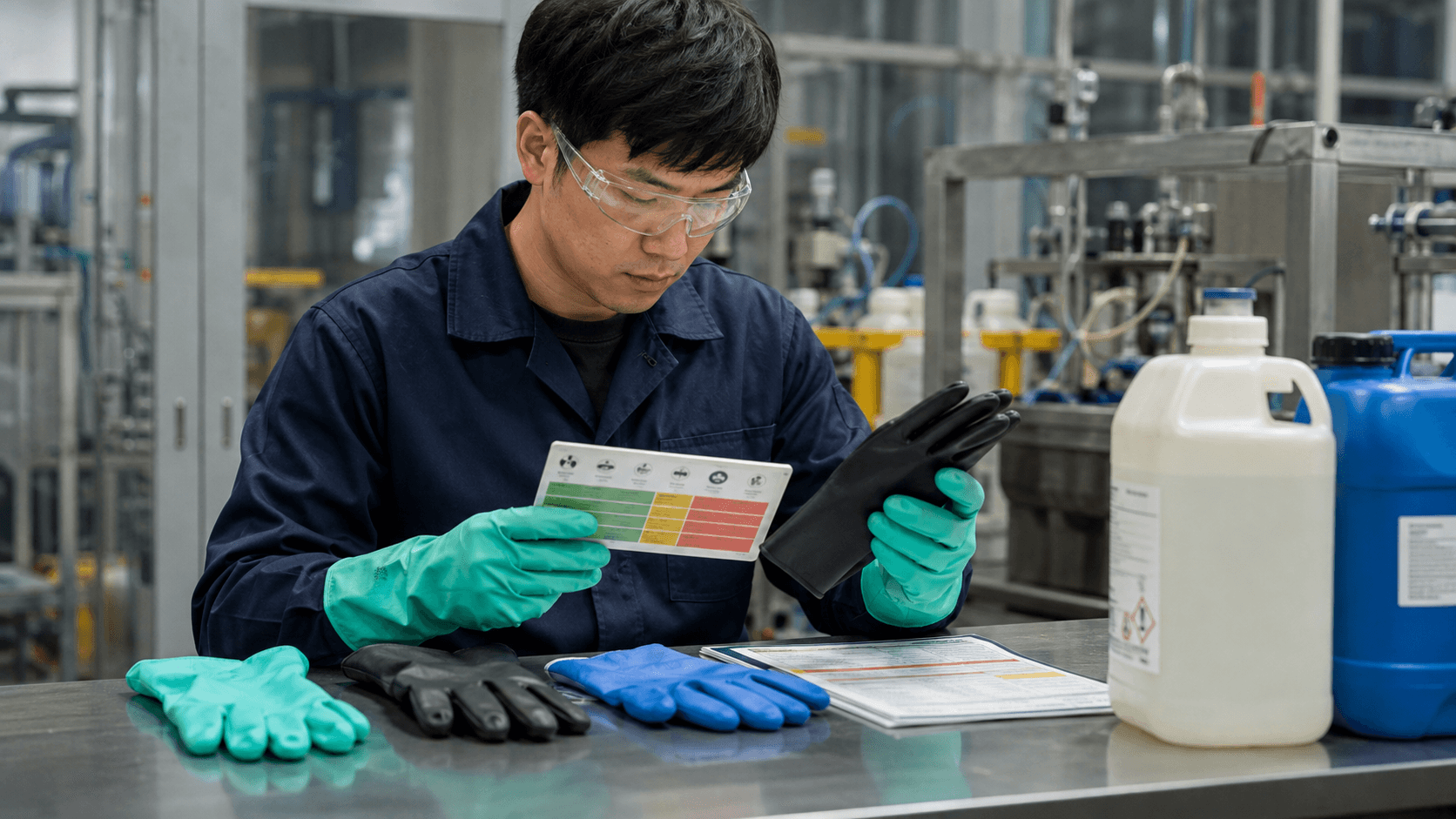
Primary topic: chemical resistant gloves selection
Introduction
Chemical-resistant glove selection cannot be reduced to a material name. The specific chemical, concentration, temperature, contact duration, task, mechanical exposure and cleaning process all matter. A glove that is workable for one chemical or short contact condition may be unsuitable for another.
Quick answer: Ask the employer or competent safety professional for the exact chemical and use conditions, then request product-specific manufacturer information and a representative task trial. Do not make compatibility claims from a generic glove category.
PPE should be selected after hazard assessment and other controls. OSHA's PPE hazard-assessment guidance explains the principle of matching protective devices to workplace hazards.
Capture the chemical-use profile

The RFQ should identify the chemical name, concentration, mixture information where available, task, potential splash/immersion exposure, temperature, contact duration, hand movement, need for grip and whether sharp edges or abrasion are also present. A supplier can then identify which model data and instructions are relevant; the employer makes the final use decision.
| Buyer question | Why it matters |
|---|---|
| What is the exact substance and concentration? | Similar names can have different glove requirements |
| Splash, immersion or incidental contact? | Exposure condition changes the selection discussion |
| Is there heat, abrasion or cut exposure? | Chemical and mechanical protection may need balancing |
| What dexterity is needed? | A thicker glove may affect safe task performance |
| How will gloves be cleaned/replaced? | Issue and disposal procedures affect the programme |
Sample the glove in the actual task
Use a controlled trial that checks fit, wrist coverage, grip, flexibility and compatibility with sleeves, goggles and other equipment. For a broader glove-material comparison, read our PU vs nitrile-coated glove guide, while recognising that coated work gloves are not a substitute for a chemical-specific selection process.
During factory testing, record the approved model, size, label and packing. Do not approve a different liner, thickness, cuff or product label without reviewing the change. The PPE sample approval checklist is useful for this control.
Need a controlled glove quotation? Send your requirements with the task, market, quantity and the customer’s technical requirement.
FAQ
Is nitrile always the best chemical-resistant glove material?
No. Suitability depends on the exact chemical and conditions. The employer should use chemical-specific information and a workplace assessment rather than selecting by a generic material claim.
Can one glove provide cut and chemical protection?
Some tasks require multiple considerations, but the correct choice depends on the chemical, mechanical hazard, dexterity and site procedure. Ask the competent safety team to define the requirement.
What should a chemical-glove shipment inspection check?
Check the approved model, size, cuff, label, packing, lot/traceability information where specified and carton quantity against the retained sample and PO.
Conclusion
Chemical glove procurement becomes safer and more reliable when buyers ask precise use questions and control the approved SKU through sampling and shipment inspection.
CTA: Request a Chemical Glove RFQ Review
Contact PPEgen with the technical requirement and order plan for a structured product discussion.
BUYER RESOURCES
Continue your PPE sourcing research.
Explore relevant PPE categories and a primary safety reference alongside this guide.Use this source alongside destination-market requirements for the exact product and application.
READY TO DISCUSS YOUR REQUIREMENT?