BUYER'S GUIDE - 11 MIN READ
Electrical-Rated Hard Hats: Accessory and Configuration Checks for Buyers
Editorial information, sources and corrections
Evaluate electrical-rated helmet classifications, vents and accessories as one configuration before sourcing in bulk. Includes an RFQ and change-control checklist.

Illustrative image, not evidence of testing or a documented customer project. Procurement guidance does not replace product instructions or competent workplace assessment.
Primary topic: electrical rated hard hat sourcing
Introduction
An electrical hazard assessment may call for a protective helmet with an appropriate electrical classification. That requirement cannot be met reliably by buying a hat with a familiar color, removing visible vents or adding a lamp bracket after approval. The exact shell, suspension and accessory configuration matter. A product marketed as an electrical-rated helmet still needs model-specific evidence and application review.
This guide is for procurement teams coordinating with qualified electrical and safety personnel. It explains how to turn the hazard assessment into an RFQ, how to examine accessory compatibility and how to control changes between approval and shipment. It is not a substitute for electrical safe-work practices or a claim that a helmet alone controls shock risk.
Quick answer: Specify the required head-protection standard and electrical class for the destination and hazard assessment, obtain evidence for the exact helmet model, and check each vent, bracket, light, face shield and other accessory against manufacturer instructions. Reassess the complete configuration after any change; do not assume an untested attachment preserves the original classification.
Start with the electrical hazard assessment
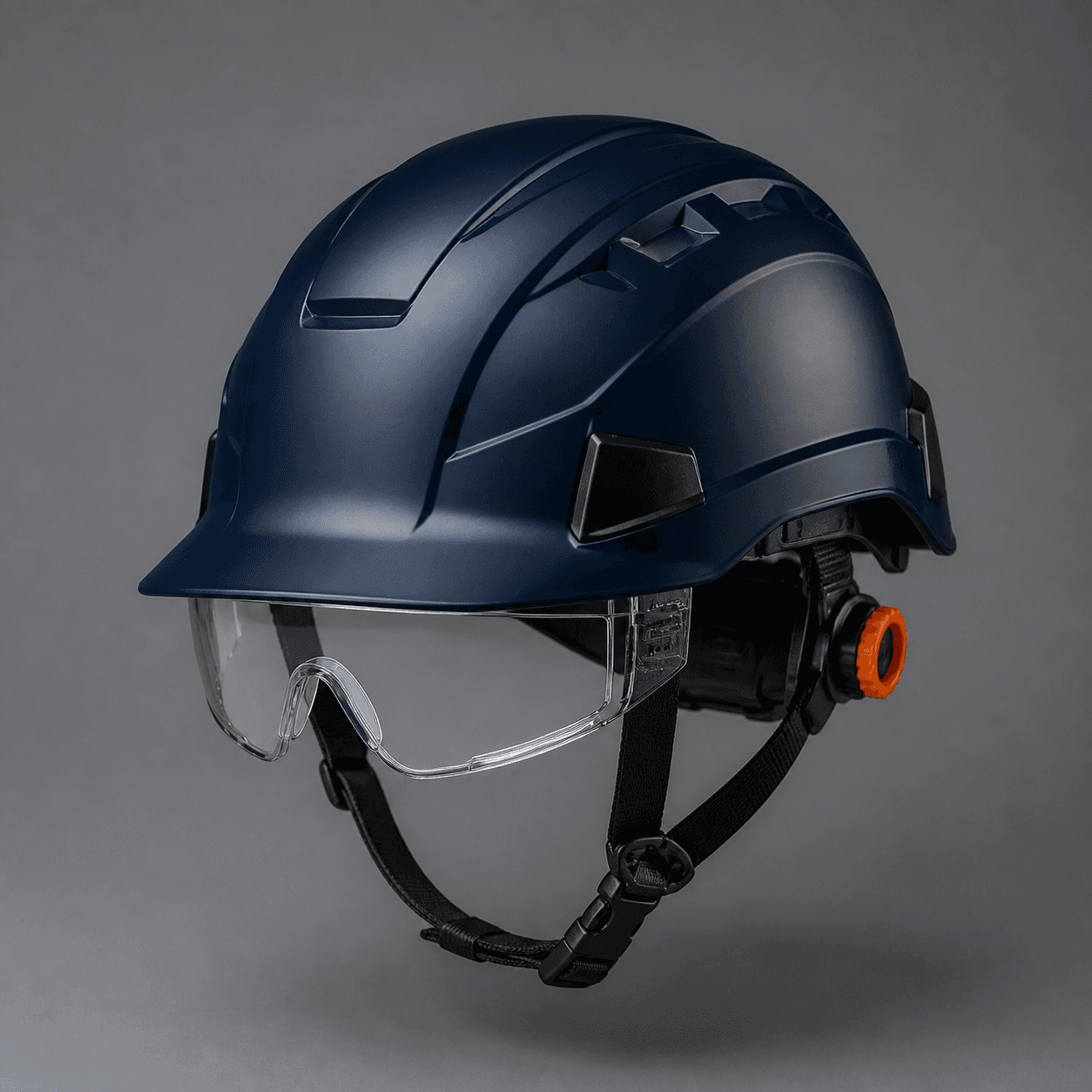
The OSHA head-protection rule distinguishes situations where protective helmets are required, including potential electrical contact. The employer must identify the actual work and applicable protection needs. An importer should ask the customer for the destination, applicable standard, electrical hazard and any other impacts or accessories the helmet must address.
The NIOSH electrical-safety overview puts PPE inside a wider injury-prevention program. Isolation, de-energization, work methods and qualified personnel remain crucial. No helmet should be used as a rationale for approaching energized equipment without the controls required by the site and jurisdiction.
Translate the task into a model specification
Write down work location, foreseeable contact or arc-related exposure assessed by the site, helmet type and class, suspension size range, chin-strap needs, compatibility with eye/face and hearing protection, and use of lamps or communication equipment. Do not ask suppliers simply for "electrician hard hats"; that phrase lacks the classification and configuration needed to compare offers.
For mixed operations, ask whether the same helmet is expected to serve electrical and non-electrical tasks. It may be practical to use one approved system, but this has to be established from evidence, not convenience. Any procurement specification should be checked by the customer's competent safety and electrical team.
Read classification and marking evidence carefully
The buyer should obtain the exact model designation, tested classification, applicable standard edition, instructions and conformity documents for the target market. Check whether the electrical claim applies to all color or size variants. If a supplier provides a certificate, compare model names and revisions, not just a logo or family name. Markings on delivered units should match the approved file.
Do not translate classification across jurisdictions by superficial wording. North American and European helmets can be evaluated under different standards and requirements. The relevant authority and customer need to decide what is acceptable at the destination. The HSE guidance on PPE suitability reminds buyers to consider the job, wearer and compatibility with other PPE.
| Item to verify | Why it matters | Evidence requested |
|---|---|---|
| Shell model and revision | Different construction may change rating | Full model identifier and technical file reference |
| Electrical classification | Must fit assessed hazard and market | Standard/class mark and supporting declaration |
| Vent configuration | Openings may be incompatible with the intended electrical use | Exact shell drawing and instructions |
| Suspension | A different part may not be approved | Part number and replacement instructions |
| Accessories | Attachments may change configuration or introduce conductive parts | Manufacturer compatibility list or written approval |
| Delivered markings | Links claim to shipment | Label/marking sample and inspection photos |
Review accessories as part of the protective system
Lamps, face shields, earmuffs, sweatbands, chin straps, winter liners and communication devices can change how a helmet fits or performs. One compatible accessory does not authorize every combination. Request the manufacturer's approved accessory list and installation instructions for the exact shell version. If a bracket requires drilling, adhesives or a fastener not permitted by the manufacturer, do not install it as an improvised site modification.
The absence of a metal part is not proof that an accessory is suitable for electrical work. Conductivity is only one issue; the attachment can also affect shell integrity, positioning and fit. Similarly, a non-vented appearance is not proof of a tested electrical classification. Review the evidence, then have the site's responsible person authorize the configuration.
Use a change matrix
For each proposed accessory, record part number, helmet model/revision, whether the supplier names the combination as approved, the installation method, whether the accessory alters inspection or maintenance, and the person who approved it. Repeat this review if an aftermarket substitute is proposed. Do not reuse an approval for an apparently identical bracket from another manufacturer without checking.
If face and head protection overlap, test whether the shield lifts and lowers without shifting the helmet. If hearing protectors mount to the shell, test their seal and position. A system may satisfy paperwork checks yet be uncomfortable enough that workers wear it incorrectly. Trial fit in a safe environment; no energized test exposure is warranted.
Mid-article CTA — Send Your Requirements: Share the helmet class, destination market and accessory list with PPEgen. We can organize exact-model questions for your technical reviewer and quote the approved configuration. Contact PPEgen.
Inspect samples and control the shipped configuration
Sample approval should cover the shell, suspension, accessory parts and installation method. Keep photos, model numbers and instruction versions. Compare the quotation and proforma invoice with this approved set. A supplier substitution can be reasonable only after the buyer's technical review—not automatically because the color and price are similar.
At pre-shipment inspection, check markings on multiple cartons and units under the agreed plan. Confirm shell and suspension part numbers, accessories, size range, pack count and absence of visible damage or unauthorized holes. If the shipment includes different versions, segregate them. Inspecting one attractive display sample is not an adequate proxy for lot identity.
The hard-hat date and replacement guide covers stock-age and issue control. The head protection category gives the commercial product starting point; neither replaces the exact electrical evidence needed for a particular order.
An illustrative procurement scenario
A buyer approves a non-vented helmet for a utility maintenance team and then requests an integrated lamp. The supplier offers a clamp-on lamp bracket with no model-specific approval. The right next step is not to attach it and assume the classification survives. Ask for the helmet maker's compatibility information, review the complete head/eye/face combination, and withhold approval until the safety team resolves the gap. This is an illustrative workflow, not a report of a PPEgen customer project.
Manage use, storage and replacement
Train users to identify the approved model, recognize damaged or unauthorized accessories, inspect before use and report an impact or electrical event. Follow manufacturer cleaning and storage instructions. Do not paint, drill or attach stickers unless the manufacturer explicitly permits that treatment and the site's review accepts it. Replacement stock should include only approved shells and suspension parts.
Ask how withdrawn helmets will be marked and prevented from re-entry. A simple quarantine bin and asset record can stop a questionable unit from returning to service. If the customer operates in different jurisdictions, maintain a destination-specific approved-product list rather than one global label that hides differing requirements.
A model-by-model accessory approval workflow
Create a configuration sheet for each helmet model rather than one list headed "electrical helmets." Include the shell and suspension versions, approved chin strap, face shield carrier, earmuff mount, lamp bracket, liner and any other component. Record the document or manufacturer response that supports each combination. If a component is not needed for a task, mark it not applicable; if evidence is missing, mark it unresolved. This makes it harder for a new buyer to mistake a familiar accessory for a universal part.
At sample review, assemble the intended kit using only the instructions. Check that the visor moves freely, the earmuff cups seal around the ears, the lamp does not destabilize the helmet, and the suspension still adjusts correctly. Do this in a safe fitting area. Do not approach energized equipment to test the assembly. If an accessory prevents correct helmet fit, that is a reason to reconsider the model even if the parts appear individually compliant.
Avoid configuration drift on repeat orders
A supplier may change a lamp bracket, sweatband or suspension to improve availability. These seem small compared with the shell, but the approval belongs to the specified combination. Require written notification of any part substitution. Reconcile the packing list to the accessory matrix at receipt. If the shipment contains mixed versions, label and segregate them rather than issuing one version under another's approved record.
Maintain the latest manufacturer instructions with the stock record. If an accessory is discontinued, ask the maker for the approved successor part and document that connection. Do not purchase a generic replacement solely because its clips fit. Where a private-label distributor is involved, confirm whether the manufacturer behind the helmet accepts the proposed component.
Electrical hazard is not the only criterion
Workers may also face falling objects, traffic visibility, heat, rain and the need for face or hearing protection. The site should prioritize the complete risk assessment. An electrically classified helmet with poor fit or wrong impact category is not an adequate solution. Conversely, a helmet optimized for impact in a non-electrical area should not be moved into electrical work without checking its classification.
Ask about limits on temperature, chemicals, UV exposure and cleaning. Storage in a hot vehicle or contact with a solvent may affect materials. Follow product directions; do not create universal service-life rules from the appearance of the shell. An impact report should go through the site withdrawal process even if there is no visible crack. Stock approved replacements so the reporting process is realistic.
Suggested RFQ wording
"Supply helmet model [exact identifier] with the head-protection and electrical classification required for [destination], including [listed suspension/accessories]. Provide instructions and evidence covering this exact configuration, approved component part numbers, markings and replacement guidance. No substitution of shell, suspension or accessory without written technical approval." The placeholders must be filled by the customer and qualified reviewer; the sentence is a structure, not a safety specification by itself.
Compare bids and control cost
Normalize helmet and accessory costs, spare suspension availability, size range, documentation, minimum order, shipment packing and lead time. A cheap shell paired with expensive or unavailable approved accessories may cost more as a system. Another offer may require fewer accessories but cannot fit the workforce. Pilot fitting and total-kit pricing make these differences visible.
Retain unit and lot information after shipment. If a defect notice affects one suspension batch, a traceable record can limit the scope of quarantine. If the buyer knows only "blue helmet," they may need to withdraw every similar unit. Traceability is a commercial and safety benefit of exact-model procurement.
FAQ
Is every non-vented hard hat electrically rated?
No. Vent appearance is not a classification. Check the exact model's markings, applicable standard, supporting documents and use instructions.
Can a lamp bracket be added after helmet approval?
Only after the helmet manufacturer's compatibility information and the site's technical review support that exact bracket, installation and configuration. Do not drill or modify the shell by assumption.
Does a shield mounted on a helmet replace electrical safe-work controls?
No. A shield and helmet are parts of a task-specific protective system. The employer's electrical work procedures and hazard assessment remain decisive.
What if the offered suspension part differs from the sample?
Hold approval and verify the alternate part against the exact helmet instructions. A look-alike suspension is not automatically interchangeable.
Which records should an importer retain?
Keep the customer specification, model/class evidence, accessory approval, sample record, quote and shipment inspection documents. This makes subsequent replenishment and change control possible.
Before closing an RFQ, ask the buyer whether the helmet will be used with winter liners, communications equipment or a customer-supplied visor not listed in the initial inquiry. These later additions are common reasons a seemingly approved configuration drifts. It is easier to resolve compatibility while samples and documents are available than after hundreds of units have been issued.
What should be checked after the first delivery?
Have the receiver compare several assembled kits—not just loose shells—with the approved configuration sheet. Check class marking, suspension part, accessory identification, installation method and included instructions. Photograph exceptions and hold any kit containing an unapproved component. A supplier may have supplied the correct shell but substituted a sweatband or lamp bracket because the original part was out of stock. That is a technical review question, not a routine warehouse correction. Log which lot and carton contain each version so the site can issue only the approved assembly and trace it later.
Conclusion
For electrical-rated head protection, the unit of approval is the complete, identified configuration. Specify the task and destination, verify exact-model classification, assess every accessory and preserve the approved setup through shipment and use. Any unresolved modification should trigger review, not an unqualified "equivalent" label.
Final CTA — Get a Quote: Send your helmet classification, accessory list, quantity and destination requirements to info@ppegen.com. PPEgen can prepare a model-specific quotation and document checklist for your team's approval.
BUYER RESOURCES
Continue your PPE sourcing research.
Explore relevant PPE categories and a primary safety reference alongside this guide.Use this source alongside destination-market requirements for the exact product and application.
READY TO DISCUSS YOUR REQUIREMENT?