BUYER'S GUIDE - 11 MIN READ
Hard-Hat Date Markings and Replacement: A Procurement Checklist
Editorial information, sources and corrections
A molded manufacture date is not a universal hard-hat expiry. Build an issue, inspection and replacement program around exact-model instructions and condition.

Illustrative image, not evidence of testing or a documented customer project. Procurement guidance does not replace product instructions or competent workplace assessment.
Primary topic: hard hat manufacture date vs expiry
Introduction
The small clock-shaped mark inside a hard-hat shell is commonly mistaken for a universal expiry date. It generally identifies manufacture timing, while a safe replacement decision also depends on manufacturer instructions, storage, date of issue, exposure and condition. A blanket rule such as "replace every hat five years" may ignore differences between models and operating environments.
This article gives PPE buyers and site managers a practical way to record dates, inspect product condition and avoid unsupported replacement claims. It does not set a universal service-life period or override the manufacturer's instructions for a particular helmet.
Quick answer: Record the exact helmet model, its manufacture marking, date placed in service and instructions. Inspect the shell and suspension before use, withdraw equipment after a relevant impact or defect according to the manufacturer's guidance, and apply any model-specific service or storage limits. A molded date is useful traceability information; it is not, by itself, a complete retirement decision.
Decode what the date can and cannot say
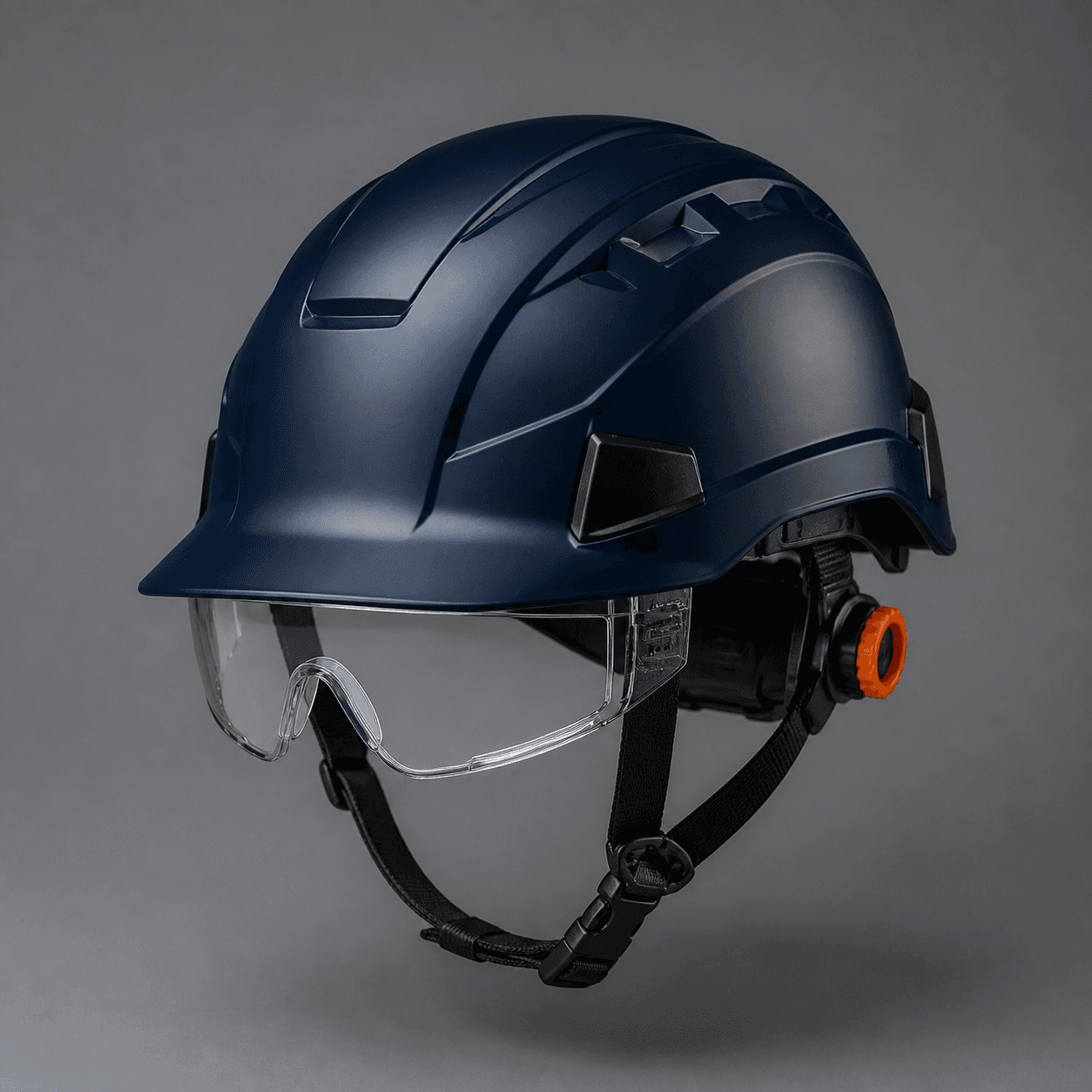
Manufacturers may mold a date wheel, month/year mark or batch code into the shell. Ask the supplier for the decoding guide for that model. A production date helps assess stock age and trace a batch, but it cannot tell a buyer how the helmet was stored or used. A helmet manufactured recently can be damaged; an older unopened helmet may require assessment against documented shelf-life instructions.
The OSHA head-protection rule requires compliant protective helmets where falling objects or electrical hazards are relevant. The rule is not a universal timer for every hat. Treat service-life claims circulating online as secondary until checked against the exact manufacturer's manual and applicable worksite program.
Keep three dates separate
- Manufacture date: encoded on or in the product by the manufacturer.
- Receipt date: when the shipment entered the buyer's inventory.
- Issue or first-use date: when a named unit entered service at the worksite.
These dates can differ by months or more. Where local law or a customer's policy requires a particular replacement interval, record its source and how it interacts with the manufacturer's instructions. Do not silently substitute an internally convenient date for the required one.
What a buyer should request before approval
Obtain the exact-model user instructions, markings guide, protection classification, suspension part number, approved accessories, storage conditions and service/replacement guidance. Check whether instructions distinguish shell and suspension intervals. A catalog page alone may omit impact or chemical-exposure criteria. The HSE guidance on choosing and using PPE emphasizes suitability, fit, maintenance and replacement.
Make sure helmet accessories are part of the approved configuration. An improvised lamp mount, sticker, paint or drilled hole may affect performance or invalidate the manufacturer's instructions. If electrical hazards are in scope, review the electrical-rated hard-hat accessory guide before accepting a changed assembly.
Sample document-control table
| Field | Why it matters | When to check |
|---|---|---|
| Model and revision | Links instructions to supplied hat | RFQ, sample and receipt |
| Marking/date code | Supports traceability | Incoming inspection |
| Suspension model | May have its own replacement rule | Approval and issue |
| Approved accessories | Prevents undocumented changes | Any accessory order |
| Storage guidance | Protects unused inventory | Warehouse review |
| Impact/defect instruction | Triggers withdrawal | Training and incident review |
A supplier should be able to explain what each marking means for the offered model. If one carton includes multiple shell versions, segregate and identify them before issue.
Inspect condition, not just calendar age
Before use, the wearer or responsible team should check for cracks, dents, deformation, surface chalking or other abnormal changes, plus suspension wear and a secure fit. Follow the model-specific instructions for inspection and prohibited modifications. Damage may be hidden after an impact; a hat that looks acceptable at a glance may still need withdrawal under the manufacturer's directions.
The OSHA PPE overview stresses appropriate selection and use. A procurement program should make inspection actionable: provide a route to withdraw the item, obtain a replacement and document the decision. Merely telling staff to inspect without maintaining replacement stock can create pressure to keep using damaged equipment.
Common reasons to quarantine a helmet
- A reported impact or event covered by the manufacturer's withdrawal criteria.
- A cracked or deformed shell, damaged suspension, missing required part or illegible essential marking.
- Exposure to a substance or temperature outside the manufacturer's stated conditions.
- An unauthorized modification or accessory with unresolved compatibility.
- A known batch notice or recall affecting the model or lot.
Do not try to repair structural helmet components with glue or improvised fasteners. Where the manufacturer permits replacement of a suspension, use the designated part and instructions. The hard-hat suspension sourcing guide describes the purchasing control for spare parts.
Build a usable issue and replacement record
The record can be simple. Assign a unique asset number or use the manufacturer's serial/lot reference where provided. Record model, shell date code, lot, receipt date, issue date, user or team, suspension version, inspection result, incident/impact report, replacement reason and disposal date. Protect personal data in line with the employer's rules.
For large rotating workforces, a shared team pool may be necessary. In that case, record cabinet or worksite location, inspection ownership and stock turnover. Do not pretend a personal issue date exists for a helmet used by several people if the records do not support it.
An illustrative example: a distributor receives several cartons in March, issues some in June and retains others in storage. The date wheel identifies production timing. The issue log distinguishes unused inventory from deployed helmets; inspection notes distinguish undamaged from affected units. The decision still follows product instructions and site hazards, not a calculation from March alone. This is an example of a record design, not a claim about an actual PPEgen shipment.
Mid-article CTA — Ask for Product Catalog: Send PPEgen your required helmet model/class, work environment, accessory list and annual volume. We can help assemble a model-specific specification and document request for your safety team. Request the catalog.
Store stock so the records remain meaningful
Use storage conditions specified by the manufacturer. Keep helmets away from avoidable heat, direct sunlight, crushing loads and chemicals that may affect materials. Rotation should ensure older compliant stock is reviewed before newer stock, but first-in-first-out is not permission to issue a helmet whose storage limits or condition are unclear.
Before each bulk release, inspect representative cartons and check model/lot labels. If a batch mixes old and new markings, sort it rather than averaging the dates. Retain evidence of how the manufacturer's code was read. If the instructions are revised, keep the version used for the decision and review whether the revision changes the stock policy.
Receiving and shipment checks
At pre-shipment or receipt, confirm quantity, color and exact model, packaging integrity, marking legibility, included instructions and approved suspension type. Examine a defined sample from multiple cartons under the agreed inspection plan. One polished product photograph is not a receiving inspection. If the supplier proposes an alternative helmet, re-run the hazard/class/accessory review instead of labeling it "equivalent" by appearance.
Our PPE receiving inspection guide covers the same traceability discipline for mixed PPE orders. For construction-site product combinations, see the construction PPE purchasing checklist.
Set replacement stock and training rules
Replacement stock should include the helmet versions and suspension components approved for the site. Estimate consumption from actual issue and withdrawal records, not a claimed universal lifespan. A site with frequent impacts, chemical contamination or rough storage may need different stock levels from a clean indoor warehouse.
Train users to report impacts and defects promptly, identify prohibited modifications, adjust the suspension correctly, and follow the organization's issue/return process. The objective is not to make every worker interpret a date wheel independently; it is to make the critical withdrawal triggers and reporting route clear.
If workers complain about discomfort, review size, suspension adjustment and climate conditions. A different approved model may solve the problem better than loosening or removing the suspension. Keep safety and fit review with a competent site team.
Create a date-code and stock-age protocol
At incoming inspection, ask a trained receiver to identify the manufacturer's code and record how it was interpreted. Keep a photo or drawing of the marking guide with the stock record. If two suppliers use different wheels or batch labels, do not impose one decoding rule on both. Include a field for "unreadable or unknown code" and quarantine such items until their identity is resolved.
Separate warehouse stock-age review from in-service review. Unissued helmets may be governed by storage and shelf guidance, while issued units also have use history and inspection findings. The employer should define when stock is reviewed, by whom and what evidence closes an exception. This does not mean every older helmet is automatically unusable, nor that every newer one is safe. Condition and model-specific instructions remain decisive.
An exception record is better than an undocumented shortcut
If a worker reports an impact, mark the helmet unavailable immediately under the site's procedure and record the event, model, unit ID and decision. If an accessory or suspension is missing, record whether an approved replacement part exists. If the shell's code is unreadable, note whether other lot information can establish identity. The record helps prevent a questionable unit from being returned to a shared rack because someone else did not know why it was removed.
Never erase or alter a manufacturer's marking to make old stock look newer. Private-label artwork should not obscure required information. If an importer applies additional labels, review them against the maker's instructions and destination requirements before affixing them to the shell.
Compare replacement programs, not arbitrary intervals
Forecast replacement stock using actual issues, damage withdrawals, changes in workforce and supplier lead time. If a site retires many helmets after impacts, investigate the work method and handling conditions. If suspensions wear out faster than shells, consider approved spare-part supply and training. Do not simply extend or shorten a universal calendar period to meet budget; that may conflict with instructions or hide a recurring hazard.
For a multi-site buyer, different environments can justify different inspection frequency and reserves. An outdoor project with heat, sun and heavy handling differs from a clean indoor store. Keep exact model and instructions common where possible, but allow site-specific risk and usage records to inform replenishment.
The purchase comparison should include shell, suspension, accessories, fit range, replacement components, documentation and delivery support. A low shell price may be offset by unavailable suspension parts. A new model with different marking style may require updated training and records. These are legitimate commercial factors once the protective specification is met.
FAQ
Does the number inside a hard hat tell me when it expires?
Usually it identifies manufacture information, but markings vary by manufacturer. Ask for the exact-model decoding guide and follow the manufacturer's replacement instructions and the site's inspection program.
Can an unused helmet sit in storage indefinitely?
Do not assume so. Check the manufacturer's shelf-life and storage guidance, inspect condition and keep receipt/lot records. Unused is not a substitute for documented suitability.
Should a helmet be replaced after an impact even if no crack is visible?
Follow the manufacturer's withdrawal rule and the site safety procedure. Do not rely on a quick visual check to dismiss a reported event; internal damage may not be obvious.
Can I replace only the suspension?
Only where the manufacturer permits that part for the exact shell model and the shell itself remains suitable. Use the approved part and instructions, not a look-alike suspension.
What should an importer ask about mixed batches?
Ask for lot/date breakdown, model identity, markings guide, applicable instructions and agreed acceptance criteria. Segregate any units whose identity or condition cannot be reconciled.
For distributors, include a code-decoding note with every first order and notify repeat buyers if marking style or instructions change. A photo of the inside marking can help a site receive stock correctly, but it should accompany—not replace—the official model instructions. This small handoff reduces confusion between manufacture date, receipt date and issue date when helmets move through several warehouses.
How should a buyer handle an undocumented service-life claim?
If a supplier says "five-year helmet" or "ten-year shell," ask which exact model and instruction support that number and whether it is measured from manufacture, first use or another event. Request the storage and inspection assumptions as well. A broad claim may be unsuitable for a harsh outdoor site or irrelevant to an unused batch. Record the source in the product file; do not publish a single lifespan across all helmets sold by the company. Where the manufacturer's directions are unclear, seek clarification and let the employer's safety lead decide how to manage stock in the interim.
Conclusion
Hard-hat replacement is a control process, not a guess from a single molded clock. The date mark supports traceability; the manufacturer's instructions, service history, impact reports and inspection findings determine what the buyer and employer do next. A small issue log and clear withdrawal route are more defensible than an unsupported universal expiry claim.
Final CTA — Send Your Requirements: Share your destination market, helmet application, expected annual volume and accessory needs with PPEgen. Request an exact-model documentation checklist and quotation through our inquiry form or info@ppegen.com.
BUYER RESOURCES
Continue your PPE sourcing research.
Explore relevant PPE categories and a primary safety reference alongside this guide.Use this source alongside destination-market requirements for the exact product and application.
READY TO DISCUSS YOUR REQUIREMENT?