BUYER'S GUIDE - 11 MIN READ
ESD vs Electrical-Hazard Safety Footwear: Do Not Confuse the Claims
Editorial information, sources and corrections
Do not confuse static-control footwear with electrical-hazard boots. Learn which claims, markings and system checks buyers should verify.
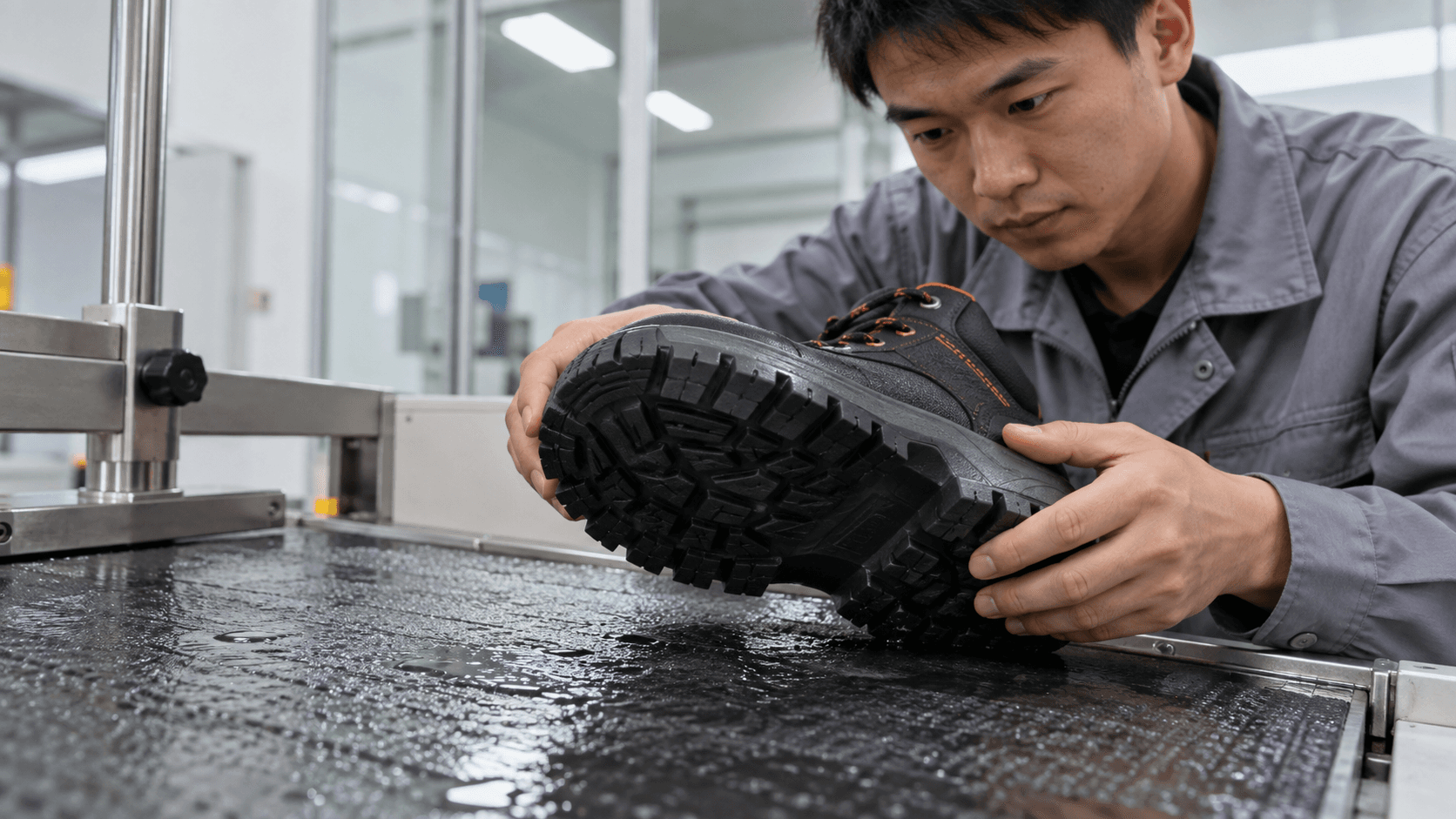
Illustrative image, not evidence of testing or a documented customer project. Procurement guidance does not replace product instructions or competent workplace assessment.
Primary topic: ESD vs electrical hazard safety footwear
Introduction
An ESD shoe and an electrical-hazard (EH) safety boot may look alike, but their intended functions are different. Electrostatic discharge controls are designed around managing static charge in a controlled environment. Electrical-hazard footwear is evaluated for a different exposure scenario. Buying one because it has "electrical" in the description can lead to a mismatch in either direction.
This guide helps buyers frame the question, check model-specific markings and preserve the approved footwear configuration. It is not electrical-work authorization. The employer's competent safety and electrical personnel must determine requirements for the actual task and applicable market.
Quick answer: ESD/static-control footwear should not be assumed to insulate a worker from electrical shock, and EH-marked footwear should not be assumed to meet an ESD floor program. Verify the exact standard, marking, test evidence, footwear condition and complete floor/footwear system for the intended use.
Understand the two different problems

Electrostatic charge can damage sensitive components or create other process risks in a controlled production area. An ESD program commonly depends on a combination of footwear, floor or grounding system, maintenance and verification. A shoe alone cannot establish that an entire facility meets its static-control objective.
Electrical shock risk is a separate hazard. The OSHA foot-protection rule requires suitable protective footwear where specified hazards are present. OSHA's foot-protection guidance describes electrical-hazard and conductive footwear as different protective categories. The NIOSH electrical-safety overview emphasizes that electrical PPE sits within safe-work controls, not in place of them.
A dangerous assumption to reject
Do not interpret "static dissipative" as "shock-proof." The goals of dissipating charge and providing a specified electrical-hazard barrier are not interchangeable. Conversely, a boot selected for its EH claim might not provide the controlled resistance and system behavior required for an ESD assembly line. A purchaser needs the exact customer requirement and test method.
Ask the site to specify the system
For an ESD environment, request the flooring and grounding policy, acceptance method, routine test procedure, required shoe characteristics and whether garments or insoles form part of the system. For an electrical task, ask the safety/electrical team for the footwear classification, other foot hazards and what additional controls are mandated. Do not invent a universal resistance target without the customer standard.
| Buying question | ESD/static-control context | Electrical-hazard context |
|---|---|---|
| Main objective | Control electrostatic behavior in a defined system | Address a specified electrical foot hazard |
| Evidence | Applicable product and system test information | Exact-model protective classification and instructions |
| Site interaction | Floor, insole, cleaning, testing | Electrical procedures, condition, other PPE |
| Frequent error | Assuming shoe alone makes floor compliant | Treating EH mark as permission for energized work |
The specification should also address toe protection, slip resistance, puncture hazards, water exposure and comfort as independent requirements. One electrical label should not hide an unsuitable sole for the actual terrain.
Inspect the exact model and its components
Obtain the model designation, standard edition, marking explanation, test report or declaration relevant to the destination, size range, outsole and insole construction and care instructions. Check whether adding an aftermarket insole changes the claim. If the user's local shoe size is unavailable, a loose fit can affect work and adherence even when paperwork is correct.
Ask whether a coating, contamination or moisture affects the intended electrical behavior. Do not guess that a dirty or worn shoe retains performance. Follow the manufacturer's maintenance and site verification process. Replace footwear when condition or testing no longer meets the program's criteria.
The safety footwear category gives a purchasing starting point; the safety footwear size-conversion guide covers a related sizing question. These pages do not replace electrical classification review.
Mid-article CTA — Send Your Requirements: Share whether your need is ESD system control, an electrical-hazard footwear claim, or both separately, plus toe and outsole requirements. PPEgen can prepare an exact-model evidence checklist. Contact us.
Trial, receipt and change control
Conduct wearer trials in a safe environment. For ESD programs, use the site's approved system test with the actual floor and approved socks/insoles. For EH-related selection, review fit, slip and mechanical needs without creating any live electrical exposure. Keep technical authorization with qualified staff.
At pre-shipment inspection, compare delivered model and markings with the sample and purchase order. Check cartons, size mix, outsole/insole version and visible defects. Do not accept a supplier's "equivalent" shoe until the exact intended claim and wearer fit are re-evaluated. A changed insole, sole compound or factory site may be material to the approval.
An illustrative scenario: a electronics plant asks for ESD safety shoes with toe protection. A supplier responds with an EH-marked work boot. The buyer should not rank it as a higher-grade ESD offer. They should request the customer's static-control acceptance method and evidence for the offered shoe in that system, while separately verifying toe protection. This is a hypothetical comparison, not an actual PPEgen shipment.
Questions to put on a supplier comparison sheet
A side-by-side comparison should make different electrical claims visible rather than placing all shoes in a single "electrical" column. Give each offered model its own row and separate fields for the exact product code, destination standard, claimed category, test documentation, toe/sole protection, insole specification, cleaning instructions and evidence of compatibility with the site system. If the customer needs ESD control, ask how that shoe was tested with the intended flooring method. If the customer needs an EH claim, ask which exact version carries it. Write "not demonstrated" where evidence is missing; do not interpret silence as a pass.
The comparison should also show who made each decision. A product engineer can confirm a material or part number; a safety professional can confirm a workplace hazard requirement; an ESD coordinator can approve a facility system. Procurement can own the commercial record, but should not sign off a technical claim outside its competence. A brief sign-off matrix prevents a supplier's sales email from becoming the only evidence in the file.
A two-stage sample approval
Stage one is a paper review of markings, construction and instructions. Reject obviously incompatible models before buying a large size run. Stage two is a controlled wearer and system trial on models that passed stage one. For the ESD task, follow the site's normal resistance or system acceptance procedure and record conditions, equipment and decision. For an EH task, do not create an artificial shock test on a worker; rely on the applicable product evidence and qualified review while checking fit and non-electrical properties safely.
Wearer feedback should include slip, heel hold, toe room and comfort across representative sizes. A shoe that is technically classified but not worn correctly provides little practical value. Record the sock and insole combination used during the trial because it may matter to both fit and static-control performance. If the manufacturer does not allow an aftermarket insole, place that restriction in the issue instructions.
What can go wrong during replenishment
The first order may be correct while a later reorder changes outsole compound, insole or factory source. A purchasing system that stores only the retailer's style name may miss the difference. Record the manufacturer's full model and revision and require advance notice of design changes. Check at least one sample from the new batch against the approval before issuing the whole replenishment lot. If an ESD test begins to fail in service, examine floor condition, cleaning practices, footwear wear and the test method together; do not blame or approve the shoe in isolation.
Pricing should compare the same technical specification. A lower-cost alternative that lacks the required marking, size availability or compatible insole is not a like-for-like bid. Separate one-time costs for pilot testing, employee fitting and training from recurring unit price and expected replacement. This prevents the cheapest carton from winning because important program work was omitted from the quotation.
Finally, communicate limitations in plain language to users. The issued shoe should be identified by approved task or area. An ESD shoe issued for an electronics room should not acquire an "electrical repair" meaning merely because its wearer later moves to another department. A site transfer is a new task assessment, not a continuation of the same purchase approval.
What to communicate to wearers and supervisors
The issue label or training card should identify the approved area and task, explain which claim was evaluated and note the limits in plain language. Avoid ambiguous shorthand such as "electrical shoe" that could be interpreted as protection from both static discharge and electrical shock. Supervisors should know when a change in work area or floor conditions requires review. A static-control shoe moved from a controlled production floor to an electrical maintenance task does not acquire an EH claim through reassignment.
For ESD programs, tell wearers how cleaning, wet conditions and aftermarket insoles are handled under the site procedure. For EH-related use, stress that protective footwear does not replace isolation or qualified-person procedures. If a shoe is damaged, contaminated or worn, provide a route for withdrawal and approved replacement. Keep the technical criteria with the program owner, not as a verbal shop-floor rule passed between shifts.
A replenishment checkpoint
Before placing a repeat order, verify the model and insole revision, current markings and documentation, approved size curve and whether the supplier changed manufacturing location or materials. Compare a fresh sample with the approved reference where appropriate. Ask the ESD coordinator or electrical safety lead whether site conditions or work processes changed since the original approval. A repeat PO should not be automatic if the underlying hazard has changed.
At receipt, preserve lot information and check several sizes. A labeling error limited to one size can be missed if inspection examines only the medium sample. Record exceptions by model, size and lot. If a shoe arrives with an unfamiliar insole, do not remove it and insert the old one by assumption; seek technical review of the full assembly.
FAQ
Is an ESD safety shoe safe for live electrical work?
Do not infer that. ESD is a static-control claim, not a general electrical-shock barrier. Follow the site's electrical hazard assessment and specific protective requirements.
Does EH footwear make an electronics floor ESD compliant?
Not automatically. An ESD program evaluates the footwear and floor system under its chosen method. Obtain evidence for that use rather than translating an EH mark.
Can workers add their own comfort insoles?
Only after the site's technical team and manufacturer confirm compatibility. An insole change can affect fit or an electrical/static-control property.
What should receiving inspection compare?
The exact model, markings, sole/insole construction, size mix and packaging against the approved sample and order. Resolve unexplained substitutions before issue.
Are these footwear claims a substitute for electrical procedures?
No. Isolation, work practices, qualified personnel and the employer's controls remain essential. Footwear is only a selected part of the protective system.
What if a worksite has both ESD and electrical maintenance tasks?
Do not assume one footwear SKU must serve both. Map personnel and tasks, then have the responsible specialists specify requirements for each. If a manufacturer proposes a model with multiple claims, require independent evidence for each claim and review the complete system in each environment. A shared shoe may be possible, but it is a documented technical decision rather than a shortcut based on labels. If workers move between areas, training and issue records should explain what footwear is approved where.
How should static-control performance be monitored in service?
Follow the facility's approved test procedure and schedule, which may consider floor condition, shoe condition and user equipment. Procurement can maintain model traceability and replace failed stock but should not interpret a single measurement without the ESD coordinator. If a new cleaning product is introduced for floors or shoes, review whether it affects the program. A nominal ESD label on a worn shoe cannot substitute for the system checks required by the workplace.
If a distributor sells both footwear categories, separate their product pages and carton descriptions. An "electrical safety shoe" catchall category can mislead a customer who needs only static control or, more seriously, a customer who needs a specified electrical-hazard claim. State the exact model, marking and intended use on quotations, and request the site requirement before suggesting an alternative. Clear naming is a basic trust measure in B2B procurement.
What if the purchaser needs slip resistance as well?
Add the floor condition and slip requirement as a separate RFQ line. A shoe that meets an ESD or EH claim may still be unsuitable on oily or wet flooring. Ask for the applicable outsole evidence and run a safe wearer trial on representative surfaces where permitted. Keep electrical, static-control and slip findings in separate columns so an excellent result in one area does not hide a gap in another. If a different outsole is offered to improve grip, recheck whether the ESD or EH documentation still applies to that finished model. The same change-control rule applies to toe caps, midsoles and insoles.
Conclusion
ESD and EH labels answer different questions. A credible sourcing process first defines the work hazard and the destination standard, then verifies the exact shoe and its interaction with the site. Do not let a familiar acronym collapse separate safety objectives into one misleading purchase decision.
Final CTA — Get a Quote: Send your footwear application, technical specification, size run and annual volume to info@ppegen.com. PPEgen can quote models for your team's evidence and fit review.
BUYER RESOURCES
Continue your PPE sourcing research.
Explore relevant PPE categories and a primary safety reference alongside this guide.Use this source alongside destination-market requirements for the exact product and application.
READY TO DISCUSS YOUR REQUIREMENT?