BUYER'S GUIDE - 11 MIN READ
Foam vs Reusable Earplugs: Building a Bulk Hearing-Protection Program
Editorial information, sources and corrections
Compare formable foam and reusable earplugs on fit, hygiene, training, replacement and full program cost before making a bulk purchase.

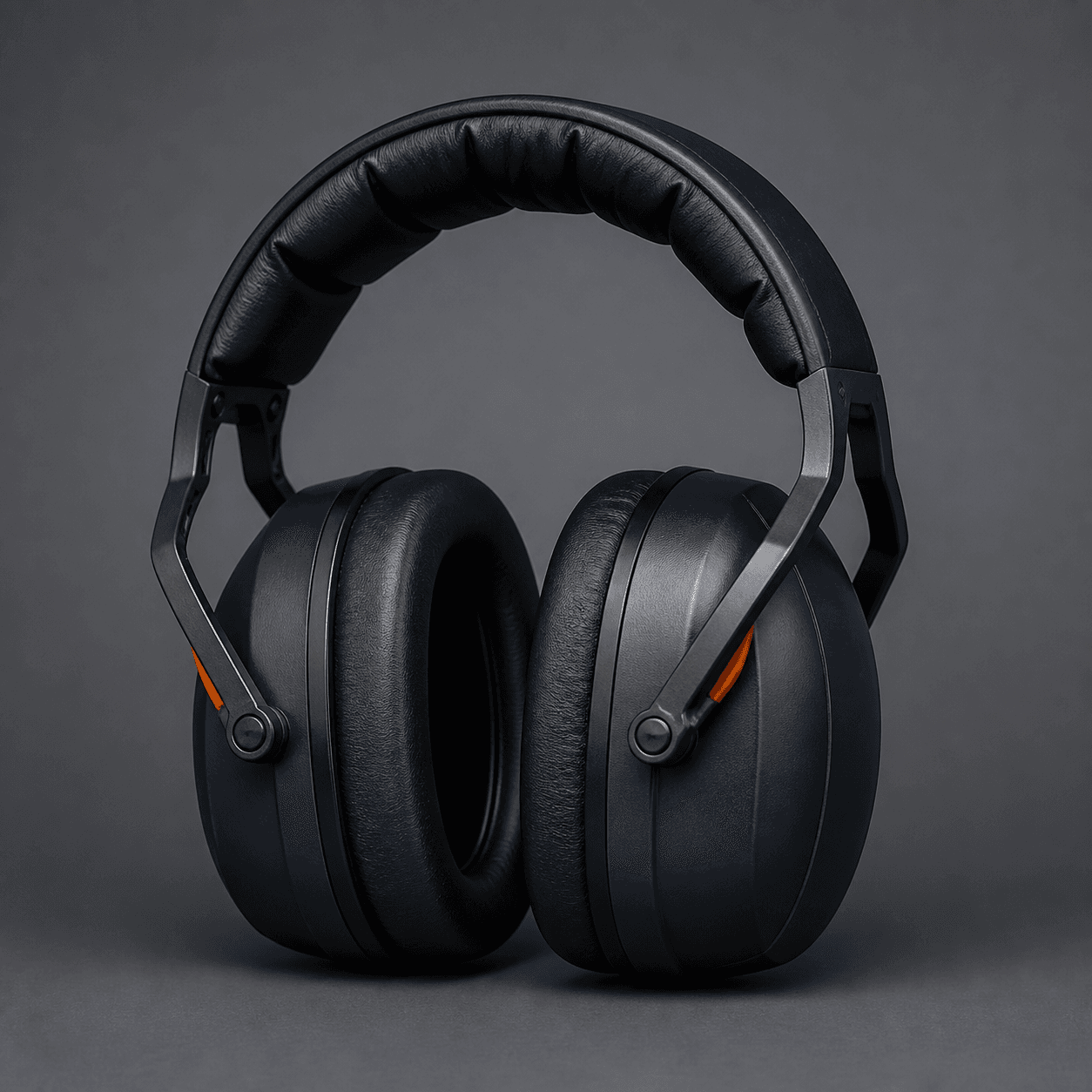
Illustrative image, not evidence of testing or a documented customer project. Procurement guidance does not replace product instructions or competent workplace assessment.
Primary topic: foam vs reusable earplugs bulk buying
Introduction
The purchasing difference between disposable foam and reusable earplugs looks simple until real work starts. Foam may require careful rolling and insertion; reusable plugs need cleaning, storage and timely replacement. Either can underperform if it does not fit the wearer or is used incorrectly. A cost comparison based only on price per pair misses these conditions.
This guide helps an industrial buyer and safety team select a practical mix of approved protectors, run a safe wearer trial and forecast supplies. It does not prescribe a specific attenuation level for an unmeasured worksite or claim one earplug type is universally superior.
Quick answer: Choose from the measured noise exposure and the wearer's ability to fit the plug correctly, not from product category alone. Pilot both approved options where appropriate, train users, verify fit, provide clean storage for reusable models and cost the whole issue-and-replacement program.
Establish the noise-control context
Hearing protectors are one layer of a noise program. Engineering and administrative controls should be assessed first. The NIOSH hearing-protection guidance emphasizes fit and warns that the labeled attenuation may not represent an individual's achieved protection. The HSE selection guidance also cautions against choosing protection purely from a high number: comfort, communication and correct use matter.
Before RFQ, record noise task, duration, other PPE, need to hear signals, cleanliness of the work area and whether workers repeatedly remove protectors. The site's qualified person should determine the needed protection and whether different tasks need different approved options.
Formable foam: strengths and obligations
Foam earplugs are generally issued as single-use consumables and can suit many workplaces, but correct insertion technique is critical. Users need clean hands, the ability to compress the plug as directed and time for it to expand properly. A short demonstration followed by an observed practice is better than a box of plugs with no training.
At a dusty issue point, protect the stock from contamination. If the worker removes a plug and puts it on a dirty bench, the program needs a replacement route. Bulk purchasing should specify model, pack format, dispensing system, labeling and any applicable rating information.
Reusable plugs: strengths and obligations
Reusable plugs can reduce repeat issues for some workers, but only if they are cleaned, dried and stored according to the manufacturer. Examine whether a cord, stem or case is practical for the task. A plug that becomes dirty or deformed should be replaced; "reusable" does not mean indefinite life.
For crews moving between several sites, ask who supplies clean cases and how contaminated stock is handled. If the buyer cannot maintain a realistic care system, the apparent lower consumption may not materialize. A trial should check whether workers can insert and remove the model reliably without touching dirty surfaces.
Test the actual fit, not just catalog ratings
The NIOSH hearing protector fit-testing guidance supports individual assessment rather than assuming a nominal package rating is achieved by every wearer. Where practicable, incorporate a recognized fit-assessment method into the pilot. At minimum, have trained personnel observe insertion and ask users about comfort and consistent use across a representative shift. Do not promise protection from a visual fit check alone.
| Factor | Formable foam | Reusable plug | Decision record |
|---|---|---|---|
| Fitting skill | Requires correct compression/insertion | Requires correct size/insertion | Training outcome |
| Hygiene | New issue after disposal | Cleaning and case needed | Site procedure |
| Consumption | Frequent replenishment | Replacement by condition | Actual usage log |
| Compatibility | Check helmet/other PPE | Check cord/case interference | Wearer trial |
| Stock control | Box or dispenser SKUs | Plugs, cases, replacements | Approved part list |
Keep multiple approved sizes or models where needed. A single model chosen for global standardization may not fit every ear. If fit assessment shows a worker needs another protector, the purchasing program must support that alternate option.
Mid-article CTA — Send Your Requirements: Tell PPEgen your worksite noise-program requirements, number of wearers, shift pattern and preferred pack format. Request sample options for a controlled fit trial and a bulk quotation. Contact us.
Calculate full program cost
Count purchase price, number of issued pairs, cases, cleaning supplies, training time, dispenser maintenance, rejected stock and stockout risk. An illustrative comparison might find a higher unit-priced reusable plug costs less over several shifts—but only if users keep, clean and correctly fit it. Another site may find single-use foam simpler and more reliable. These are scenarios, not claims about measured PPEgen products.
Use actual issue records from a pilot. If foam use spikes, ask whether dispensers release multiple plugs or workers are taking replacements after breaks. If reusable loss is high, check case design and whether workers move between sites. Fix process causes before drawing a broad conclusion about product category.
The earplug dispenser refill guide covers bulk station maintenance. The hearing protection fit-testing guide goes deeper on checking achieved protection.
Write a specification and inspect deliveries
Specify approved model, size options, rating documents applicable to the market, pack count, case/cord accessories, instructions and lot traceability. Sample-approve the exact product, not simply a color or material description. For reusable plugs, include care and replacement instructions. For foam, include protected packaging and compatible dispensers where used.
At receipt, check carton quantity, model identifiers, intact packaging and presence of instructions. Segregate unapproved substitutions. Retain enough lot information to investigate a complaint. Where the supplier changes compound, shape or case design, re-run the relevant fit and use review; a similar nominal rating does not establish identical fit.
Design a representative wearer trial
A pilot should include workers from the actual noise tasks, not only volunteers from an office. Include new and experienced users, different shift patterns, and people who normally wear helmets, safety glasses or gloves while inserting plugs. Have the program administrator define the allowed protectors and fit-assessment method before trial. Procurement can then issue identified samples and record quantities without conducting the technical fit test itself.
Ask participants to demonstrate how they insert each model according to instructions. Observe whether the plug stays in place during routine head movement and normal work-like motions in a safe area. Record discomfort, difficulty with dirty hands, problems with cords or cases and whether users can hear necessary signals under the program's assessment. Do not infer safety from preference alone: the most comfortable plug still needs to meet the protection requirement, and a high-rated plug cannot compensate for persistent poor fit.
Separate training problems from product problems
A foam plug that initially fails to seal may fit after proper instruction, or it may simply be a poor shape for a particular ear. A reusable plug may be easy to insert but uncomfortable after several hours. Record both initial and trained performance. If one group repeatedly struggles with a model, provide an approved alternative rather than rewriting the training to blame users. If multiple models fit, issue the one the worker can use consistently.
Keep sample identifiers, sizes, dates and trial conditions. Later batches should be compared with the approved samples; a subtle shape or stiffness change can affect fit even if the catalog name remains. If a supplier changes formulation or tooling, ask the hearing program to review whether new fitting is needed.
Make cleaning and replacement operational
For reusable plugs, specify who provides the case, when and how cleaning occurs, how plugs dry and what visual changes trigger replacement. If a user keeps a plug in a pocket with metal parts, the case may be essential. If a worksite has no clean water or appropriate cleaning supplies during a long shift, the care plan must address that practical gap. Do not design a reusable program that depends on facilities workers do not have.
For disposable foam, set protected issue points, replenish before shift change and provide disposal bins. If earplugs are issued individually rather than from a dispenser, check whether pack format encourages proper pair handling. Monitor waste without penalizing necessary replacement of a dirty or dropped plug. Reusing a contaminated single-use plug to hit a consumption target is not a sound cost control.
Incident and complaint handling
If a wearer reports ringing ears, discomfort or a suspected lack of protection, refer the issue to the hearing-conservation professional. Procurement should preserve the product model and lot information and ensure alternate approved protectors are available. Do not advise workers to double up protectors without the program's assessment; combinations can affect fit and communication.
RFQ and receiving checklist
For each model, request applicable rating information, exact product identifier, size options, packaging, instructions, storage conditions, case or cord parts and substitution policy. Ask whether the quoted price is per plug, per pair, per case or per refill. A buyer comparing one bag of 200 loose plugs with a box of 200 pairs can easily misstate cost by a factor of two; unit definitions belong in the comparison sheet.
At receiving, sample cartons for model, count, packaging integrity, lot information and instructions. For reusable types, check that cases and cords promised in the quote are present. Keep a reserve of approved alternatives by size. If stock is short, the employer should use its program's contingency process, not issue an unreviewed substitute because it is available in a warehouse nearby.
FAQ
Are reusable earplugs always cheaper than foam?
No. Their economics depend on loss, cleaning, replacement, fit and number of uses. Compare observed program costs, not unit price alone.
Does a higher NRR or SNR automatically mean a better choice?
No. The required protection depends on the site's noise assessment, and the wearer may not achieve the label value. Fit and correct use are essential.
Should a worker wash disposable foam earplugs for reuse?
Follow the product instructions. Do not improvise reuse of a single-use model; provide clean replacement stock when needed.
How often should reusable plugs be replaced?
Follow the maker's directions and withdraw plugs that are damaged, deformed, contaminated or no longer fit. There is no one interval that covers all products and work conditions.
Can one earplug model serve every worker?
Not necessarily. Ear anatomy and task needs vary. Provide approved alternatives when fit assessment or practical use shows a mismatch.
What if a worker repeatedly fails to fit the standard plug?
Escalate to the hearing-conservation program rather than blaming the worker or repeatedly issuing the same unsuitable product. Review instruction, size and alternative approved models. A different protector may be required. Procurement should keep a small but reliable reserve of those alternatives and ensure that the issue system can record them without making special users wait for a new purchase order. Fit assessment is an individual result; a sitewide average cannot prove that every wearer is protected.
Should a bulk tender specify only one material?
Usually the more useful specification is the required protection, fit process, hygiene and supply format. A single material can simplify logistics but may exclude a suitable option for some people. If the site has already approved particular models through testing and trial, list those exact SKUs with controlled equivalents subject to review. Ask vendors to quote pairs, cases and replacement packs in consistent units. This supports a fair comparison without turning the bid into a contest of unsupported attenuation claims.
Some workplaces will need both formats at once. A reusable plug may be approved for trained employees with access to cleaning facilities, while disposable foam may be useful for short-term visitors or dirty tasks. That mix should be deliberate and documented. Keep separate issue counts and replacement instructions, and tell supervisors which users or tasks are approved for each. Do not advertise a reusable model as environmentally preferable without accounting for actual retention, cleaning and disposal at the site; do not portray single-use stock as inherently easier if dispensers are frequently empty.
Before signing a long-term supply agreement, confirm that the selected model, case and refill can be supplied consistently in the required market. An unexpected design revision may require new fit assessment. Build a change-notification term into the order and keep a small sample of the approved product for comparison.
How should the program handle temporary visitors?
Visitors may not have received the same fitting instruction as employees and may be present for only one task. The hearing-conservation team should define which approved protector options and supervision apply. Procurement should stock clean, accessible sizes and formats, and avoid assuming a reusable plug issued to a short-term visitor will be returned, cleaned and reissued safely. If the site uses disposable foam for visitors, provide immediate fitting guidance rather than assuming the plug is self-explanatory. Record how many visitor pairs are issued so consumption is not mistaken for employee waste. A controlled visitor program may justify a different pack format even when the main workforce uses reusable plugs.
Conclusion
The right bulk program is not a vote for foam or reusable plugs in the abstract. It is a documented match between noise exposure, achievable fit, hygienic use, replenishment and worker acceptance. Keep the specification and issue records tied to exact models so future price comparisons remain meaningful.
Final CTA — Ask for Product Catalog: Send your hearing-protection application, quantity and destination requirements to info@ppegen.com. PPEgen can prepare model-specific options and a sample-request list.
BUYER RESOURCES
Continue your PPE sourcing research.
Explore relevant PPE categories and a primary safety reference alongside this guide.Use this source alongside destination-market requirements for the exact product and application.
READY TO DISCUSS YOUR REQUIREMENT?