BUYER'S GUIDE - 11 MIN READ
High-Visibility Rainwear: Visibility and Weather-Protection Buying Guide
Editorial information, sources and corrections
Buy high-visibility rainwear by checking visibility classification, wet-weather construction, fit, seam details and finished-garment evidence.
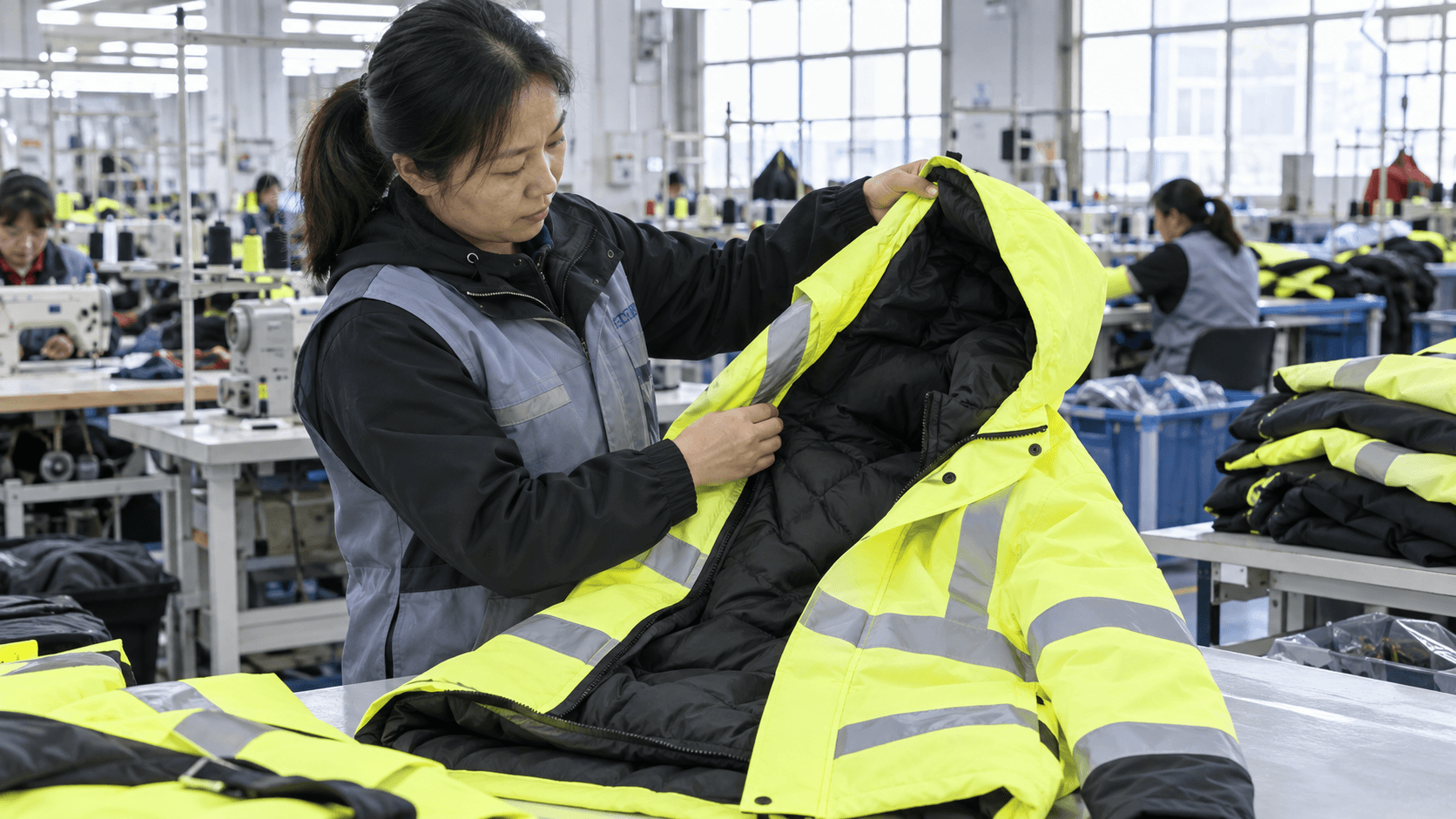
Illustrative image, not evidence of testing or a documented customer project. Procurement guidance does not replace product instructions or competent workplace assessment.
Primary topic: high visibility rainwear procurement
Introduction
Rainwear for roadside, logistics or outdoor crews may need two separate capabilities: conspicuity in the assessed traffic or plant environment and protection from rain. A bright jacket that leaks through the seams is poor rainwear; a waterproof dark jacket with a narrow reflective strip is not automatically suitable high-visibility PPE. Procurement should verify both claims on the finished garment and trial fit over the clothing actually worn.
This guide converts a wet-weather task into a practical RFQ and inspection plan. It does not declare a single visibility class or water-resistance level appropriate for every site. Those choices belong to the employer's risk assessment and destination-market rules.
Quick answer: Specify visibility and weather performance separately, then verify the exact jacket or trouser model against the relevant standard and task. Inspect reflective material placement, seams, closures and size coverage on the finished garment; trial movement and layering; and block substitutions that alter the approved design.
Describe the job under wet conditions
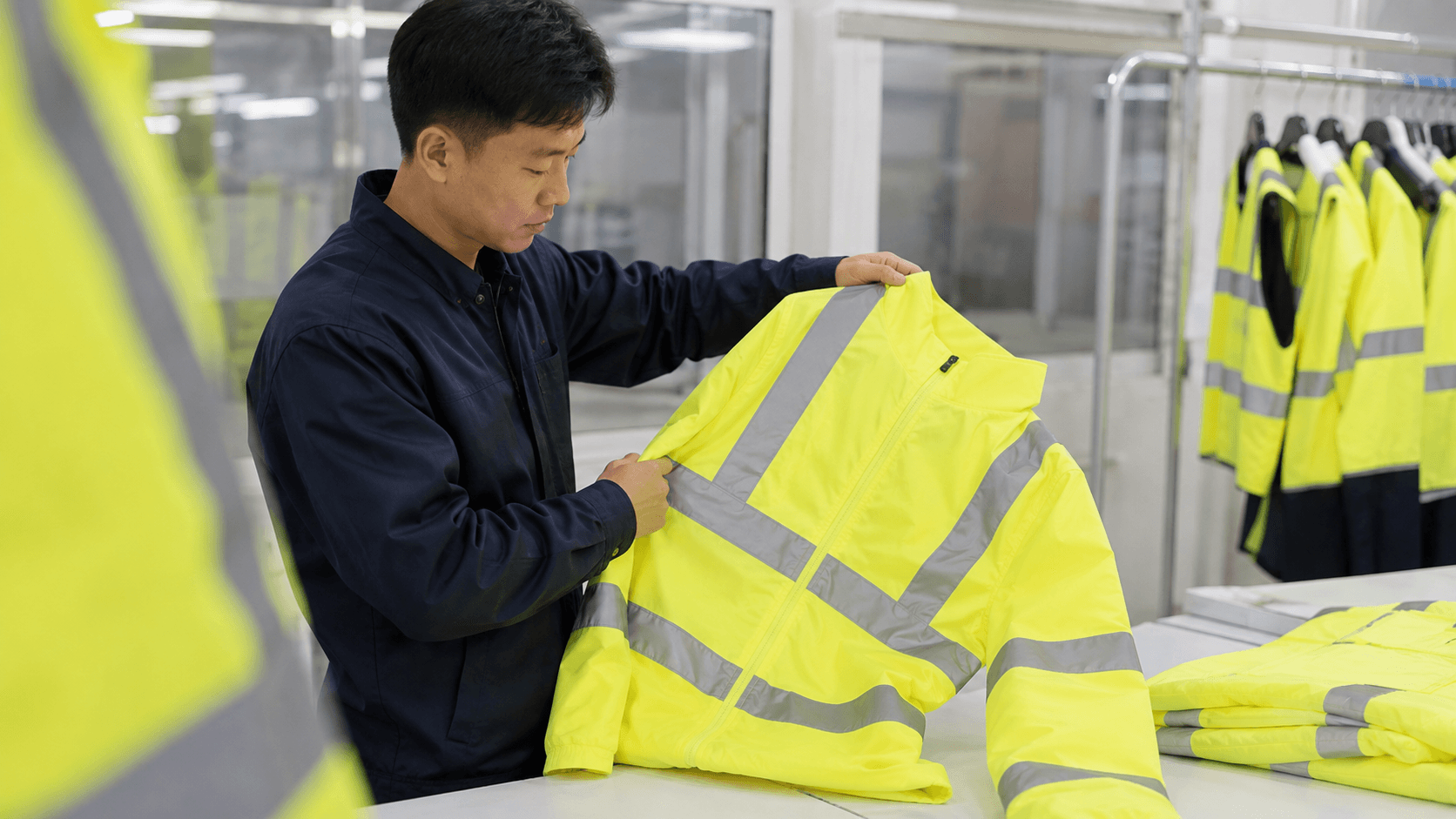
Record whether workers are near moving vehicles, work at night, direct traffic, climb or bend, and whether rain is sustained or occasional. Note temperature and the layers worn beneath the shell. The HSE guide to choosing PPE stresses suitability for the actual task and wearer. The required visibility category should come from the hazard assessment rather than a marketing label such as "high visibility style."
Visibility may change when a hood is up, a harness covers reflective tape or a backpack hides the rear panel. Evaluate the complete work configuration. A vest worn under a dark rain jacket may cease to be visible. If trousers form part of the specified arrangement, review the combination as required by the applicable standard and instructions.
Separate evidence for two functions
Ask for the exact model's visibility classification and labeling under the destination's applicable rule, and independent evidence for water resistance or other weather claim. The International Safety Equipment Association's standards overview helps identify North American high-visibility standards, while a European destination may apply a different set. Do not present class numbers from unlike systems as direct substitutes.
| Requirement | Buyer question | Sample/receipt check |
|---|---|---|
| Visibility | Which class and garment configuration apply? | Marking, material placement and garment identity |
| Rain barrier | What finished-garment claim covers fabric and seams? | Seam, flap and closure construction |
| Fit | Can workers move safely over real layers? | Size-run trial, hood and cuff movement |
| Care | How many washes and which method are permitted? | Label and spare-stock plan |
| Traceability | Are model and lot identifiable? | Carton and garment labels |
The HSE product-safety and supply guidance is a reminder that a distributor's obligations depend on the destination and product claim. Obtain proper regulatory review rather than copying a generic certificate paragraph into every country listing.
Inspect seams, closures and reflective details
Water can enter through seams, zipper lines, cuffs, hood openings and pocket constructions. Ask whether seams are taped, welded or otherwise treated, and whether the test claim applies to the finished garment. A fabric swatch result alone does not prove a complete jacket stays dry. Check storm flaps and closures in a sample; a stiff zipper that workers leave partly open may undermine use.
Reflective trim should follow the approved design and remain visible after normal movement. At sample review, compare band width and placement against the technical file, not a catalog illustration. Inspect stitching, attachment and whether a hood or pocket interrupts required design features. Do not claim that every stripe position is compliant merely because it looks bright under a phone flash.
Layer and movement trial
Give representative users the garment over typical workwear and any harness or helmet. Check arm reach, bending, cuff seal, hood peripheral view, glove compatibility and whether trousers cover the boot opening without tripping. A size that fits indoors over a shirt may be too tight over winter layers. Do not compensate by choosing a size so oversized that it catches on moving equipment.
Record wearer comments alongside measurements and model numbers. A safe rain simulation with clean water may reveal practical closure issues, but do not market such a trial as a certification test. Use laboratory evidence for formal claims.
Mid-article CTA — Send Your Requirements: Tell PPEgen your visibility standard, weather conditions, preferred jacket/trouser set and size mix. Request exact-model evidence and a sample plan before committing to a bulk order. Contact us.
Put change control in the purchase order
Specify garment model, color, visibility class, fabric and seam construction, hood and closure details, reflective trim layout, sizes, labels, care instructions and packaging. If private-label artwork is added, check it does not obscure required markings or visible material. Supplier changes to tape, fabric or design should trigger new approval, even if the product name stays the same.
At pre-shipment inspection, compare representative units from multiple cartons with the signed sample and artwork. Check sizes, construction, seam quality, reflective trim and labeling. A photograph of one folded jacket cannot show every critical seam. Keep a defined inspection plan and quarantine mixed or unexplained variants.
An illustrative scenario: an outdoor logistics team receives a lower-cost jacket whose fabric is described as waterproof. The buyer asks whether the finished seams and closure construction match the tested model and whether the high-visibility class is valid for that exact assembly. If only a fabric report arrives, the weather claim remains unresolved. This is a hypothetical procurement example, not a PPEgen field test.
Our high-visibility product category can start model discovery. The visibility garment care guide addresses what happens after the garments are issued.
Plan upkeep and replacement
Rain and road grime can obscure fluorescent and reflective surfaces. Follow care instructions and inspect garments for torn seams, damaged closures and loss of visible material. Establish a route for exchange, especially for crews working night shifts. Do not continue use solely because the garment was certified when new.
Use actual returns and wear records to forecast spare stock by size. A custom-branded jacket with long lead time may need a larger approved reserve than an off-the-shelf unit. Keep quantity planning distinct from protective claims.
Use a two-column sample-approval sheet
Keep visibility and rain protection as separate columns on the same approval form. Under visibility, list the applicable standard, required class or category, fluorescent material, retroreflective layout, label and any combination rule for a jacket and trouser. Under rain protection, list the fabric and finished-garment claim, seam treatment, front closure, hood, cuffs, hem and care directions. A supplier should not be able to satisfy both columns by sending one fabric sample or one generic certificate.
Add a third column for task integration: harness, helmet, gloves, radio, tool belt, winter layers and any branding. A chest logo or company name may be commercially important, but it should not obscure required visible material. A hood must not block peripheral vision or prevent helmet fit. A jacket that rides up under a harness may expose the worker or conceal a reflective band. These are review questions for the complete setup, not matters that a fabric test can answer.
The approval sheet should capture the sample's exact model and revision, size, date, reviewer and decisions. If the supplier submits a new reflective tape or seam process after approval, compare it with the sheet. A pre-production sample and production goods need to tell the same technical story. Keep a signed photograph of front, back, hood and seam details alongside the document set.
Different work patterns change the questions
For a road crew, look at visibility from several approach directions, wearing posture while bending and how rain affects lighting and grime. For warehouse yards, consider forklift and truck sightlines, but do not assume a yard has the same garment requirement as a public-road task. For outdoor utility workers, examine climbing, harness coverage and the ability to close the jacket while wearing gloves. These examples are prompts for a site assessment, not universal class recommendations.
Wet weather may lead workers to wear a personal raincoat over an approved vest. That can defeat the intended visibility configuration. A suitable rainwear program should provide an approved outer layer and train users not to cover it. Keep spare sizes at the site so a torn or soaked garment can be exchanged without resorting to unapproved clothing.
Compare bids beyond the unit price
When two offers differ, normalize fabric weight, visibility claim, seam construction, closures, size availability, label language, packing and delivery terms. A lower-priced jacket that omits taped seams or cannot supply larger sizes is not the same product. Ask about replacement availability for each size and how a future lot will be matched to the approved design. One-off custom colors or trim placement can create a long lead time for replenishment.
If the buyer specifies a breathable membrane or ventilation feature, ask how it affects the rain barrier and the visibility claim. Do not take "breathable" as a quantified comfort promise without a stated method. A wearer trial across realistic movement and climate is more useful than a marketing adjective, while formal protective claims still require supporting tests.
Set an inspection plan proportionate to order size and risk. Check several cartons and sizes, not only a small display sample. Inspect inside and outside seam areas, hood attachment, reflective layout and label accuracy. Record defects by lot and size. If a specific batch has peeling tape or inconsistent seam treatment, quarantine it until the supplier identifies scope; do not release the unaffected-looking cartons by assumption.
FAQ
Is a bright waterproof jacket automatically high-visibility PPE?
No. Visibility requirements concern the assessed task and applicable finished-garment standard. Ask for the exact model's classification and design evidence.
Does waterproof fabric prove a jacket will keep workers dry?
Not by itself. Seams, zips, hood and cuffs are part of the garment. Request the finished-garment claim and inspect construction.
Can a harness be worn over high-visibility rainwear?
The PPE combination must be reviewed for both fall-protection compatibility and visibility. A harness may cover reflective areas; the site should approve the complete setup.
Can suppliers change reflective tape without notice?
Not under a controlled approval. A material or layout change should be disclosed and technically reviewed against the required classification.
What should buyers check at receipt?
Match exact model and sizes, labels, reflective layout, seams, closures and packaging to the approved sample and purchase order. Record any variance by lot.
How should wet-weather samples be compared?
Lay the approved candidates side by side with all closures fastened. Compare visibility layout, hood design, seam coverage, pocket openings and cuff adjustment against the RFQ. Have wearers try the garments over the actual winter or rain-season layers, then record which sizes preserve movement without excessive bulk. A clean-water demonstration can reveal obvious construction or donning problems but is not a substitute for standardized weather-performance evidence. If one model feels lighter, ask whether the material or construction changed the required claims before awarding the contract.
What if a later shipment has different reflective trim?
Stop release of the affected lot and request model, material and document reconciliation. Reflective trim is not merely decoration on a high-visibility garment. Even a change that looks small in a photo may affect the approved design. Inspect labels and multiple garment sizes, document the variance and have the responsible reviewer decide whether the new configuration is acceptable. Update approved samples only after the decision, not to make nonconforming stock appear compliant.
The RFQ should say who approves substitutions during a weather emergency. A supplier may offer a different fabric color, pocket design or reflective tape to meet a short deadline. Those changes can alter the documented garment configuration, and an urgent order does not eliminate the review. Keep a preapproved backup model if continuity is critical. The commercial team can compare stock and delivery, while the safety reviewer confirms that the backup meets the same task requirement. This avoids making a technical decision at the loading dock.
Which details should a customer see before approving artwork?
Provide front, back and side drawings of the finished garment, including reflective bands, fluorescent panels, hood, pockets, closures and proposed logo. Note which parts are protective design elements and which are cosmetic. Ask the customer's safety reviewer to approve any branding position before production. A logo moved onto reflective trim or a pocket added through a required visible area should not be treated as a minor print revision. Keep the approved artwork version with the sample and purchasing file. When a supplier offers a later style update, compare it against the same drawing and the applicable classification evidence.
Conclusion
High-visibility rainwear is a two-function protective garment. Build separate visibility and weather criteria, verify them for the finished model, trial fit with real layers and inspect the configuration shipped. A well-written RFQ prevents a visually similar but technically different substitute from entering service.
Final CTA — Get a Quote: Send your application, destination standard, garment sizes and annual quantity to info@ppegen.com. PPEgen can prepare model options and an evidence checklist for review.
BUYER RESOURCES
Continue your PPE sourcing research.
Explore relevant PPE categories and a primary safety reference alongside this guide.Use this source alongside destination-market requirements for the exact product and application.
READY TO DISCUSS YOUR REQUIREMENT?