BUYER'S GUIDE - 10 MIN READ
High-Visibility Garment Care and Replacement: A Buyer Plan
Editorial information, sources and corrections
Plan inspection, laundering, storage and replacement of high-visibility workwear with model-specific care instructions and an issue log.
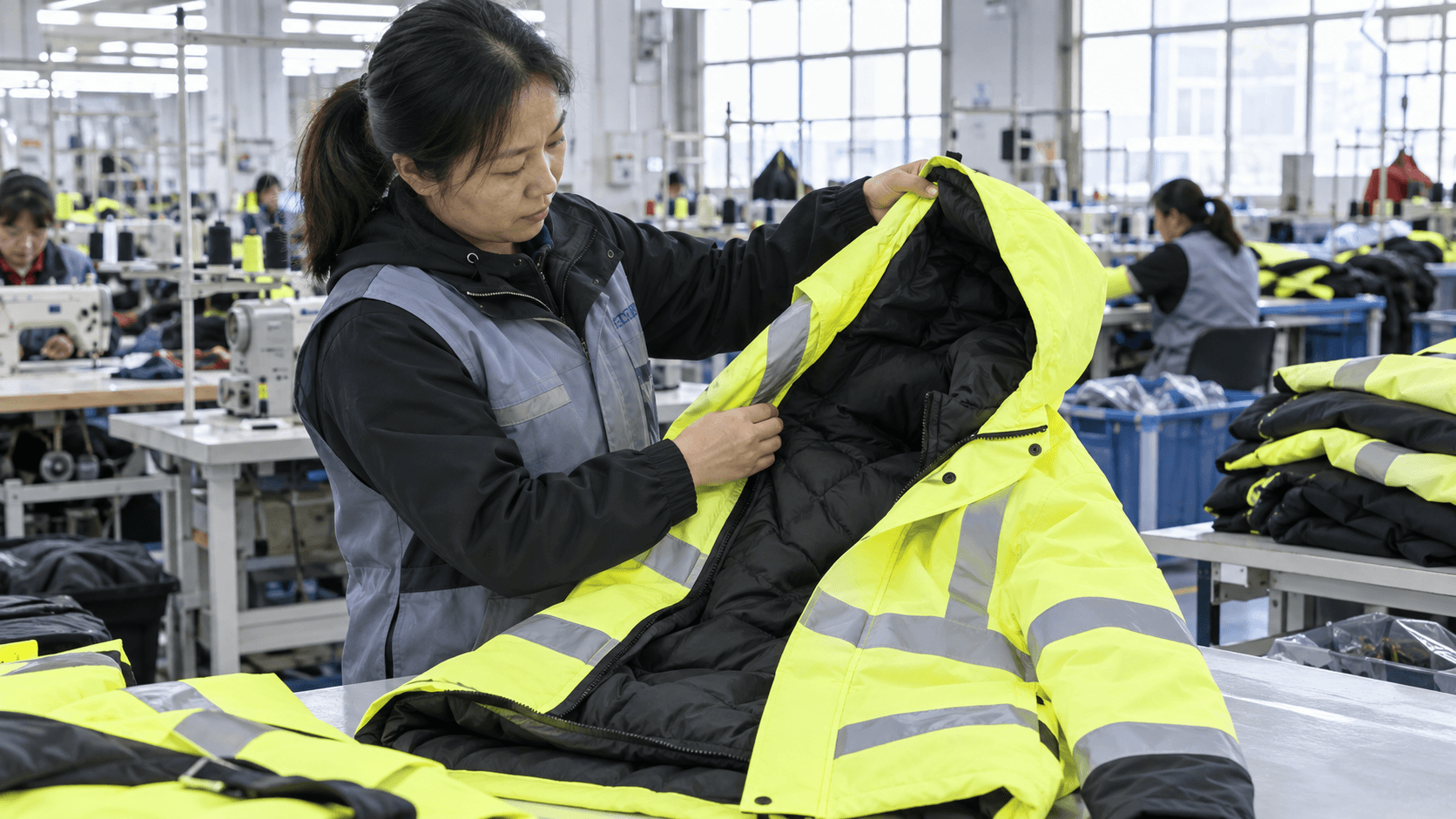
Illustrative image, not evidence of testing or a documented customer project. Procurement guidance does not replace product instructions or competent workplace assessment.
Primary topic: high visibility garment replacement criteria
Introduction
A high-visibility garment's approval is established for a specified product condition and configuration; it is not a promise that the garment will stay effective after unlimited washing, abrasion or contamination. Procurement needs a care and replacement plan from the first bulk order, particularly when garments are shared, laundered commercially or exposed to dirty outdoor work.
This guide is for buyers and site managers planning inspection, laundering and replenishment. It avoids a universal wash-count or subjective "looks okay" rule. Model-specific instructions, the required visibility classification and the site's risk assessment must guide withdrawal decisions.
Quick answer: Buy garments with clear care labels and exact-model instructions; record issuance; inspect fluorescent fabric and retroreflective material before use; launder as directed; and withdraw damaged, obscured or nonconforming garments under a documented site rule. Keep approved replacement stock by size.
Record what was approved and issued

The HSE PPE-use guidance discusses maintenance and replacement as part of correct PPE use. A buyer should keep model, size, visibility classification, care instruction revision, issue location and date. If trousers and jacket are required as a combination, record that relationship so a later swap does not silently alter the configuration.
The ISEA standards overview provides an entry point for North American high-visibility requirements. Different destinations may use other standards; retain the exact classification and country context in the purchasing record instead of writing only "Class 2" without a standard.
A simple issue log
Use fields for employee or team, garment model, size, lot or order, issue date, cleaning method, inspection outcome, repair authorization if any and withdrawal date/reason. A shared pool can be logged by location rather than person if the site's privacy and operations call for it. The important thing is to link replacement decisions to an identifiable product and reason.
Inspect three kinds of deterioration
First, examine the fluorescent background for fading, tears, stains or areas covered by dirt. Second, inspect reflective material for peeling, cracking, abrasion and missing bands. Third, check structural parts—seams, zips and closures—that affect whether the garment stays in the intended position. A vest that cannot close properly or a jacket with reflective bands hidden by a torn flap needs attention.
Do not use a phone flashlight as a formal retroreflectivity test. It can reveal obvious damage but cannot establish compliance. Follow manufacturer instructions and the site's criteria. The OSHA PPE overview places ongoing suitable use within the employer's protection program.
| Observation | Immediate action | Longer-term follow-up |
|---|---|---|
| Heavy dirt covering visible material | Clean according to instructions or exchange | Review task contamination |
| Torn or missing reflective band | Withdraw pending authorized repair/replacement | Check garment durability |
| Illegible care/identity label | Verify identity; do not guess classification | Improve issue records |
| Damaged closure | Withdraw if garment cannot stay properly worn | Review replacement stock |
| Repeated early failures | Preserve samples and lot data | Supplier quality review |
Avoid unapproved repair assumptions
Sewing on any reflective tape or patch may change the approved design. Ask the manufacturer whether a repair is permitted, which material and method must be used, and whether the repaired garment still meets the required classification. If this cannot be established, replace the garment.
Launder according to the product—not habit
Check maximum washing or cleaning conditions, drying method, allowed detergents and any stated service limit. Industrial laundry may use processes different from home washing. Provide the launderer with the specific instructions and segregate models with incompatible care requirements. Do not invent a universal number of wash cycles for every garment.
Keep an inspection point after laundering. Clean does not necessarily mean undamaged. A garment can emerge with cracked tape, distorted seams or reduced visibility. Conversely, dirt that can be removed safely does not always require immediate disposal. The plan should distinguish cleaning, authorized repair and withdrawal.
For wet-weather versions, examine water-protection elements as well. The high-visibility rainwear sourcing guide describes seam and closure questions that can affect the original purchase decision.
Mid-article CTA — Send Your Requirements: Share your garment model, work environment, laundry method and annual usage with PPEgen. Request care-document review and a replacement-stock quotation. Contact us.
Forecast stock by actual wear pattern
Different roles damage garments at different rates. A driver working mostly in a cab and a roadside crew working in mud may need different replenishment assumptions. Start with actual issue and withdrawal data by size and role, then adjust for lead time and seasonal demand. Do not claim an industry-wide replacement period without evidence.
An illustrative plan: one location finds the most common withdrawal reason is torn zipper seams, while another has heavy fluorescent-fabric contamination. The first may need a construction-quality review; the second may need a different cleaning or garment design. The observation drives the next RFQ rather than a generic reorder. This example is not a claim about PPEgen customers.
At shipment inspection, check approved model, size mix, reflective layout, labels and care instructions. Keep representative units and lot references to investigate premature deterioration. If a supplier changes fabric or tape, repeat the technical approval even when the price and style code appear unchanged.
Train users and supervisors
Workers should know how to wear the garment fully closed, avoid covering required visible areas, report damage and request replacement without penalty. Supervisors need a quick inspection guide and a supply route. If high-visibility PPE is required for a task, a damaged item should not be kept in service merely because the replacement is at another site.
Link the program to the high-visibility category for approved replenishment and the bulk PPE receiving checklist for lot-level intake control.
Make the withdrawal rule practical
A policy such as "replace when visibility is reduced" is too vague for a busy storeroom. Define who inspects, which conditions trigger immediate exchange, where the removed garment goes, and who decides whether a repair is allowed. Use model-specific instructions as the boundary. A short visual guide can show examples of severe dirt, missing reflective sections, torn background material, broken closures and altered trim. State that the guide does not replace required product guidance or a technical review of borderline cases.
Different defects call for different actions. A garment with removable mud may be cleaned and inspected again. A missing strip or an unauthorized repair may require withdrawal. A jacket whose zipper cannot stay shut may expose or displace the protective design. Train supervisors to record the observation before the garment is discarded so purchasing can identify recurring quality problems.
Shared garments need extra controls
Visitor vests, contractor stock and pooled jackets often have no named wearer. Assign ownership to the station or department, mark storage locations and inspect before reissue. Cleaning between users must follow site hygiene policy and garment instructions. Do not let the absence of a personal issue record become the absence of an inspection record. A pooled register can list model, size, location, clean/dirty status and withdrawal reason.
Store clean stock away from direct sunlight, crushing and contaminants as instructed by the manufacturer. A transparent bag may make a garment easy to identify but should not be treated as ideal long-term storage without checking product directions. Keep damaged garments visibly segregated so they cannot return to the rack during a shift change.
Use return data to improve the next order
At each review period, group withdrawal reasons by model, size and work area. If reflective tape fails mostly after laundry, examine the cleaning process and whether it followed the care label. If a particular size tears at the shoulder, inspect fit and design as well as material quality. If dirt is the dominant issue, evaluate whether a different garment construction or more frequent exchange is appropriate. These are diagnostic hypotheses; do not assign cause from a small sample without investigation.
Ask the supplier for documented change control on fabric, tape, thread, closure and factory process. Retain one approved sample or detailed photographs and specification for comparison. If a lot performs differently from previous deliveries, use the lot reference and inspection records to isolate it. A vague complaint that "the vests don't last" is much harder to resolve than a set of dated returns with observed defects and wash history.
Forecast by size and season. A generic annual total can conceal shortages in rare sizes or seasonal rainwear. Include reorder lead time, approval lead time for any replacement design and a safety reserve selected by the employer. If a custom-branded style is discontinued, run a fresh technical approval before using a visually similar alternative.
What to put in a supplier claim
Describe the exact model, lot, quantity affected, dates, care method, defect photos and any approved sample used for comparison. Avoid claiming a failed standard solely from field appearance unless appropriate testing supports that conclusion. Ask the supplier to investigate, identify affected stock and propose corrective action. Meanwhile, provide compliant replacement garments so the workplace is not forced to choose between visibility and operational continuity.
FAQ
Is there a universal wash-count limit for high-visibility vests?
No. Follow exact-product instructions and inspect condition. Different materials and care processes can behave differently.
Can any damaged reflective tape be sewn back on?
Not by default. Obtain manufacturer-approved repair instructions and ensure the required classification remains supported; otherwise replace the garment.
Is a clean garment automatically suitable for use?
No. Inspect reflective material, fluorescent background, seams and closures after laundering and before issue.
How should shared high-visibility stock be tracked?
Record model, size, location, cleaning and withdrawal events. A pooled log can work when personal issue is impractical, provided inspection ownership is clear.
What is the best reorder trigger?
Use actual issue and withdrawal data, required lead time, size distribution and buffer chosen for site risk. Do not rely solely on the number originally bought.
Should every soiled garment be discarded?
No. The care instructions and condition determine whether cleaning is appropriate. However, a garment that remains obscured, torn or otherwise unsuitable after cleaning should be withdrawn. The site should protect workers during the exchange by keeping approved spares. Do not use a fixed visual-distance test improvised by procurement as a claim of formal compliance. Record what was observed, what cleaning was attempted and who approved return to use.
How can a distributor support aftercare?
Supply clear model-specific care information with the order, provide consistent replacement SKUs and respond to reported lot defects with traceable investigation. A buyer may need care labels in the destination language and an explanation of approved repair, if any. The distributor should not promise a universal number of washes or a guaranteed service life without product-specific evidence. A transparent restock route and accurate documentation are more useful than an exaggerated durability claim.
What if a garment's label is no longer readable?
Use the issue record and model identity to decide whether its instructions and classification can still be established. If the garment cannot be identified reliably, hold it for review rather than inventing a class from its color. Future orders should specify durable, legible marking appropriate to the workplace and care method. A label that disappears after routine cleaning can create both a traceability and a supplier-quality issue.
For organizations using an external laundry, include the garment model and care restrictions in the service agreement. Ask how the laundry will segregate PPE from ordinary uniforms, record cleaning cycles where required and identify damaged pieces before they return to a wearer. A clean bundle returned to the depot should not automatically bypass inspection. If the laundry proposes a chemical or temperature change, review it against the maker's instructions before implementation.
If the site changes to a new high-visibility garment, train users and stores personnel on its labeling and care. Old and new designs may have different wash limits, repair policies or reflective placement. Mixed stock should be clearly identified until the earlier model is retired. Otherwise, a well-intended standardization project can accidentally apply one product's rules to another.
Should a buyer choose a single replacement date for all garments?
Not without product and site evidence. Different garment models, work environments and cleaning practices can produce different wear. A fixed review date can be useful as a reminder to inspect, but it should not replace condition-based withdrawal or a manufacturer's stated limit. A garment damaged early needs replacement before the calendar date; an older garment still needs evaluation under the applicable instructions rather than an automatic marketing claim that it remains compliant. Keep the policy clear to workers: they should report damage immediately, not wait for an annual exchange. Stock planning can use historical turnover while technical acceptance remains a separate decision.
Conclusion
High-visibility protection must be managed after purchase. Exact-model care instructions, simple inspections, documented withdrawal reasons and accessible replacement stock protect the integrity of the approved garment configuration. These records also improve the next buying specification.
Final CTA — Ask for Product Catalog: Send your work environment, garment sizes, care method and expected order volume to info@ppegen.com. PPEgen can provide model-specific options and a replenishment checklist.
BUYER RESOURCES
Continue your PPE sourcing research.
Explore relevant PPE categories and a primary safety reference alongside this guide.Use this source alongside destination-market requirements for the exact product and application.
READY TO DISCUSS YOUR REQUIREMENT?