BUYER'S GUIDE - 12 MIN READ
How Should Size, Fit, Adjustment and Comfort Be Assessed for Safety Gloves?
Editorial information, sources and corrections
Assess safety glove sizing, finger fit, cuff security and comfort through controlled trials, with a practical approval record for bulk purchasing.
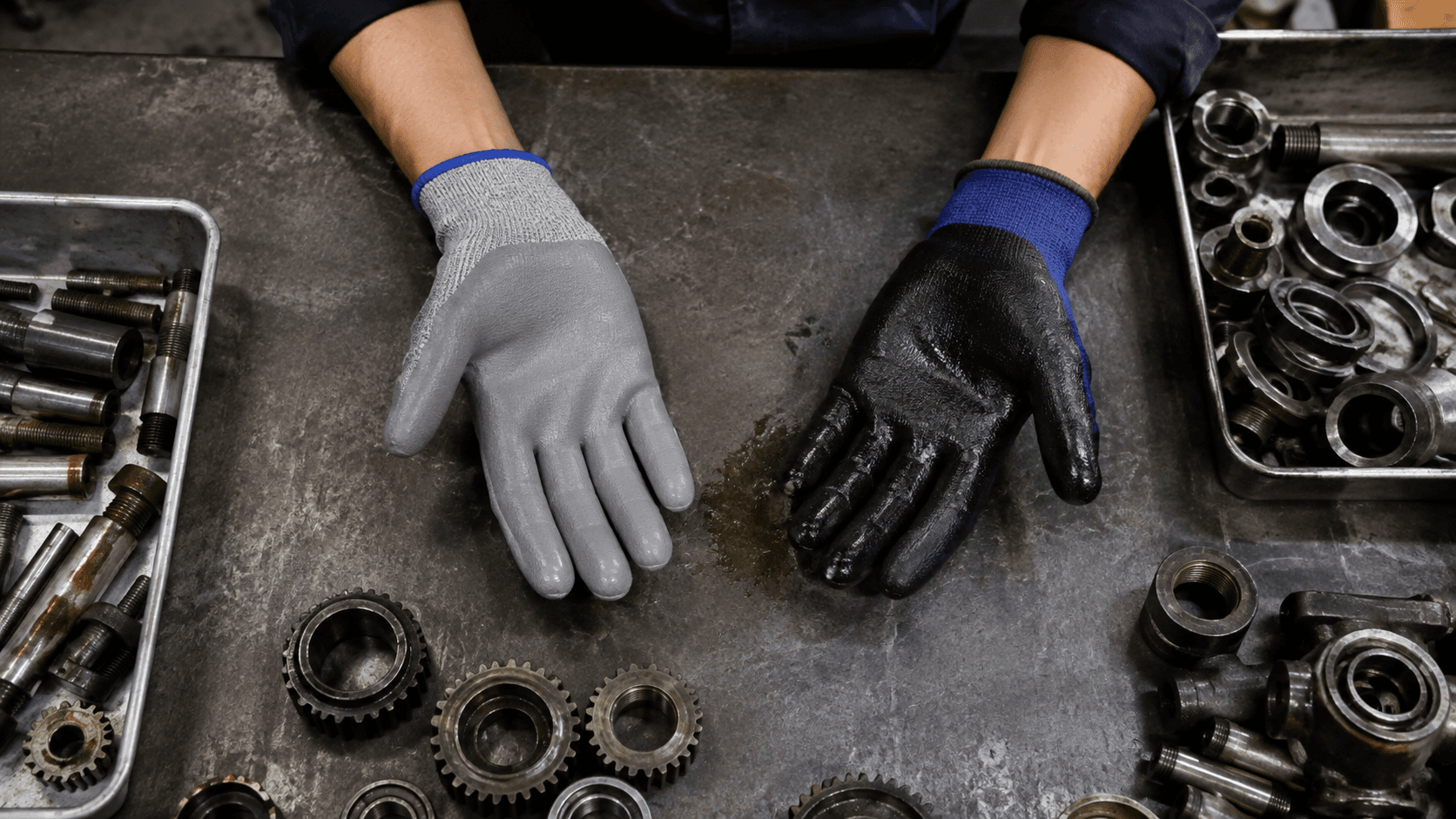
Illustrative image, not evidence of testing or a documented customer project. Procurement guidance does not replace product instructions or competent workplace assessment.
Primary topic: safety gloves size fit and comfort
Introduction
Safety glove fit should be assessed on representative users performing approved, controlled tasks, after the candidate glove has passed the protection review. Start with the manufacturer's size chart, then check finger length, palm fit, thumb movement, cuff security and practical handling. A size label alone cannot establish a good fit.
Comfort matters because repeated adjustment, excessive gripping and unnecessary removal can undermine correct use. However, comfort is not a substitute for protection. The best-fitting glove still needs the documented performance required for the assessed task, and a protective glove that cannot be used normally needs further review rather than forced acceptance.
This guide gives importers, distributors and workplace buyers a repeatable fit-evaluation process. It does not claim that any specific model suits every hand. The sample exercises are hypothetical and should use safe, inert props rather than deliberate exposure to sharp, hot, chemical or electrical hazards.
Understand why the same size can fit differently
Glove sizing reflects more than palm width. Finger proportions, thumb placement, knit stretch, coating stiffness, seams and cuff construction affect the final fit. Two gloves marked medium may behave differently on the same person, especially when their intended applications and materials differ.
A narrow palm with long fingers presents a different fitting problem from a broad palm with shorter fingers. Moving up a size may solve tightness while creating fingertip excess. Moving down may reduce excess but restrict thumb movement. The buyer should recognize when a different model is more appropriate than another size of the same construction.
Avoid assuming that the most common size is suitable for everyone. A bulk order based only on a standard carton ratio can leave smaller and larger hands poorly served. The required size range is part of product suitability, not a minor inventory preference.
Establish a protection gate before a comfort trial
The trial pool should contain only candidates reviewed against the task's protection requirements. Otherwise, participants may prefer a glove that feels excellent but lacks the necessary evidence. The trial organizer must explain that comfort feedback cannot approve an unsupported protective claim.
Prepare a short task statement, permitted activities and stop conditions. If the workplace assessment is incomplete, use only nonhazardous fitting exercises until the responsible person authorizes further evaluation. Never invite participants to test cut resistance with a blade or barrier performance with a chemical.
The hazard-based glove selection guide should precede this process. A fit trial answers whether an approved candidate can be used comfortably and effectively; it does not replace the original exposure assessment.
Measure consistently and use the supplier's chart
Ask the supplier which hand measurements its chart uses and how to take them. Use that method consistently. Record measurements privately and only to the extent needed for the fitting process; the purchasing team usually needs size demand rather than personally identifiable measurement records.
Do not invent a universal conversion between numeric sizes and small, medium or large labels. Keep the manufacturer's chart with the exact model reference. If different models use different charts, preserve both instead of forcing them into an assumed common size system.
Record model identity with every measurement
A useful fitting record includes model, size, version, sample identifier and wearer code. Without the model identity, feedback such as “large is too tight” becomes impossible to interpret across several products.
If the supplier revises the pattern or construction, the old fit record may no longer apply. Ask for change notification and evaluate whether the size distribution needs to be checked again. Retaining a dated chart and reference sample makes that discussion more objective.
Check the hand in several safe positions
Begin with the hand relaxed, then use ordinary movements appropriate to the approved task. Look for pressure, excess material, twisting and restriction. Do not force the hand into painful positions to prove a glove will stretch.
| Fit area | What to observe | Reason to investigate |
|---|---|---|
| Fingertips | Space and alignment during handling | Excess material catches or contact feels imprecise |
| Finger webs | Material position when fingers move | Persistent pulling or pressure |
| Palm | Smooth contact without excessive bunching | Glove shifts or requires repeated adjustment |
| Thumb | Comfortable reach and opposition | Restricted grip or seam pressure |
| Cuff | Stable position with the intended sleeve | Slipping, pressure or coverage gaps |
| Overall movement | Normal approved handling | User removes the glove to complete routine steps |
These are observation prompts, not universal dimensional limits. The acceptable fit depends on the product and task. Record why a concern matters instead of inventing a single millimeter allowance for all gloves.
Examine both hands
Users may notice different fit on each hand. Check both, particularly when the task assigns different roles to the dominant and supporting hand. A glove that feels acceptable while holding a large object may be less suitable for precise manipulation on the other side.
If an individual cannot obtain a workable fit, escalate the issue through the site's process. Do not alter the glove by cutting, stretching aggressively or changing closures unless the manufacturer specifically permits the modification and the responsible reviewer approves it.
Evaluate cuffs and clothing together
Cuff fit is part of the complete arrangement. The glove should be assessed with the intended sleeves or other protective equipment, not only on a bare forearm in a sample room. Reaching and bending can reveal gaps or bunching that are invisible in a static photograph.
Follow the product instructions and task assessment for overlap arrangements. There is no universal rule that one cuff must always sit inside or outside every garment. The correct configuration depends on the exposure and compatible products.
For adjustable closures, check that users can operate them as intended without improvised modifications. Confirm that the closure stays secure during approved movements and does not introduce an equipment interaction problem. Adjustment should support fit, not conceal the wrong size.
Make comfort feedback specific and useful
“Comfortable” is too broad to guide a purchasing decision. Ask about pressure points, stiffness, warmth, dampness, seam irritation, finger movement and the effort needed to maintain a normal grip. Record when the concern occurred and whether it affected the task.
Separate a first impression from feedback after an appropriate controlled period. A glove may feel soft immediately but shift during repeated handling; another may initially feel unfamiliar yet fit well once correctly donned. Neither observation should override a safety concern or extend use beyond approved conditions.
HSE's skin-at-work guidance provides context for managing occupational skin problems. Persistent discomfort, irritation or other symptoms should be handled through the workplace health process, not diagnosed by a glove salesperson or dismissed as something workers must tolerate.
Avoid turning preference into a performance claim
Worker feedback is valuable evidence of usability in the evaluated task. It is not a laboratory certification. Describe findings accurately: “Several participants reported pressure at the thumb seam” rather than “the model fails ergonomic standards” unless appropriate evidence supports that statement.
Likewise, a preference for one coating does not prove superior protection. Keep the fit scorecard separate from the technical evidence sheet and use both in the final decision.
Request a glove sample and sizing discussion with PPEgen. Share the task, current model, difficult size ranges and intended clothing combination. We can help organize a comparison for a controlled wearer trial.
Design a small but representative wearer trial
Include users with different hand proportions and relevant work patterns rather than choosing only the purchasing manager. Give each participant the same instructions and a simple feedback sheet. Where practical, compare candidates in a balanced order so the first sample does not receive an automatic advantage.
Use safe tasks that represent necessary movements: sorting smooth inert parts, operating an approved stationary control mock-up or handling intact packaging. The responsible site team should decide which real work activities, if any, are suitable for the trial.
The work-glove wearer trial protocol provides additional structure for recording observations. Keep the model and size visible in the record, and stop an individual's trial when discomfort or an unexpected problem requires review.
Hypothetical example: long fingers and a narrow palm
A fictional packing team finds that one glove size fits the palm but leaves pressure at the fingertips. The next size removes that pressure but bunches during handling. Ordering the larger size for everyone would not solve the underlying pattern mismatch.
The buyer compares a second approved model with a different fit profile and records the results. The outcome may be a better primary model or an approved alternative for a subset of users. The example illustrates a decision process; it does not imply that any one brand has a superior universal fit.
Assess liners and seasonal combinations as a system
If an inner liner is proposed, evaluate the complete combination. Added layers can change finger movement, cuff behavior, grip and the effective fit of the outer glove. Do not assume that buying one size larger preserves protection or usability.
Document the exact liner and outer model, sizes and intended conditions. Confirm compatibility with the relevant instructions and assessment. A combination that works for one wearer may need a different size arrangement for another.
Seasonal changes also require thought. Users may report different comfort in warm or cold conditions, but adjustments should remain within the approved protection requirements. Do not remove a needed layer or substitute an unreviewed glove solely to address discomfort.
Convert trial results into a size curve
The size curve should reflect the evaluated user population and operational needs, not a generic supplier ratio. Record the expected demand by approved model and size, then distinguish normal stock from a reasonable contingency quantity. Review the distribution as staffing and tasks change.
Avoid counting only the sizes initially requested. Participants may have selected familiar labels before the fit review. Use the approved result, and note any users who require an alternative model rather than a different size.
At issue points, label stock clearly and provide a route for fit problems. If a worker receives an unsuitable size because the correct one is temporarily unavailable, the procurement plan has failed operationally even if the original sample approval was sound.
Protect fit consistency during repeat orders
Keep the approved sample, chart and relevant dimensional method together. Ask the supplier to notify changes to patterns, yarns, coatings or construction that may affect fit. Do not assume that an unchanged item number guarantees unchanged feel or dimensions.
Shipment inspection can compare visible construction and agreed measurements against the approved reference. Receiving staff should also flag unexpected size labels, mixed models or unusual stiffness. Such checks do not certify protective performance, but they can reveal deviations that need investigation before issue.
If complaints cluster around a particular delivery, compare batch information and retained samples before deciding that all users simply need another size. A controlled investigation is more useful than silently adjusting the next order's size ratio.
Document exceptions without losing control of the range
Some users may need an approved alternative even after the main trial is successful. Record the reason in terms useful for selection, such as unresolved finger-length mismatch or cuff interference, without collecting unnecessary personal health information. Refer medical or persistent skin concerns through the appropriate workplace process.
An alternative should have its own protection and fit approval. Do not let an exception become permission to buy any comfortable glove from a local shop. The issue record should identify the model, sizes, intended task and any restrictions just as clearly as the primary product.
Review whether the exception reveals a wider pattern. If several users with similar hand proportions cannot obtain a workable fit, the main model or size range may need reconsideration. If the concern is isolated, maintaining a controlled secondary option may be practical.
Tell supervisors how to request that option and how quickly it can be supplied. A clear exception route reduces pressure on workers to tolerate poor fit or make unauthorized modifications. It also gives procurement better data for future orders instead of hiding demand in emergency purchases.
FAQ
Should safety gloves fit tightly?
They should fit securely without unacceptable restriction, pressure or excess material for the approved task. “Tight” is not a universal target. Follow the model's sizing information and evaluate movement, grip and cuff behavior on the user rather than judging fit from appearance alone.
Can one size fit most workers?
Some products may cover a range of users, but that must be demonstrated for the intended application. Do not use a one-size purchasing policy to avoid evaluating smaller or larger hands. An adequate range is part of making the approved protection usable.
Should we buy a larger glove for better comfort?
Only if the larger size actually fits better. It may create fingertip excess, bunching or reduced control. Compare adjacent sizes and, when needed, another approved model. Increasing size is not a universal solution for discomfort caused by construction or hand proportions.
Can workers cut the cuff or fingertips to improve handling?
Do not permit improvised alterations as a fitting solution. They can change coverage and the product's intended performance. Refer the problem to the responsible reviewer and manufacturer, and evaluate an approved alternative rather than modifying the glove without authorization.
How many people should join a fit trial?
Use enough representative users to cover meaningful differences in hand size, proportion and task, rather than relying on an arbitrary universal number. Small teams may include everyone; larger sites can use a structured sample and a process for unresolved individual fit needs.
Does comfort feedback replace technical approval?
No. Fit and comfort are essential usability evidence, but protective performance and suitability require their own review. The final decision combines both. A comfortable glove without the required evidence should not be approved simply because trial participants prefer it.
Conclusion
Good glove fit is a repeatable purchasing process: review protection first, use the correct size chart, assess both hands and the complete clothing arrangement, and collect specific feedback during controlled tasks. Recognize when the problem is a model mismatch rather than a size mismatch.
Translate the results into an appropriate size curve, clear issue arrangements and repeat-order controls. That makes comfort and fit part of the approved product specification instead of an informal comment that disappears after the sample meeting.
Send PPEgen your glove fit and sizing requirements or email info@ppegen.com. Include the task, current size problems and expected user range so candidate samples can be discussed with a clear evaluation plan.
BUYER RESOURCES
Continue your PPE sourcing research.
Explore relevant PPE categories and a primary safety reference alongside this guide.Use this source alongside destination-market requirements for the exact product and application.
READY TO DISCUSS YOUR REQUIREMENT?