BUYER'S GUIDE - 12 MIN READ
How to Run a Work Glove Wearer Trial Before Bulk Purchasing
Editorial information, sources and corrections
Plan a controlled work glove wearer trial with task records, fit checks, feedback, stop rules and a clear purchasing decision before bulk ordering.
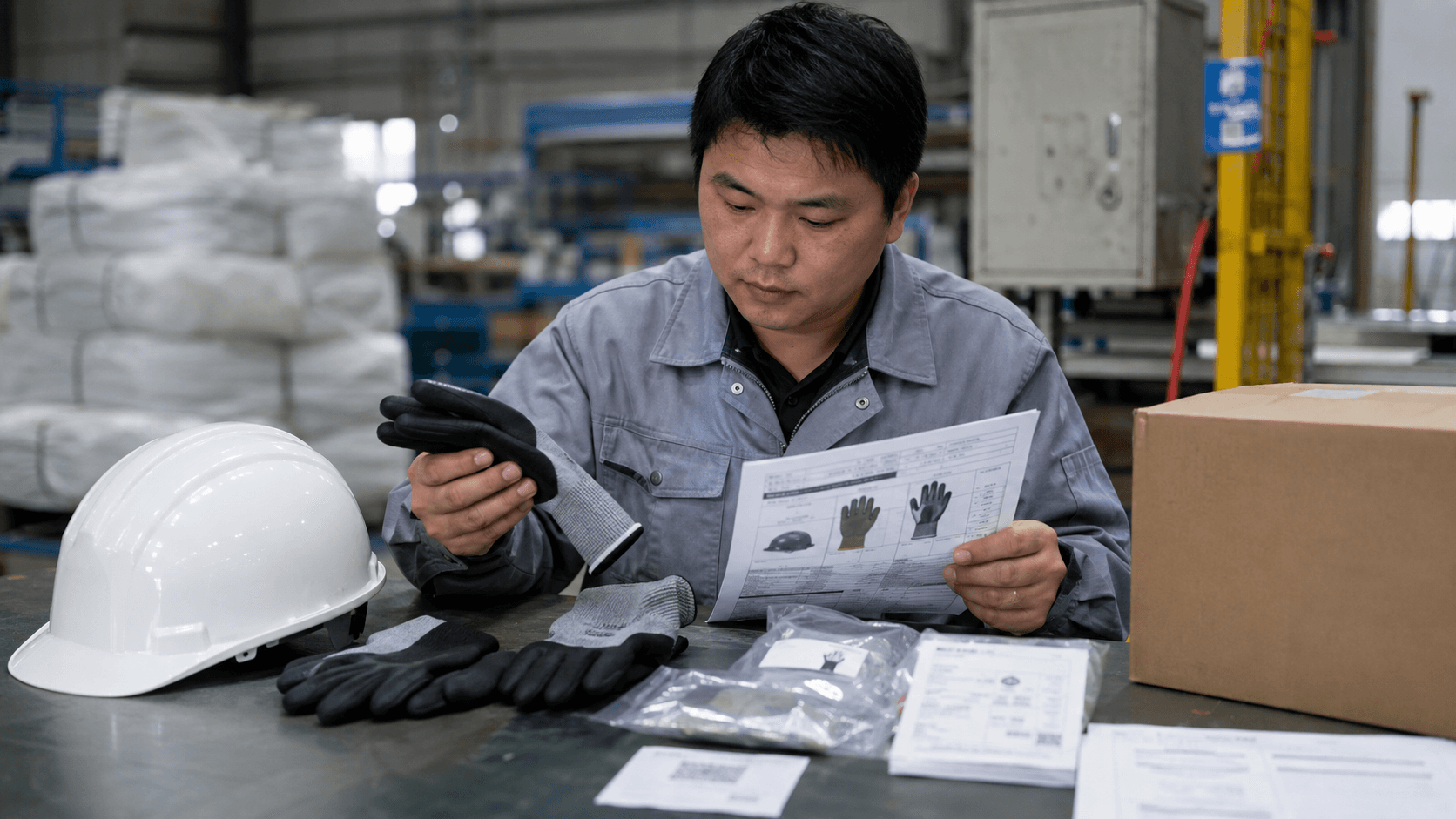
Illustrative image, not evidence of testing or a documented customer project. Procurement guidance does not replace product instructions or competent workplace assessment.
Primary topic: work glove wearer trial
Introduction
Quick answer: A work glove wearer trial compares fit and task usability only after the candidate products have passed the necessary suitability review. Record the task, approved conditions, wearer size, product identity and reasons for stopping. Do not use workers to discover cut, puncture, chemical or electrical protection limits.
A work glove wearer trial should answer a narrow question: among products already judged suitable for the hazard, which option works best for the actual task and workforce? It should not expose employees to uncontrolled hazards to discover a glove’s protective limits. Laboratory evidence, employer assessment, and manufacturer instructions remain separate requirements.
For a buyer, the most useful trial produces a repeatable record of fit, grip, dexterity, comfort, condition, and user acceptance. A collection of enthusiastic comments is not enough. Nor is a single photograph of a glove after one shift.
This guide proposes an operational trial framework for industrial buyers. It is not a certification method or a substitute for competent workplace safety review. The example results are hypothetical, and no claim is made that PPEgen has conducted the described exercise.
Define the purchasing decision first
Start with the problem that prompted the trial. Perhaps workers remove bulky gloves for small-part handling. Perhaps one size repeatedly causes fingertip excess. Perhaps a distributor needs to compare two approved coatings for a customer’s dry assembly task. Each problem calls for a different observation plan.
Write a decision statement before samples arrive. For example: “Select an approved glove model and size range for manual handling of identified dry components, subject to the site’s assessment and documented exclusions.” This is more useful than “find the best glove,” which encourages people to compare unrelated features.
Record what the trial will not answer. A short supervised trial cannot prove long-term durability across all seasons. User preference cannot establish chemical breakthrough performance. A successful touchscreen interaction does not demonstrate electrical protection. Making these boundaries explicit prevents trial results from becoming exaggerated sales claims later.
The employer’s hazard review should precede candidate selection. OSHA’s PPE assessment guidance describes assessment as the basis for determining PPE needs. The trial framework below is original purchasing guidance layered on top of that prerequisite, not a restatement of a regulatory test.
Choose comparable candidates
Ask for each candidate’s exact model, size range, materials, relevant performance evidence, instructions, and limitations. Resolve missing information before allowing the candidate into the trial. If products serve different hazards, do not rank them in one unrestricted league table.
Use new, identifiable samples from a known source. Record sample batch or lot details when available. If the trial sample differs from planned bulk production, document the difference and decide whether the trial can support a purchasing decision at all.
Brand-blind evaluation can reduce preference bias for appearance or familiarity, but do not remove required markings or instructions. A coordinator can code the evaluation sheet while retaining the actual product identity in the controlled record. Participants still need enough information to use the product correctly.
Avoid giving one candidate a carefully selected size and another an approximate substitute. That tests the sample allocation process rather than the gloves. Obtain adequate sizes before scheduling the exercise.
Select representative tasks and participants
Break broad job titles into observable activities. “Warehouse work” can include picking cartons, scanning labels, opening packaging, handling sharp-edged components, and driving equipment. A glove suitable for one activity may be inappropriate for another. The site must determine which activities are within scope.
List the object being handled, surface condition, relevant tools, frequency, environmental conditions, and other PPE worn. Capture these facts without turning the worksheet into an unmanageable research project. The aim is to explain a result, not to create paperwork for its own sake.
Recruit users across the actual size range and task pattern. Include people who have previously reported fit problems rather than selecting only easy-to-fit volunteers. Obtain feedback privately where practical so participants do not simply follow a supervisor’s preference.
Do not prescribe a universal sample size or number of shifts. A buyer’s small operational pilot is not automatically statistically representative. The scope should be justified by the decision, the workforce variation, and the level of risk. If the decision has significant consequences, seek specialist support for the evaluation design.
Build a trial sheet people can complete
A practical sheet starts with participant code, task code, glove model code, size, date, exposure period, and environmental notes. Avoid collecting unnecessary personal information. The participant code should be enough to connect repeated observations without publishing employee names.
Separate objective observations from subjective ratings. “Could pick up the specified component without removing gloves” is an observation. “Comfort rated four out of five” is a personal assessment. Both can be useful, but they should not be presented as equivalent evidence.
| Area | Example observation | Important limitation |
|---|---|---|
| Fit | Fingertip excess interfered with the task | Applies to this user and size |
| Grip | Object slipped during the defined handling sequence | Investigate conditions, not just coating |
| Dexterity | User completed the supervised small-part task | Does not prove protection |
| Comfort | User reported pressure at a seam | Subjective but operationally relevant |
| Condition | Visible wear location photographed | Not a laboratory performance result |
Use a short rating scale with definitions. If “acceptable” means the worker can complete the task without adjustment, state that. Otherwise one participant’s three may mean “good enough” while another’s three means “unacceptable.”
Add open questions
Ask what caused the worker to adjust or remove the glove, where discomfort occurred, and which task was hardest. Open comments often explain a low score better than another numerical column.
Also ask whether anything changed during the session. A new component finish, wet packaging, or an unfamiliar tool can affect the result. Recording the change helps prevent an unfair product comparison.
Set stop rules before the trial begins
Stop the activity if the glove is damaged, the user experiences an adverse reaction, the task changes beyond the approved scope, or the supervisor identifies an unsafe condition. The exact rules should be set by the site’s competent personnel and manufacturer instructions.
Never ask workers to deliberately contact sharp blades, energized equipment, hot surfaces, or hazardous chemicals to “prove” the glove. Protective performance should not be demonstrated by putting a person at risk. Arrange any required technical testing through appropriate qualified facilities.
Make the reporting route simple. Participants should know whom to contact and where to place a withdrawn sample. A worker should not need to finish a shift to generate a useful data point.
The trial coordinator should record the stop reason without automatically blaming either the glove or the wearer. A stop may reveal an unsuitable size, an incorrect task definition, a product problem, or an uncontrolled workplace condition. Those explanations require different corrective actions.
Keep the comparison fair
Where practical, have participants evaluate candidates under comparable approved conditions. Record order effects: a worker may perform better after learning a task, regardless of the glove. Alternating the sequence can help reveal that influence, although it does not turn a small pilot into a formal scientific study.
Do not compare a new glove with a heavily worn one unless replacement condition is the explicit question. Similarly, avoid comparing different exposure durations without recording them. A glove used briefly for demonstrations should not be credited with the durability of a full-shift sample.
Factory testing and wearer feedback should be stored as separate evidence types. A laboratory report may support a defined performance claim. A wearer trial may support task usability. Neither should be rewritten as the other.
Send your glove trial requirements, including the task, approved performance criteria, candidate sizes, and sample quantities. Start with the work glove product range and the sample approval checklist.
Analyze results without hiding exceptions
Summaries are useful, but an average can conceal an important failure. If most participants like a glove and one cannot obtain a safe fit, the purchasing decision may need an alternative size or model for that person. A high overall score does not remove the exception.
Group results by task and size before creating an overall conclusion. If one candidate performs well for dry handling but poorly when the approved task involves a damp surface, report that distinction. Avoid statements such as “best grip” without naming the conditions.
Look for patterns that require investigation. Repeated seam discomfort in one size could indicate a sizing issue. Repeated glove removal during one operation may indicate that the task needs a different solution. Isolated comments should not be dismissed, but they should not automatically become universal claims.
Agree weighting before viewing the scores. Otherwise the team can unconsciously change the scoring system to favor a preferred supplier. Safety eligibility should remain a gate, not a low-weight category that can be offset by attractive pricing.
A hypothetical buyer trial
Consider an importer supporting a customer that handles approved dry metal components. Two candidate gloves have passed the customer’s preliminary suitability review. Twelve participants across several sizes complete a supervised usability pilot.
Candidate A receives better comfort comments, but three participants report excess material at the fingertips. Candidate B receives slightly lower comfort ratings, but its available sizes fit those participants better. No conclusion about cut performance is drawn from the pilot; that question remains tied to the required evidence and assessment.
The purchasing team has several reasonable next steps. It could obtain additional sizes of Candidate A, evaluate a second approved model for affected users, or repeat a targeted fit check. Choosing Candidate A for everyone solely because its average score is higher would ignore an actionable result.
The final report might state: “Candidate A is preferred for the evaluated task among participants who achieved acceptable fit; additional sizing review is required before workforce-wide adoption.” That statement is less dramatic than “universally superior,” but much more useful.
Translate the trial into a controlled purchase
Once a model is selected, connect the decision to an approved specification, size allocation, and sample record. State which features were evaluated and which remain subject to incoming or shipment inspection.
Ask the supplier to identify changes affecting the approved construction. A trial of one liner, coating, or seam arrangement should not silently support a different bulk product. Use the cut-resistant glove selection guide for related product questions, while keeping the trial record specific to the actual model.
Agree a review point after rollout. Early feedback can reveal issues not visible in the pilot, particularly across shifts or task variations. A review does not mean the original decision was wrong; it recognizes that a limited pilot has limited coverage.
Retain a concise decision log: candidates considered, evidence checked, tasks evaluated, exceptions, decision owner, approval date, and review trigger. This record helps future buyers understand why a product was selected instead of restarting from a price list.
Turn feedback into a usable decision meeting
Bring the task owner, purchasing representative, safety reviewer, and trial coordinator together with the same evidence pack. Start with eligibility and unresolved fit issues before discussing preference or cost. This order prevents a commercially attractive option from shaping the interpretation of the technical findings.
For each candidate, ask three separate questions: is it eligible for the defined task, which users achieved acceptable fit, and what usability limitations were observed? A candidate can pass the first question while requiring another size or model for part of the workforce. The report should preserve that distinction.
Use a short decision table with the candidate, approved task scope, accepted sizes, unresolved issues, and next action. Do not hide a conditional approval in meeting notes while the purchasing system shows unrestricted approval. If additional samples are needed, identify who will obtain them and which question the next check must answer.
Before releasing the order, ask a person who did not attend the trial to read the decision. They should be able to identify the exact product and understand where the conclusion applies. If they interpret it as a universal recommendation, revise the wording. This simple independent reading helps prevent a carefully limited evaluation from becoming an exaggerated catalogue claim later.
Finally, preserve unsuccessful results as well as the preferred option. A future buyer considering the rejected candidate should be able to see whether the issue was fit, missing evidence, or an unrelated commercial constraint. That history avoids repeating an evaluation without understanding why the earlier decision was made.
Record what would trigger another trial
Define practical review triggers in the final report: a material or construction change, a new task, a different user group, or recurring fit feedback. Do not rerun the full exercise automatically for every routine order, but do not assume the original result applies forever. A targeted follow-up can answer the changed question while preserving the value of the earlier evidence.
FAQ
How should safety gloves for work enter a wearer trial?
Start with an approved task description and the employer's hazard review, then shortlist eligible products. Offer a useful size range before evaluating handling. A person who cannot obtain a suitable fit should not be counted as a routine trial participant simply to keep the test group a convenient size.
Can nitrile coated gloves and PU coated gloves be trialed together?
Yes, if both exact products are suitable for the assessed task. Compare their actual construction and evidence rather than assuming a coating name establishes protection. Keep task conditions consistent and record differences in fit or coverage that could explain the feedback independently of the coating material.
What should glove dexterity evaluation measure?
Choose safe, representative actions such as handling an approved component, using a permitted control or assembling a part. Record missed actions and adjustments as well as completion. Avoid sharp-edge demonstrations or other improvised hazard tests; usability observations cannot substitute for standardized protective-performance evidence.
How should glove trial acceptance criteria be agreed?
Write the decision rules before users see the alternatives. Separate required suitability and fit from preferences such as feel or color. Define stop conditions and who reviews exceptions. A product should not pass because its average satisfaction score hides a group that cannot use it appropriately.
Can a successful trial determine a universal replacement interval?
No. Results describe the evaluated users, tasks, products and conditions. Cleaning, contamination, damage and manufacturer limits still matter. Record the trial duration as context, not as a promised service life, and establish replacement decisions through the site's approved procedures and relevant product instructions.
Conclusion
The underlying product selection should also address the task and exposure factors in OSHA's hand-protection requirements. This reference supports the stated context, not certification of a PPEgen product.
A useful work glove trial is a controlled purchasing exercise, not a protection stunt. Its value lies in a clear question, suitable candidates, representative fit checks, recorded conditions, and an honest decision that preserves exceptions.
The strongest report is often a short, specific one: who evaluated which product, doing what task, under which conditions, and what still needs resolution. That is the evidence a purchasing team can carry into a bulk order.
Ask PPEgen about glove samples. Share the approved task scope, destination market, size range, and documentation needs so the sample discussion supports a meaningful evaluation.
BUYER RESOURCES
Continue your PPE sourcing research.
Explore relevant PPE categories and a primary safety reference alongside this guide.Use this source alongside destination-market requirements for the exact product and application.
READY TO DISCUSS YOUR REQUIREMENT?