BUYER'S GUIDE - 11 MIN READ
Metatarsal Guards vs Safety Toes: When Buyers Need More Foot Coverage
Editorial information, sources and corrections
Understand why a safety toe does not automatically protect the top of the foot. Compare integral and external metatarsal protection for bulk footwear buying.
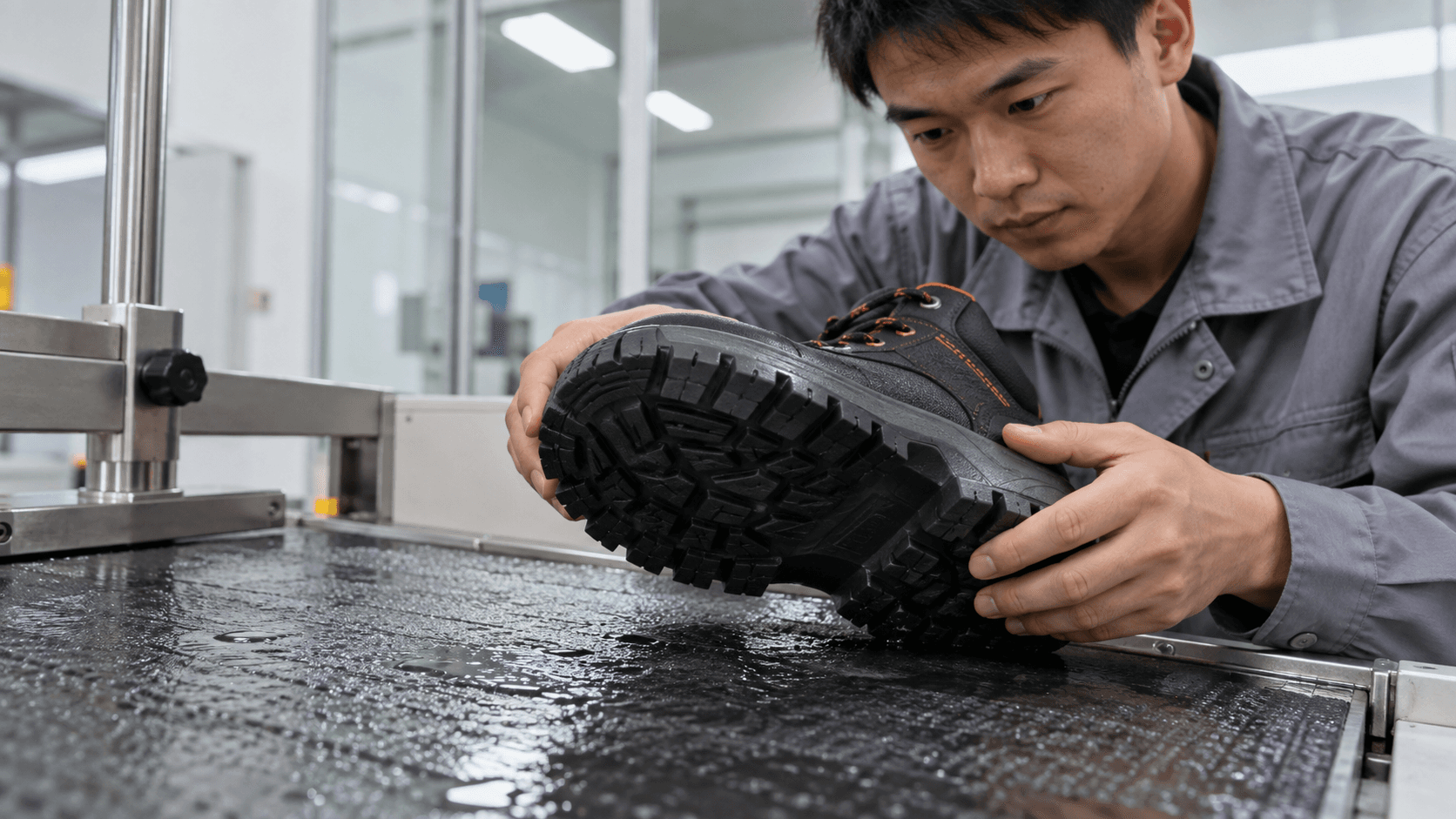
Illustrative image, not evidence of testing or a documented customer project. Procurement guidance does not replace product instructions or competent workplace assessment.
Primary topic: metatarsal protection vs safety toe
Introduction
Safety toes protect a defined front-of-foot area under applicable tests. They do not, by their mere presence, establish protection over the metatarsal region on top of the foot. A foundry, fabrication shop or material-handling operation may have a credible hazard from objects striking farther back than the toe cap. Procurement should not respond with "steel toe" as a complete specification before that risk has been assessed.
This guide explains the coverage distinction, how to compare integral and external metatarsal guards, and what buyers should record in a wearer trial and RFQ. It does not set one footwear solution for every workplace; the employer's hazard assessment and destination-market requirements control selection.
Quick answer: Specify toe and metatarsal protection separately when the task warrants both. Verify the offered model's exact protective marking and test evidence, inspect the coverage and attachment method, and trial mobility and fit. A conventional safety-toe boot should not be advertised as metatarsal protection without relevant evidence.
Locate the impact hazard
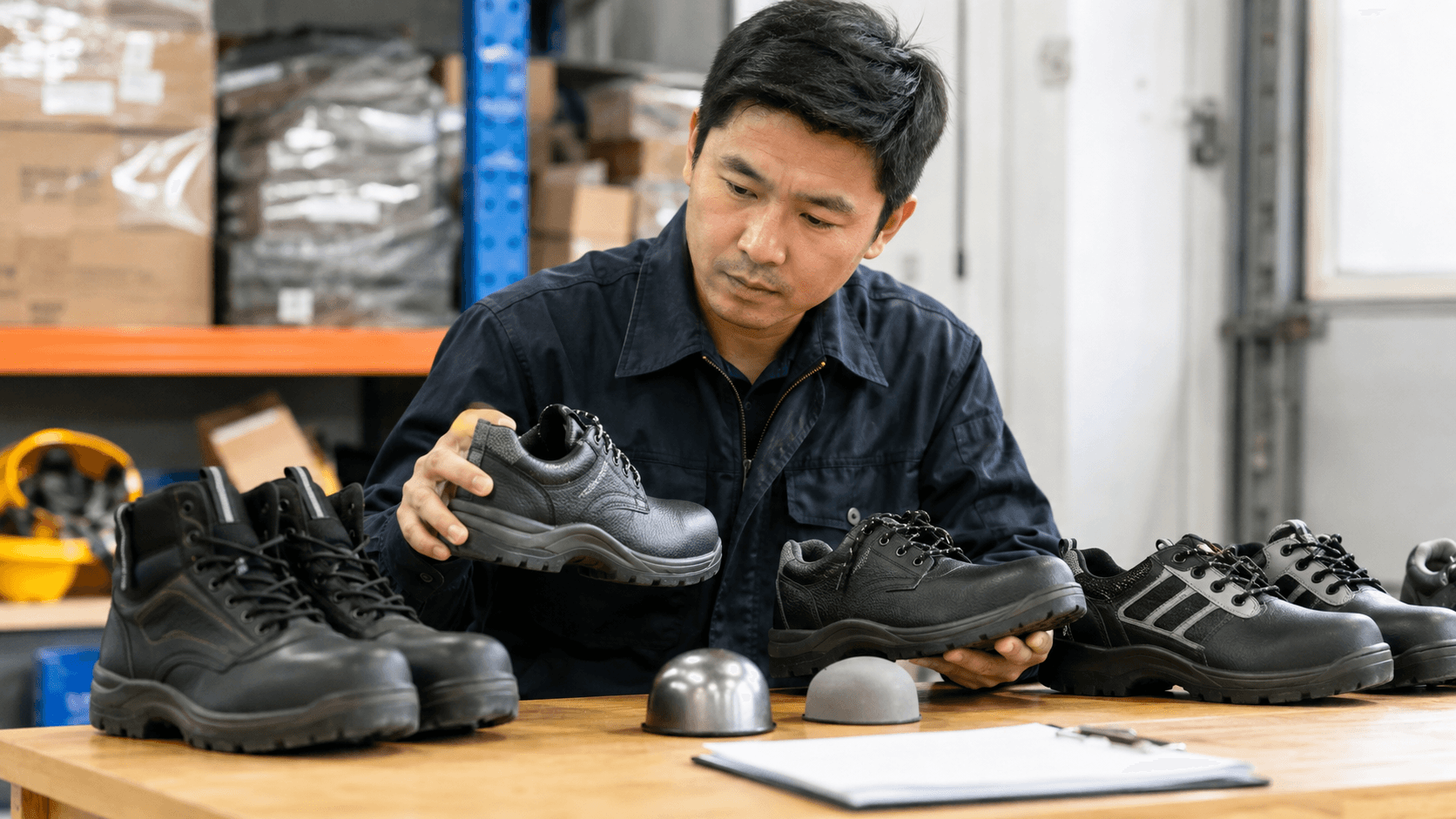
Ask what could fall or roll, from what position, and which part of the foot could be struck. The OSHA foot-protection rule requires protective footwear where falling, rolling or piercing objects create relevant hazards. OSHA's shipyard foot-protection guidance provides examples of foot and metatarsal considerations, though buyers must apply the rules relevant to their own workplace.
The hazard map should include the top of the foot, toe, sole and ankle rather than treating footwear as one undifferentiated barrier. A dropped bar may hit the metatarsal area; a protruding nail requires underfoot puncture assessment; a slippery floor needs suitable outsole performance. A boot can address some of these but not automatically all.
Distinguish designs
An integral metatarsal guard is built into the boot assembly. An external guard attaches over the laces or upper. Either may be appropriate if the complete configuration is approved for the needed standard and used as instructed. The practical questions are coverage, retention, mobility, durability and whether workers actually keep the guard correctly positioned.
External accessories must not be accepted solely because they fit over a boot. Ask whether the guard is intended and evaluated with the exact footwear or under the relevant accepted method. For integral designs, inspect whether the protective element covers the area identified in the hazard assessment and whether different sizes preserve intended fit.
Build the RFQ around separate claims
| Required characteristic | Why it is separate | Evidence/inspection |
|---|---|---|
| Safety-toe claim | Front-of-foot impact/compression | Exact model marking and standard |
| Metatarsal claim | Top-of-foot impact zone | Exact assembly result and instructions |
| Underfoot puncture | Sharp penetration through sole | Separate midsole claim if required |
| Outsole grip | Slip context differs by floor | Applicable evidence and safe trial |
| Fit and closure | Affects guard position and wear | Size-run wearer assessment |
The HSE PPE suitability guidance reinforces matching PPE to the wearer and the work. Request full size range, width options if available, weight, closure type, replacement parts and care instructions. A high-protection boot that causes persistent interference with ladders or pedals may need an alternative approved design.
Run a practical fit trial
Trial the footwear in a safe setting with representative wearers and the clothing normally used on shift. Check that toes have space, heel movement is controlled, the metatarsal guard stays in place while walking and kneeling, and the closure can be adjusted without defeating protection. If the guard catches on equipment or causes discomfort, record it. Do not solve the problem by removing an essential guard during the actual task.
Include a break-in and repeat-wear review where feasible. Examine whether the integral guard changes pressure when the upper flexes. For an external guard, look at strap or fastening durability, position after movement and the chance that it will be left in a locker. Trial results are qualitative operational evidence, not a substitute for protective testing.
Mid-article CTA — Send Your Requirements: Share the object-handling task, required foot claims, destination market and full size run with PPEgen. We can prepare a model-specific sourcing comparison for your technical team. Contact us.
Inspect samples and incoming stock
Approve a complete sample in each materially different configuration. Keep the model identifier, marking photos, guard part number where separate, test documents and instructions. On receipt, check representative cartons for the approved boot and guard, size mix, condition and fastening parts. A missing external guard is not a minor packaging defect if metatarsal protection was the reason for ordering.
If a supplier proposes a different toe-cap material or outsole, review whether the protective claims and fit still apply. "Same safety level" is too vague without product and method detail. The safety footwear size-conversion guide can help plan size labeling, while the footwear category is a commercial entry point.
Illustrative purchase decision
A maintenance team reports dropped small components near the toes, while a fabrication team handles heavy stock that can strike higher on the foot. One low-cut toe-only shoe may work for the first task but should not be assumed suitable for the second. The buyer records the different hazard zones, obtains technical sign-off and sources accordingly. This is a hypothetical process example, not a report of field performance.
Manage ongoing use
Train users to identify a displaced or damaged guard, keep fasteners secure and report impact events. Follow maker instructions for cleaning, replacement and withdrawal. Stock spare approved external guards if the manufacturer allows them; do not mix guards from different models without documented compatibility. Keep an alternative approved size or design for workers whom the primary boot cannot fit safely.
Document impact coverage at the task level
Before selecting an external or integral guard, draw or photograph the task setup and identify where an object could contact the foot. Does the load pass above the toe cap as a worker sets it down? Could a rolling cylinder strike the instep? Is there a pinch point near a pallet or machine base? Ask the site safety professional to identify realistic events without staging a hazardous drop. The description makes it easier to select the right protective zone and evaluate whether another control—handling aid, barrier or storage change—can remove exposure.
Write the toe, metatarsal and underfoot needs as separate rows in the RFQ. If only a toe claim is required, do not pay for an unsuitable extra guard out of habit. If metatarsal protection is required, do not award the bid on a toe certificate alone. If a customer uses a nonstandard term such as "full-foot safety," request clarification before pricing.
External guard integration
An external guard can be attractive when a site already has approved toe-protective footwear, but the complete combination still needs technical review. Check that the guard stays in the intended position as the wearer climbs stairs, squats and operates pedals. Confirm the fastening method and whether it can loosen or snag. Ask how the guard is cleaned, inspected and replaced. A cracked guard or missing strap should be withdrawn, not refastened with an improvised tie.
If several boot models are in use, do not assume one guard fits all. Build a compatibility table by boot model and guard part. A properly attached product on one boot may sit at the wrong angle on another. Keep instructions at issue points so a later replacement guard is not fitted based only on appearance.
Compare offers with a controlled size run
Metatarsal components can affect volume over the instep. Request a representative size set rather than extrapolating from one comfortable sample. Have workers wear their normal socks and move on safe versions of the surfaces they use. Record if the guard bends with the upper, presses on the foot or shifts during motion. If a worker needs a wider last or alternative closure, order the approved variant rather than forcing the wrong size.
Consider the whole shift. A five-minute fitting may miss pressure that appears after several hours, but a trial should still avoid exposing the worker to the impact hazard. Ask for repeat feedback under ordinary safe work conditions and check whether laces remain secured. Comfort observations improve the purchase decision; they do not replace protective tests.
Pricing should compare the complete protective system. Include the boot, integral or external guard, replacement straps where permitted, size exchanges, spare stock and delivery timing. An external accessory can look cheaper at purchase but be costly if it is frequently lost or incompatible with future footwear models. An integral design may simplify issue but be less flexible for changing tasks. These are site-dependent commercial factors, not universal performance rankings.
Receiving and replacement control
At receipt, record which lots contain integral guards and which contain separate accessories. Confirm that each external guard has the correct fasteners and instructions. Mark approved boot/guard combinations in the stock system. When a worker transfers to a different task or receives a replacement boot, recheck the metatarsal requirement rather than copying the old assignment automatically.
If a protective component takes an impact, follow manufacturer withdrawal guidance. Do not infer that it can absorb another impact simply because it still looks intact. Record the event, quarantine the unit and provide a replacement. A small incident log can inform future stock levels and handling controls.
FAQ
Does every safety-toe boot protect the metatarsal area?
No. Toe and metatarsal protection are separate claims. Verify exact-model markings and evidence for the area the task exposes.
Are external metatarsal guards always equivalent to integral ones?
No universal equivalence follows from design alone. Compare the complete approved assembly, attachment, coverage, fit and applicable test evidence.
Can a worker remove an uncomfortable guard?
If the hazard assessment requires it, removing it defeats the approved configuration. Report the fit problem and trial another suitable model or design with the safety team.
Does a metatarsal guard protect against nails underfoot?
Not by itself. Underfoot puncture protection is a separate requirement and needs its own evidence.
What should a bulk footwear buyer inspect first?
Match delivered model, markings, size mix and guard presence to the approved sample and order. Then inspect representative units for condition and correct fastening.
When could a separate metatarsal accessory be a poor choice?
If it does not remain correctly positioned during the actual task, catches on equipment, lacks compatibility evidence for the boot or is routinely removed due to discomfort, the accessory may not deliver the intended practical protection. The answer may be a different external design, an integral-guard boot or a change in the task. Procurement should record trial findings and take the decision back to the site safety lead, not silently delete the metatarsal requirement from the RFQ.
What should be included in a repeat-order review?
Compare the new boot and guard with the approved sample, confirm part numbers, check size and width availability and review any changes in user task or floor conditions. Look at withdrawal data: broken straps, pressure complaints and missing guards may point to different corrective actions. A repeat purchase can be faster than first approval, but only if product and hazard assumptions truly remain stable.
When a site has both visitors and permanent workers, the same metatarsal solution may not be practical for everyone. Temporary visitors may need controlled access to a task area rather than an improvised clip-on guard over ordinary shoes. The site safety team should decide access and protective requirements. Procurement can support it with approved size availability, loaner inspection records and fast replacement. Do not present a universal overshoe or accessory as a substitute for a task-specific footwear assessment.
If the boot also requires a puncture-resistant sole, record that as a separate claim and review the midsole comparison. This matters in scrap handling, where an object can strike the top of the foot or penetrate from below. One guard cannot be assumed to solve both pathways. The final approved outfit may involve several independently verified properties in one finished model.
Can the customer approve only one sample size?
A single size can establish some construction details, but it may not reveal fit or coverage issues across the complete size run. Request representative sizes, including the edges of the proposed range, and compare guard location, closure and wearer movement. If a large size uses a differently shaped guard or a small size has less room over the instep, ask for technical clarification. Record approved sizes and widths explicitly. A quotation that cannot supply the required workforce curve may be unsuitable even if the sample boot looks excellent.
When additional sizes are introduced later, treat them as a controlled extension of the approval. Check labels, model scope and fit rather than assuming that all size variants are identical beyond length.
Conclusion
The key question is where the hazardous object can strike. Safety toes and metatarsal guards address different foot zones; buying one should not imply the other. A task-based RFQ, evidence for the complete model and a practical fit trial make the purchase safer and easier to replenish.
Final CTA — Get a Quote: Send your foot-hazard description, sizes and quantity to info@ppegen.com. PPEgen can provide exact-model options and a documentation checklist for approval.
BUYER RESOURCES
Continue your PPE sourcing research.
Explore relevant PPE categories and a primary safety reference alongside this guide.Use this source alongside destination-market requirements for the exact product and application.
READY TO DISCUSS YOUR REQUIREMENT?