BUYER'S GUIDE - 9 MIN READ
PPE Quality Control Checklist: Factory Testing and Pre-Shipment Inspection for Importers
Editorial information, sources and corrections
Use this PPE quality-control checklist to verify approved samples, factory testing, labeling, packing, carton counts, and pre-shipment inspection.
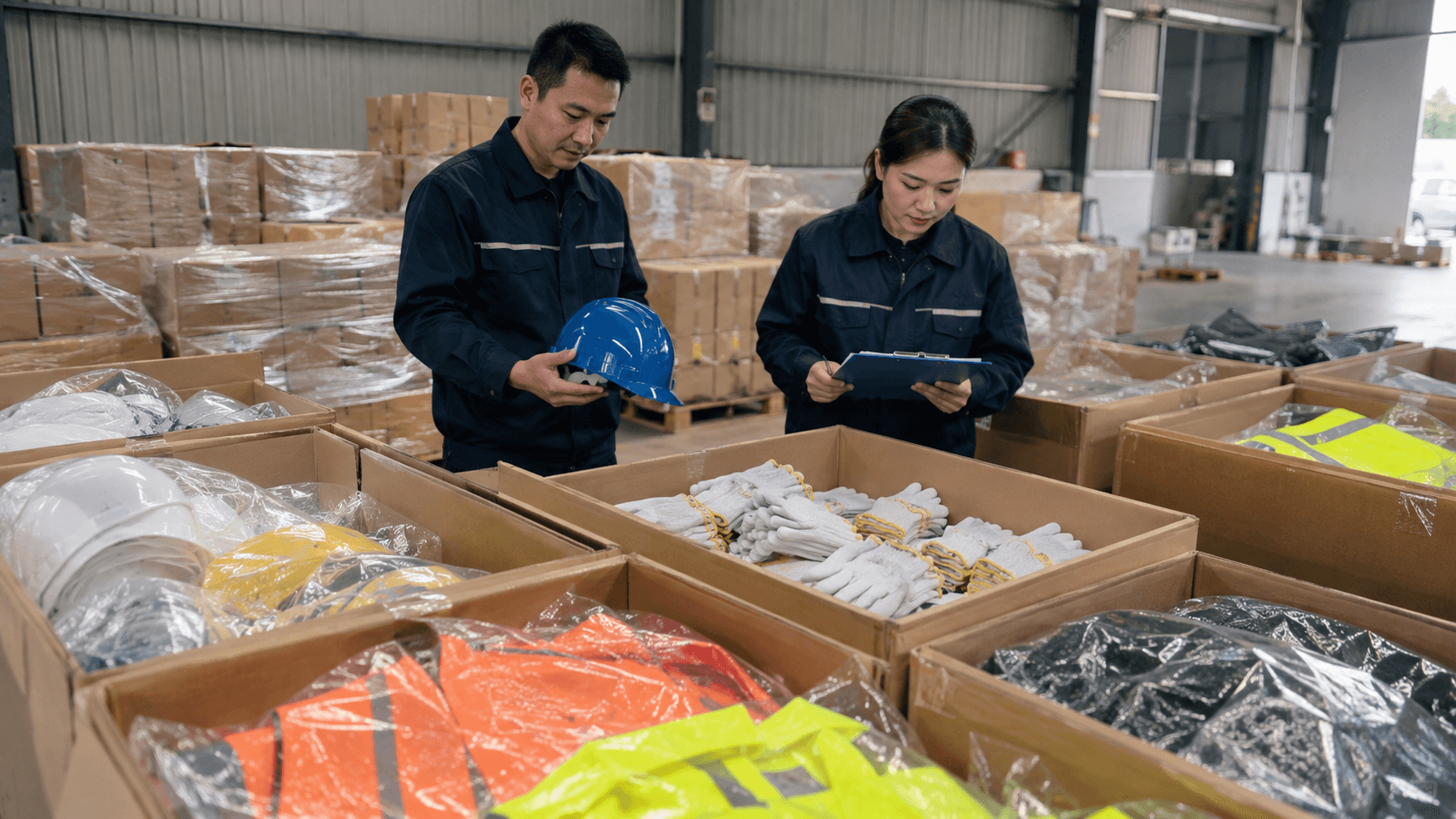
Primary topic: PPE quality control checklist
Introduction
PPE quality control begins before an inspector opens a carton. If the product requirement is vague, the test evidence does not match the sold model, or the buyer has not agreed the packing and labeling details, a final inspection can only discover problems late. The stronger approach is to build quality controls into the purchasing process from specification to loading.
For importers, the objective is not to create unnecessary paperwork. It is to confirm that the product released for shipment matches the purchase order, approved sample, applicable documentation, and customer-facing packing requirements. That protects both the buyer and the supplier by making expectations visible before goods are made.
Quick answer: an effective PPE QC plan controls the approved specification, incoming materials, in-process work, final product, labels and instructions, packing, carton marks, quantity, and the release decision before shipment.
1. Build a Control Plan Around the Exact Product

Generic inspection checklists cause generic results. A safety glove, hard hat, high-visibility vest, respirator, fall-protection component, and safety boot each have different critical features. Start with the product’s intended use, then identify the characteristics that must remain unchanged from the approved configuration.
Use the purchase order and approved sample to create a one-page control plan:
| Control item | Example for gloves | Example for high-visibility apparel |
|---|---|---|
| Model identity | Liner, coating, cuff, size marking | Fabric, reflective tape, garment style, size label |
| Performance claim | Applicable test/certificate reference | Applicable standard and material configuration |
| Workmanship | Coating coverage, holes, loose yarns | Seams, tape placement, stains, skipped stitching |
| User information | Marking and instruction language | Care label, size label, warning information |
| Packing | Pair count and inner-pack label | Fold method, polybag, size assortment, carton count |
| Traceability | Lot/date code where agreed | PO/style/size/carton link where agreed |
The plan should identify what counts as a critical, major, or minor issue for your business and who has authority to release or hold the order. Do not rely on verbal memory after weeks of production. If the customer needs a translated instruction, barcode, special carton mark, or retailer packing format, put the approved artwork revision into the order file.
2. Verify Compliance Documents Before Production Starts
The most expensive time to discover a document problem is after production. Before material is committed, review the documents and claims that will appear on the product, label, website, listing, or shipping file.
For market-regulated PPE, buyers should confirm that the product’s technical documentation and conformity route align with the exact intended model and destination. For example, EU PPE placed on the market is governed by Regulation (EU) 2016/425. The appropriate document set depends on the product and category; seek competent regulatory advice for the importer’s or distributor’s role.
Your pre-production document review should answer:
- Does the report or certificate identify the same construction we are ordering?
- Are the standard, result, and limitations stated correctly in the product specification?
- Is the document current and issued by the relevant body or laboratory?
- Do the product marking, user instructions, carton labels, and online claims agree with the documentation?
- What change-control step applies if material, color, component, or construction changes?
For respirators, be especially careful with claims. NIOSH explains that appropriate respirator selection depends on the workplace hazard and must be part of a complete respiratory protection program where required. A particulate filtering respirator is not automatically appropriate for gases, vapors, oxygen-deficient atmospheres, or every work environment. A factory check cannot transform an unsuitable application into a safe one.
3. Use Incoming-Material and In-Process Checks to Prevent Rework
Final inspection is a gate, not a manufacturing system. The best time to catch an incorrect yarn, fabric, shell, coating, reflective tape, buckle, label, or carton is before it becomes thousands of packed units.
Ask suppliers what they verify at each stage. The exact records may differ by product, but the controls should be understandable.
Incoming materials
An incoming check may confirm material identity against the approved bill of materials, appearance, color, dimensions, quantity, supplier label, or required test documentation. The buyer does not need to prescribe every factory procedure. The important point is that substitutions are not made silently.
First-off or pilot production
Before full production, inspect the first pieces against the approved sample. Confirm the product’s critical dimensions, construction, logo placement, marking, packaging, and any specific customer instruction. Photograph the review if visual configuration is important.
In-process control
In-process checks look for recurring defects while correction is still possible. For apparel, that may include tape position, seam construction, label placement, and garment measurement. For gloves, it may include coating coverage, cuff finish, size marking, and pair matching. For hard hats or molded products, it may include component assembly, surface condition, marking, and accessory fit according to the product plan.
Factory testing
“Factory testing” should be described precisely. It may mean routine dimensional or functional checks, visual inspection, batch sampling, or a formal laboratory test. Do not represent an in-house process check as a third-party certification test. If an order requires specific laboratory verification, agree the test method, sample source, laboratory, timeline, acceptance result, and who bears the cost before production.
4. Conduct a Meaningful Final Random Inspection
A final random inspection is strongest when the inspector has the right information: purchase order, approved sample, specification, artwork, packing list, inspection checklist, and acceptance criteria. The purpose is to observe a representative sample of the finished, packed goods—not to create a staged display of the best pieces.
Core final-inspection checks
| Area | What to inspect | Evidence to record |
|---|---|---|
| Quantity | Packed units, inner packs, cartons, and assortment | Count, sampling result, packing list comparison |
| Appearance | Color, workmanship, contamination, damage | Defect photos and classification |
| Construction | Agreed product-specific points | Measurement or functional-check result |
| Marking | Product label, size, warnings, logo, barcodes | Photos against approved artwork |
| Packing | Bag, inner box, carton, pallet, protection | Pack count, carton condition, dimensions/weight where needed |
| Documents | Report references, label/instruction revision, shipping marks | Revision and file check |
Sampling plans such as AQL can be helpful when buyer and supplier agree how lots, sample sizes, defect classifications, and acceptance numbers will be treated. However, AQL is not proof that every unit is perfect, and it does not replace a product-specific quality system. Use it as part of a documented release process.
Do not allow inspection staff to remove defects without recording what was found. A useful report tells you the lot, date, location, sample size, points checked, defects, photos, corrective action, and the final recommendation. If the order is held, the supplier should explain the rework and re-inspection plan.
5. Inspect Labels, Instructions, and Cartons as Carefully as the Product
Many import problems are not product failures. They are wrong labels, missing warnings, a mismatched standard claim, unreadable barcodes, mixed sizes, or incorrect shipping marks. These issues can delay receiving, create retailer chargebacks, or expose a distributor to a misleading product claim.
Create an artwork and packing approval list before production:
- Product marking and placement.
- Size label or size marking.
- User instructions, warnings, care information, and language versions.
- Brand logo and artwork revision.
- Barcode type, number, print quality, and scan check.
- Pair count, inner-box count, carton count, assortment, and carton mark.
- Country-of-origin mark, if applicable to your trade and customer requirements.
- Pallet, moisture protection, and loading arrangement where required.
During shipment inspection, open cartons from more than one location in the lot. Check that the inside agrees with the carton label and that the sizes or styles are not mixed. Where the buyer has a specific retailer label, scan a sample barcode with the intended system or use a documented scan verification before the order is released.
6. Prepare for Container Loading and Post-Shipment Traceability
Container loading is an operational control, not simply a logistics event. If your agreement includes loading supervision, check container cleanliness, dryness, condition, carton count, loading sequence, pallet condition, and the seal number. Photograph the container before loading and the final loaded condition if that is part of your procedure.
After shipment, keep a compact order dossier:
- Purchase order and approved specification.
- Approved sample and artwork references.
- Relevant documentation and test references.
- Production or final inspection report.
- Packing list, carton/pallet details, loading record, and shipping documents.
- Any corrective-action record or deviation approval.
This file improves response time if a customer reports a size issue, missing instruction, damaged carton, or suspected product variation. It also makes reordering easier because the buyer can retrieve the exact approved configuration rather than starting from an old email chain.
7. Common QC Mistakes Importers Can Avoid
Inspecting only after the balance payment is due
Set inspection timing and release conditions in the order terms. The buyer needs time to review findings and the factory needs time to correct verified problems.
Approving a sample without preserving the specification
Photos alone are not enough for a technical product. Record material, construction, size, color, label, packing, and document references.
Treating every defect as cosmetic
An incorrect warning, size mark, standard claim, or product component may be more serious than an appearance issue. Define critical and major defects for the product and market.
Confusing a test report with a shipment inspection
A type test supports a specific performance claim. A shipment inspection checks finished order conformity. Both may be needed; neither substitutes for the other.
Ignoring the user’s application
OSHA notes that fit, care, maintenance, limitations, and proper use matter. Product acceptance should not be separated from the real workplace task and the information the end user receives.
FAQ
What is included in a PPE pre-shipment inspection?
It normally checks quantity, workmanship, product-specific features, labels, instructions, packing, carton marks, assortment, and visible shipping condition against the approved order information. The exact checklist should be tailored to the PPE category and customer requirements.
Is factory testing the same as certification?
No. Factory testing can mean internal process checks, dimensional verification, functional inspection, or batch sampling. Certification or third-party testing follows a defined external process. Ask the supplier to name the method, laboratory or function, sample, date, and result rather than using broad terms.
When should an importer inspect PPE?
Review documents before production, confirm initial output for private-label or complex orders, monitor in-process risk where appropriate, and inspect the finished goods before shipment. The right timing depends on the order value, product risk, supplier history, and customer requirements.
Can AQL guarantee that there are no defective items?
No. AQL-based inspection is a statistical sampling approach. It provides a defined acceptance decision for a lot; it does not inspect every unit or guarantee zero defects. Agree the plan and defect definitions in advance.
Conclusion
PPE quality control works best as a chain of evidence: approved requirements, product-specific documents, controlled materials, first-off confirmation, in-process checks, final inspection, packing verification, and traceable shipment records. A buyer who defines this chain early reduces late surprises and gives both the factory and inspection team a clear release standard.
CTA: Request a PPE QC and Shipment Checklist
Tell us the product category, target market, expected order quantity, and packing format. We can provide a practical inspection-point list to help you prepare a more complete RFQ, sample approval, and pre-shipment review.
Recommended references
- OSHA: PPE overview
- OSHA: PPE selection and reassessment guidance
- NIOSH: Respirator selection and use
- EU Regulation 2016/425
BUYER RESOURCES
Continue your PPE sourcing research.
Explore relevant PPE categories and a primary safety reference alongside this guide.Use this source alongside destination-market requirements for the exact product and application.
READY TO DISCUSS YOUR REQUIREMENT?