BUYER'S GUIDE - 4 MIN READ
Fall Arrest Harness Inspection Checklist: What Buyers and Safety Teams Should Verify
Editorial information, sources and corrections
Use this fall arrest harness inspection checklist to plan supplier qualification, pre-use checks, periodic inspection, traceability and shipment acceptance.
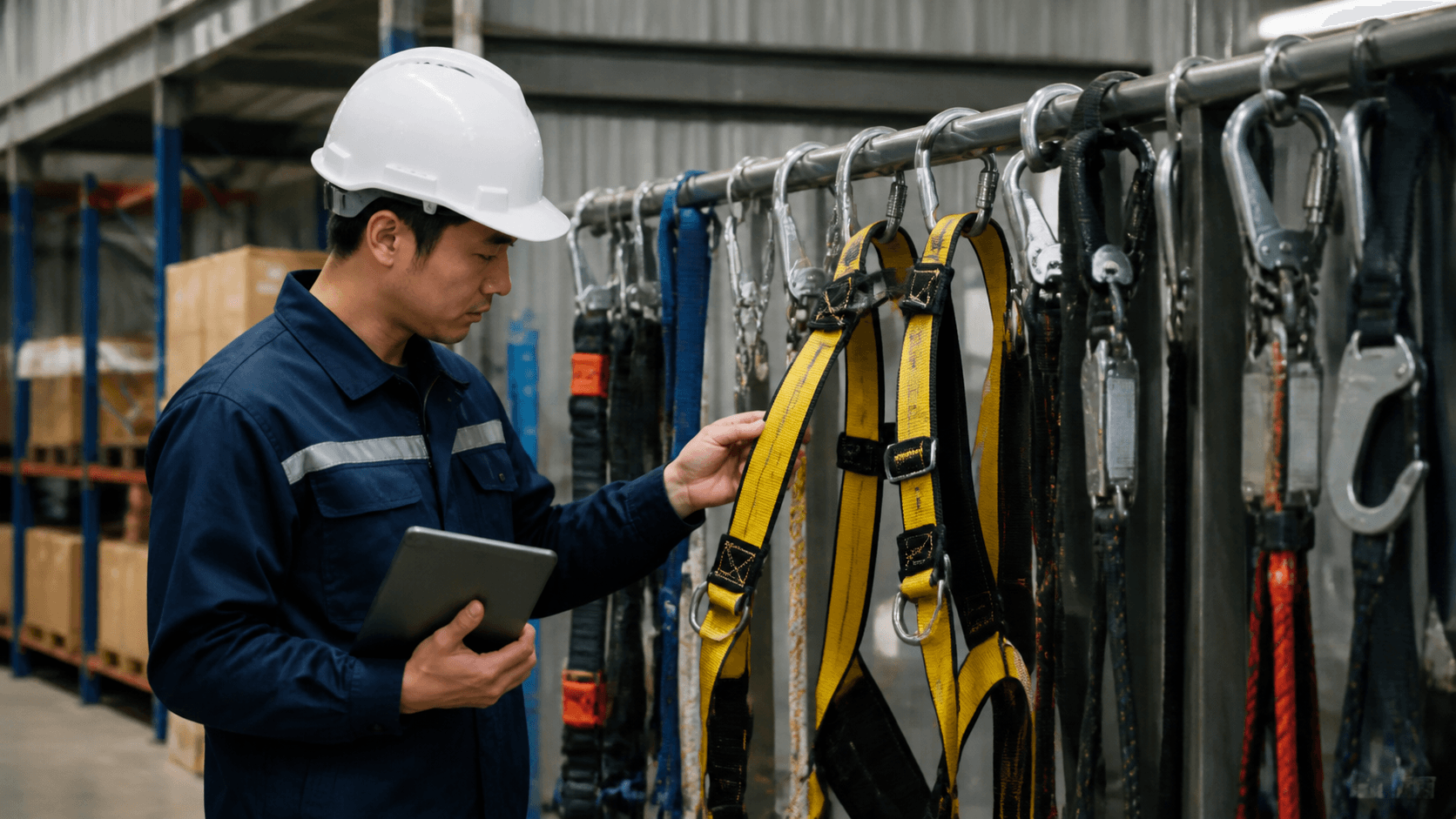
Primary topic: fall arrest harness inspection checklist
Introduction
A fall-arrest harness is safety-critical equipment, so a product photo and a generic certificate are not enough for responsible procurement. The buyer needs a defined system requirement, traceable product identity, appropriate instructions and a documented inspection regime. A harness is only one part of fall protection: anchorage, connector, lanyard or self-retracting device, rescue planning and user training must work together.
Quick answer: Define the complete fall-protection system and destination standard first. Approve an identifiable harness configuration, then inspect webbing, stitching, hardware, labels, compatibility, packaging and lot traceability before shipment. Users must also perform checks and follow the employer’s competent-person inspection regime.
Start with the system, not the harness alone
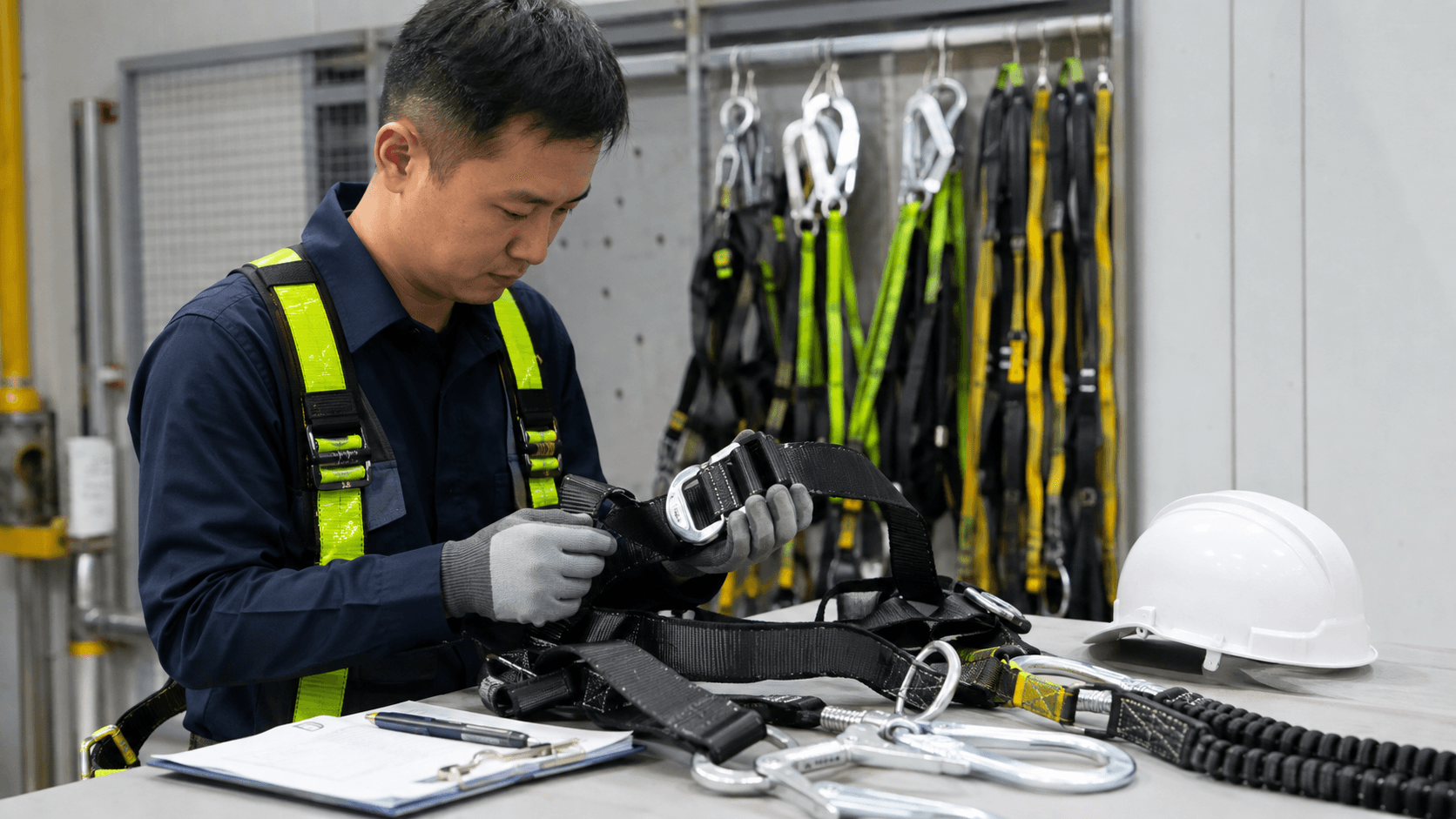
The same harness can be configured for fall arrest, restraint, work positioning or rescue depending on the system and approved attachment points. The specification should state the intended application, user range, compatible connectors and any project standard. Never describe a harness as a universal substitute for a full fall-protection plan.
The UK HSE’s fall-arrest equipment inspection guidance explains that inspection regimes should be used for webbing or rope fall-arrest equipment. It also makes clear that the principles apply more broadly to harnesses and lanyards. Follow the applicable local law, manufacturer instructions and a competent person’s assessment.
| System question | Buyer action |
|---|---|
| What work is performed at height? | Define fall arrest, restraint, positioning or rescue need. |
| Which market and project rule applies? | State the required standard, edition and documentation. |
| Which connectors are used? | Confirm compatible hardware and attachment arrangement. |
| What happens after a fall? | Require a rescue plan; suspension after a fall is an emergency. |
Pre-use checks and periodic inspection are different
Users should inspect their harness before use in line with training and manufacturer instructions. A competent person may conduct more detailed periodic examinations at intervals set by regulation, risk, environment and the manufacturer. HSE notes that inspection frequency can vary with conditions, and that deterioration or events that could jeopardise safety may require reinspection.
Practical pre-use check points
- Look for cuts, fraying, abrasion, burns, chemical damage, stiffness or contamination in webbing.
- Check stitching for broken, loose, pulled or discoloured threads.
- Examine D-rings, buckles, adjusters and connector interfaces for deformation, corrosion, sharp edges or poor function.
- Verify labels and serial/lot identification remain legible where required.
- Remove from service after a fall or when damage, missing records or doubtful condition is found; follow the manufacturer’s process.
This checklist is not a substitute for equipment instructions or competent-person training. A buyer should ask the supplier to provide clear, market-appropriate instructions and traceability records with the product.
Factory testing and shipment inspection
For a B2B order, set two controls. First, confirm product conformity evidence for the exact harness model and intended market. Second, inspect the manufactured order against an approved reference. The final inspection can include:
- Correct harness model, webbing colour, attachment-point configuration and size range.
- Webbing condition, stitching pattern, hardware finish and buckle operation.
- Label content, unique identifier or lot code, instructions, warnings and packaging language.
- Packing: individual bag, instruction insert, box count, carton label and shipping marks.
- Sampling plan, photos, finding log and corrective-action response before release.
Factory testing must be understood precisely. A type test supports a defined product claim; it is not proof that every packed harness was made from the approved webbing and hardware. Ask how the factory controls incoming components, production lot identification and nonconforming products. If the supplier proposes a webbing, stitching, hardware or attachment-point change, stop production for a technical and customer review.
Procurement records that prevent disputes
Keep a file per SKU: approved drawing, bill of materials, standard evidence, labels, instruction file, sample approval, inspection criteria, shipment report and change approvals. These records are valuable when a distributor needs to answer a customer’s question months after delivery.
For general supplier evaluation, use our reliable PPE supplier guide. For carton counts and delivery release, apply our pre-shipment inspection checklist with fall-protection-specific checkpoints added.
FAQ
How often should a harness be inspected?
Pre-use and periodic checks should follow applicable law, risk assessment, manufacturer instructions and a competent person’s regime. Harsh conditions and events that may damage equipment can require more frequent inspection.
Can a harness be used after arresting a fall?
Treat equipment involved in a fall as out of service until assessed under the manufacturer’s and employer’s procedures.
What should appear on a supplier’s product file?
The model identity, approved configuration, relevant conformity evidence, instructions, labels, traceability, sample record and shipment inspection documentation should be controlled together.
Conclusion
Fall-protection buying is a risk-control process, not a commodity purchase. A precise system specification, authentic documentation, production traceability and disciplined inspection help buyers deliver equipment that can be correctly managed by the end user.
CTA: Request a Fall-Protection Order Checklist
Send your application, market, required harness configuration, expected quantity and packaging needs. PPEgen can provide a quote-ready checklist for sample approval and shipment inspection.
BUYER RESOURCES
Continue your PPE sourcing research.
Explore relevant PPE categories and a primary safety reference alongside this guide.Use this source alongside destination-market requirements for the exact product and application.
READY TO DISCUSS YOUR REQUIREMENT?