BUYER'S GUIDE - 11 MIN READ
Protective Coverall Seams and Closures for Liquid-Splash Tasks
Editorial information, sources and corrections
Assess coverall seams, zipper flaps and PPE interfaces for liquid-splash tasks using finished-garment evidence and safe wearer trials.
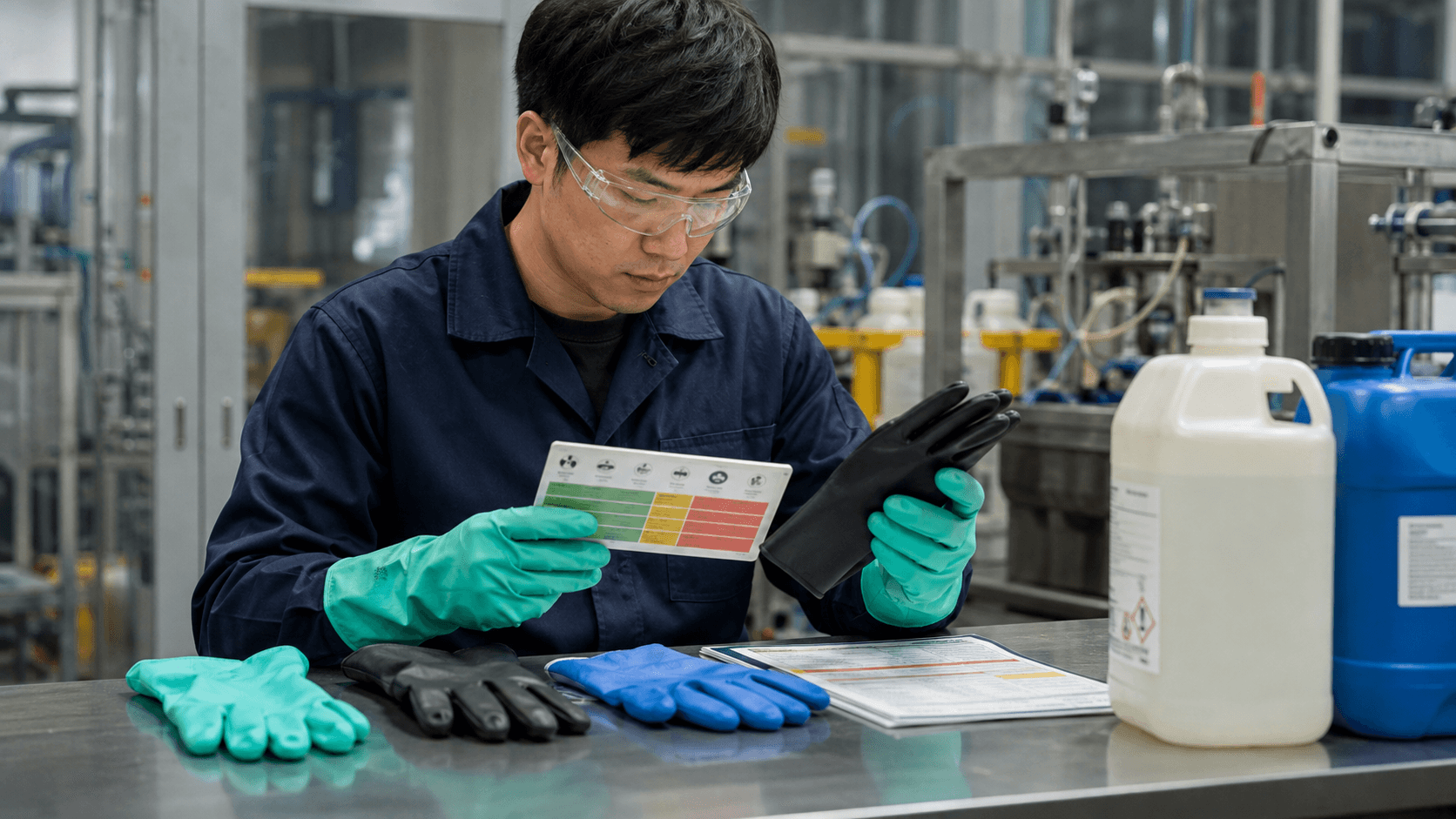
Illustrative image, not evidence of testing or a documented customer project. Procurement guidance does not replace product instructions or competent workplace assessment.
Primary topic: protective coverall seam type comparison
Introduction
Protective coveralls are often sold by the name of their fabric. Yet liquid can reach a wearer through a seam, zipper, cuff, hood or gap at another PPE interface even when a flat fabric panel has a favorable test result. For splash tasks, buyers need evidence for the finished garment and its intended use, plus a practical check that workers can wear the complete system correctly.
This guide helps B2B buyers inspect construction and ask better questions. It does not endorse a coverall for a named chemical without substance-specific evidence, nor does it replace the employer's exposure assessment and control program.
Quick answer: Define the liquid, concentration, splash direction and duration. Then verify the exact coverall model's applicable protection claim, seam construction, closures and interfaces with gloves, boots and respiratory protection. A "taped seam" description or fabric-only test is not sufficient to prove the finished suit is appropriate for every splash task.
Characterize the liquid exposure first

Is the task an occasional low-energy splash, spray from a hose, sustained wet contact or possible immersion? Which substance and concentration are present? Is there an aerosol or vapor hazard requiring respiratory review? The OSHA chemical protective clothing manual distinguishes permeation, penetration and degradation. Those mechanisms differ and require different evidence. Do not transform a generic "liquid resistant" marketing phrase into chemical compatibility.
The NIOSH protective-clothing overview emphasizes selection for the hazard and task. Where exposure cannot be adequately controlled through process or engineering changes, the site must define residual PPE needs. A coverall's role should be explicit rather than assumed.
Identify likely entry points
Map where liquid can land: front zipper during pouring, shoulder seams under overhead work, crotch and knee seams during kneeling, sleeve-glove junctions, hood-respirator area and boot tops. This physical map helps procurement ask for relevant garment construction. It does not substitute for a test of the exact finished product.
Compare seam and closure construction
Seams may be stitched, bound, taped, welded or otherwise sealed. The effectiveness of a design depends on the material, manufacturing quality, test method and liquid exposure. A taped seam should be identified by construction and supported by evidence where it is part of the claim. Tape appearance alone does not establish barrier performance.
| Construction area | Buyer question | Sample inspection |
|---|---|---|
| Main seams | Which seam type and test apply? | Consistency, skips, tape adhesion |
| Front closure | How is zipper protected? | Flap length and closure reliability |
| Cuffs/ankles | How does garment meet glove/boot? | Elastic, fit, approved interface method |
| Hood/neck | What other PPE is worn? | No obvious gaps in safe fitting trial |
| Repair | Is patching permitted? | Maker instructions and withdrawal criteria |
Do not improvise duct-tape interfaces or modify the coverall without the site's technical authorization. Some tasks may need tested system components or a different protective design. The HSE guide to suitable PPE calls out compatibility and fit across equipment.
Obtain exact-model finished-garment evidence
Ask for the destination-market standard and classification, tested model/revision, fabric and seam details, intended substances or exposure types, size scope, donning and doffing instructions, care or disposal instructions and known limitations. A flat-fabric swatch may support one material property but does not answer whether the zipper or seam leaks. Likewise, evidence for one seam variant should not automatically be applied to another version sold under the same family name.
When chemical protection is involved, request substance-specific information and consult the safety team. Laboratory breakthrough or spray tests have defined conditions; they do not create unlimited field wear time. Our chemical glove breakthrough guide explains this distinction for hand protection and the same caution applies to extrapolating laboratory data generally.
Mid-article CTA — Send Your Requirements: Share the liquid task, destination, required garment classification and PPE worn at the cuffs, ankles and face. PPEgen can prepare a model-specific evidence and sample checklist. Contact us.
Trial donning, movement and interfaces safely
Trial sizes over normal work clothes in a clean, hazard-free area. Check kneeling, reaching, hood movement, glove overlap, boot transition and ability to close the zipper flap without gaps. A garment that meets test paperwork but tears during routine donning or pulls off a glove at the cuff may not be suitable for the workflow. Record the model, size, wearer feedback and observed issues.
Plan doffing as well as donning. If the outside becomes contaminated, removal procedures matter. This guide does not prescribe decontamination for a named chemical; the employer's competent team should define it. Provide a method for damaged or used garments to leave service without being placed back in clean stock.
An illustrative purchase scenario: a sanitation team considers a coverall with a fabric-liquid test and ordinary stitched seams. Its work includes liquid reaching the front zipper and cuffs. Procurement asks for finished-garment evidence, closure details and a safe interface trial before approval. If the supplier only repeats the fabric claim, the question remains open. This is a hypothetical scenario, not a PPEgen field result.
Inspect production and incoming shipments
Sample approval should freeze fabric, seam type, zipper and flap, hood, cuff/ankle construction, labels and packaging. At pre-shipment inspection, examine representative garments from multiple cartons for skips, detached tape, flawed closures, wrong size and missing instructions. Photograph and quarantine inconsistent units. If a supplier changes a seam process, require new technical review rather than a purely commercial sign-off.
For broad kit selection, see the protective workwear category and the PPE compatibility guide. Neither page can replace substance- and task-specific approval.
Build an interface map for the complete PPE set
Coveralls rarely operate alone. Draw the worker from head to foot and mark each interface: hood to respirator or goggles, sleeve to glove, ankle to boot and zipper to front flap. Ask what the worker does while bending, reaching overhead or kneeling. Gaps may open during movement even when a standing photograph looks fully covered. The site safety team must decide whether an overlap, tape system or another manufacturer-approved method is required for the specific exposure; procurement should not invent one.
Record the make and model of other PPE used in the trial. A wide respirator head strap may pull on the hood, while a glove cuff may roll back over an elastic sleeve. Both can alter the practical barrier. If a supplier claims a tested ensemble, request the components and configuration that were included. Evidence for the coverall alone should not be described as evidence for an untested combination.
Doffing logistics affect the product specification
A liquid-exposed garment can present a contact risk during removal. The employer's competent personnel should determine the doffing and disposal process for the substance. Procurement can help by asking whether the zipper can be operated with gloved hands, whether pull tabs remain accessible, how the hood is removed and whether the garment is single-use or has an approved cleaning procedure. If the site expects reuse, obtain instructions that support that claim rather than assuming all protective coveralls are washable.
Plan the location of clean replacement stock and a route for used garments. A coverall that fits the hazard but cannot be exchanged during a long shift may be misused. Keep packaging intact until issue, and protect spare units from chemicals and moisture in storage.
Review construction defects systematically
At pre-production approval, inspect seams under normal light for skipped stitches, inconsistent tape coverage, puckering and gaps at junctions. Examine zipper alignment and whether the flap stays closed during motion. Check cuffs and ankles in different sizes; an extra-large garment may use different proportions from a medium sample. These checks identify visible workmanship problems but are not a substitute for the relevant performance test.
The PO should include the approved pattern and construction revision. If a supplier changes tape adhesive, seam method, zipper or fabric, ask whether the exact-model protective evidence remains applicable. The change may be material even when the outer appearance remains almost the same. Require written notice before the changed lot is packed.
An illustrative receiving problem is a mixed shipment in which some units have taped seams and others only stitched seams while every carton carries the same family name. The buyer should segregate by construction, compare to the approved order and request a documented explanation. Do not average the differences and release the whole lot because the fabric is the same.
Write the RFQ to expose unsupported claims
Include intended liquid or substance, concentration range if known, exposure form, expected contact duration, destination standard/classification, required size range, other PPE and whether the garment is disposable. Ask the supplier to identify the exact finished-model evidence and limitations. If the task is unusual or the exposure uncertain, label the requirement as needing safety review rather than asking the supplier to guarantee "complete chemical protection."
For each offer, record what is established and what remains unresolved. A fabric-only report may be useful but should sit in a separate column from finished-garment evidence. An unexplained certificate for a product family is not a reason to bypass model verification. This disciplined comparison keeps commercial negotiation from silently turning into a safety decision.
FAQ
Does a taped seam make any coverall chemical-proof?
No. The exact garment, liquid and test conditions matter. Seams are one part of the protective system.
Can a fabric test replace a finished-coverall test?
Not necessarily. Seams, closures and interfaces may be critical entry points. Request evidence appropriate to the claim and destination market.
Should a face shield be worn with a coverall?
The site risk assessment decides the needed eye/face and respiratory equipment. Review compatibility at the hood and neck rather than assuming the coverall alone covers those hazards.
Can a torn coverall be patched for reuse?
Only if the manufacturer and site procedure explicitly permit a repair that preserves the required protection. Otherwise withdraw and replace it.
What should a buyer inspect at receipt?
Match model, seam/closure construction, size, labels and instructions to the approved sample and purchase order. Quarantine unexplained variants or visible defects.
Can a buyer use one coverall for all cleaning chemicals?
Not from a generic "chemical-resistant" label. Different substances, concentrations, temperatures and exposure forms require separate assessment. The employer should provide the cleaning task and substances; the supplier should provide relevant exact-garment evidence and limitations. The buyer can group similar tasks only after a competent reviewer confirms the basis. A coverall appropriate for incidental water splash may not be suitable for a concentrated chemical spray.
What should be retained after an order?
Keep the approved model and size schedule, fabric and seam specification, closure details, test/declaration files, sample photos, instructions, lot records and receiving exceptions. If a wearer later reports liquid penetration, these records allow the team to ask whether the garment was damaged, misused, incorrectly specified or changed in production. Without traceability, a supplier and customer may argue about a product name while examining different constructions.
Which size should be used for a layered outfit?
Choose through a safe fitting trial with the work clothes and PPE actually worn, not by the wearer's street-clothing size alone. Check reach, crouching and the integrity of cuff and hood overlaps. An oversized suit can snag or leave excess material around the face; an undersized suit may pull seams or closures open. If the required size is unavailable, do not issue the nearest size without technical review.
For a private-label order, approve the finished garment and its printed instructions together. A buyer may request a new logo, altered zipper pull or extra pocket late in development; each can affect the approved configuration or the way workers don and doff the suit. Record the manufacturer response and technical approval before production. If a supplier cannot explain whether the change is covered by existing evidence, defer the claim rather than assuming that a cosmetic request has no protective effect.
At receipt, give particular attention to seam junctions, zipper ends and the hood opening on several sizes. These areas can reveal workmanship differences that a folded front photograph misses. Preserve exception samples and lot references if defects recur. Even when inspection finds no visible defect, remind the customer that visual checks cannot prove substance-specific barrier performance; formal evidence and correct use remain necessary.
What if a coverall is described only as "waterproof"?
Ask what that term refers to: fabric, seam, finished garment, duration and test method. Water resistance is not a blanket chemical-barrier claim. A coverall may protect against one form of incidental water splash but be unsuitable for a solvent, concentrated cleaner or pressurized spray. The buyer should document the real liquid and exposure route, then request exact-model evidence and limitations. If the supplier cannot connect its claim to the finished suit, it remains a marketing description, not an approved PPE specification. The customer's competent safety reviewer should choose controls and PPE for the actual task.
Conclusion
For liquid-splash tasks, the coverall's weak point may be outside the fabric panel. Define exposure, verify finished-garment evidence, inspect seams and closures, and test fit with the full PPE configuration in a safe environment. Hold any unsupported chemical or barrier claim for qualified review.
Final CTA — Get a Quote: Tell PPEgen the coverall task, size run, destination and required document set. Request a model-specific quotation at info@ppegen.com or our inquiry page.
BUYER RESOURCES
Continue your PPE sourcing research.
Explore relevant PPE categories and a primary safety reference alongside this guide.Use this source alongside destination-market requirements for the exact product and application.
READY TO DISCUSS YOUR REQUIREMENT?