BUYER'S GUIDE - 3 MIN READ
Safety Glasses vs Goggles vs Face Shields: A Practical Buyer Guide
Editorial information, sources and corrections
Compare safety glasses, goggles and face shields for industrial buying. Learn how task hazards, fit, compatibility and prescription needs affect selection.
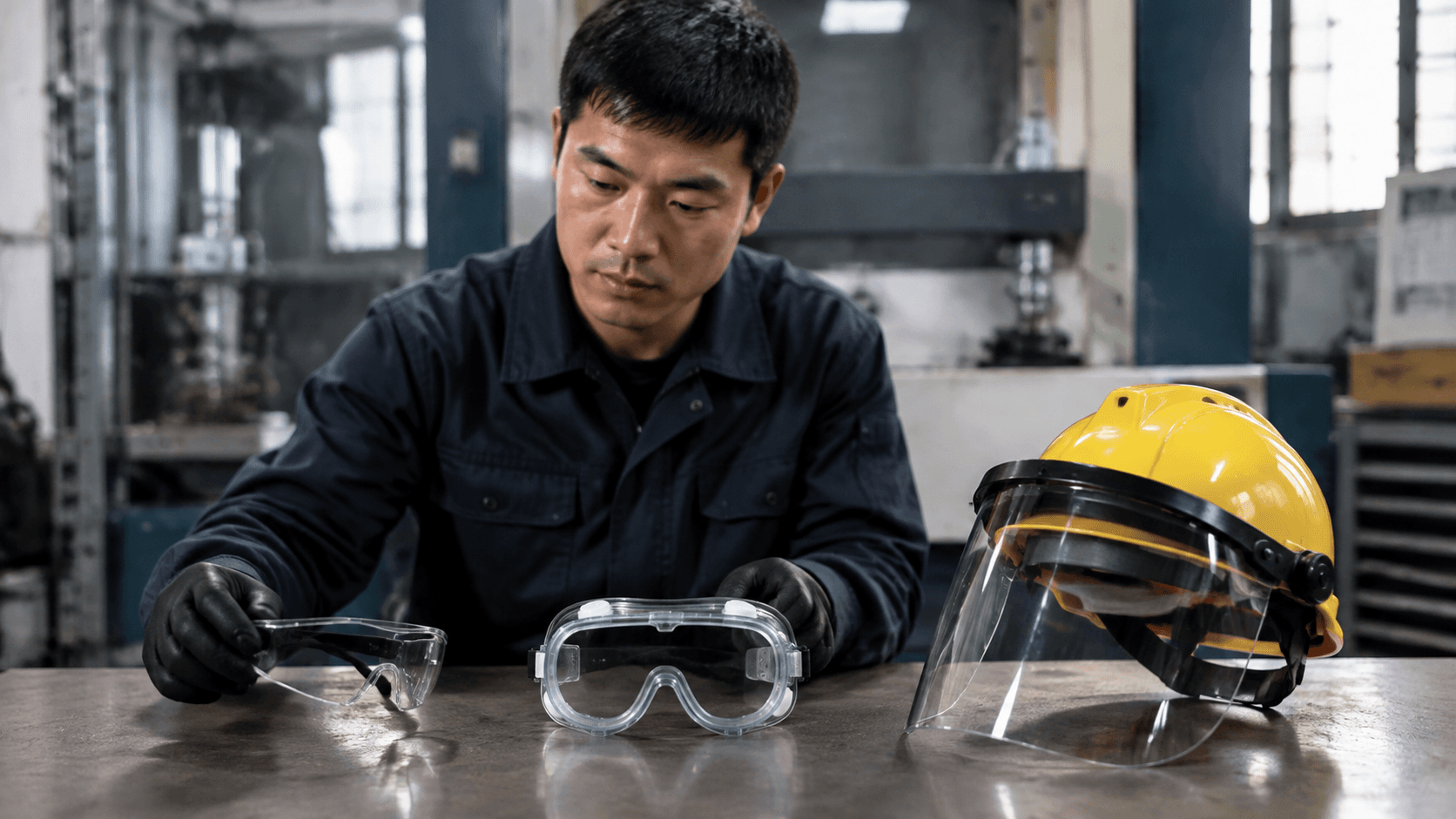
Primary topic: safety glasses vs goggles vs face shield
Introduction
Safety glasses, goggles and face shields are not interchangeable product names. Each is designed for different conditions, and in some tasks more than one item may be required. The correct purchase starts with the hazard and the user's other PPE, including hard hats, respirators and prescription eyewear.
Quick answer: Use the site's task and hazard assessment to determine the required eye and face protection. Then sample the specific models together with helmets, respirators and prescription eyewear before ordering in bulk.
OSHA notes that appropriate eye or face protection is required for hazards such as flying particles, molten metal, chemicals, vapours and injurious light. Its construction eye and face protection rule also addresses side protection and eyewear that can be worn over prescription lenses.
Compare the categories by task
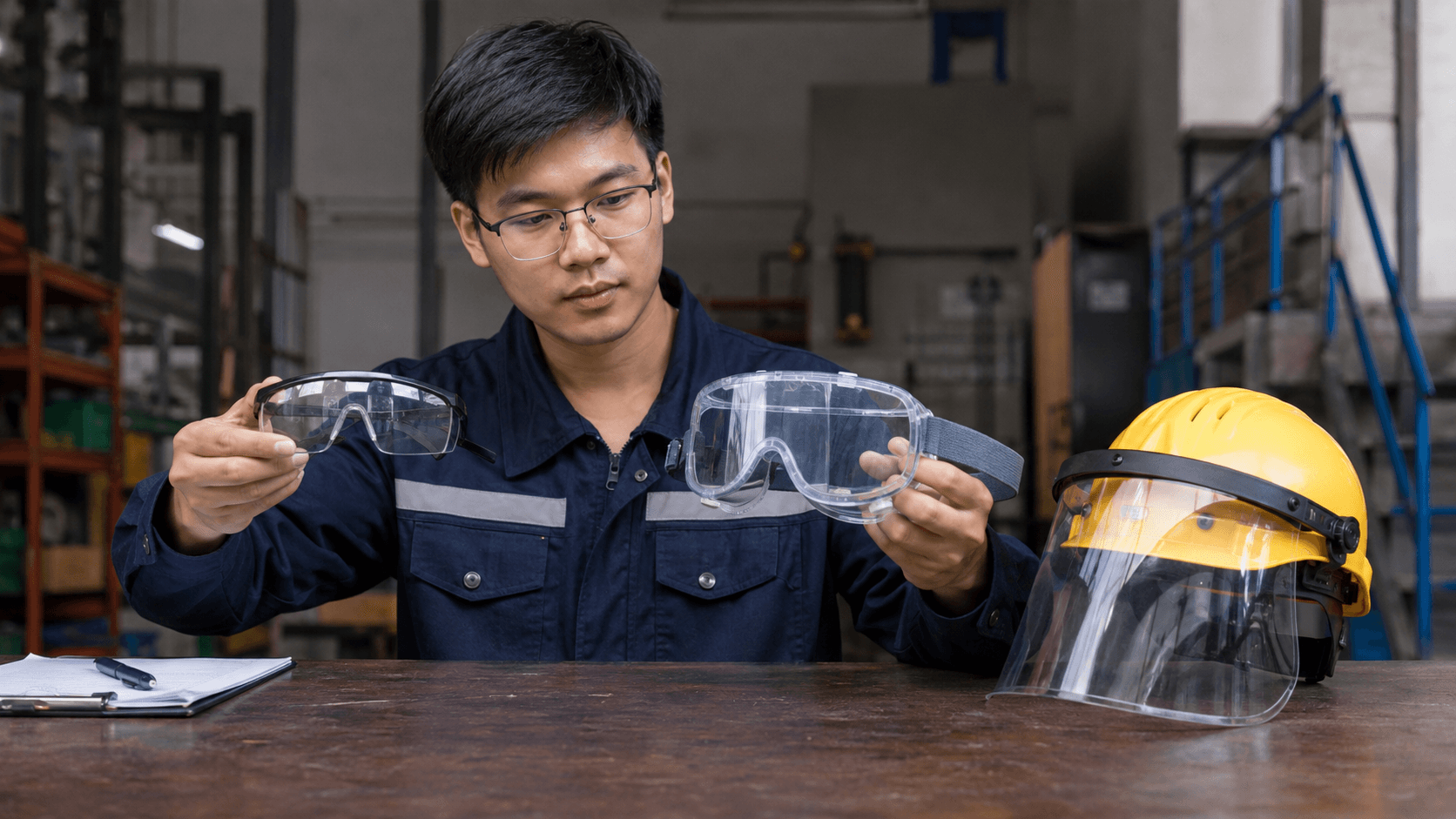
| Product type | Typical buyer discussion | Compatibility check |
|---|---|---|
| Safety glasses | impact, side protection, all-day comfort | temple arms with helmet/respirator |
| Goggles | splash, dust or closer seal needs | fit around face and other PPE |
| Face shield | face coverage for defined tasks | helmet mount, eyewear and visor clearance |
The table is not a substitute for a hazard assessment. A face shield does not automatically replace safety glasses, and a product that feels comfortable may still not protect against the identified hazard. The employer should follow current instructions and local requirements.
Buy for real users and real interfaces
Request models, lens options, anti-fog/anti-scratch needs, accessory mounts, prescription-over-glasses requirements, cleaning/storage method and replacement-part availability. Sample with the actual head protection and respiratory protection used on site. Our PPE compatibility checklist gives a full ensemble method.
During approval, check field of view, nose bridge comfort, temple pressure, helmet fit, visor movement and whether products can be identified and replenished by an exact SKU. At shipment inspection, compare lens, frame, strap, marking, accessory and carton labels against the approved file.
Sourcing industrial eye and face protection? Ask for a product catalogue with your task, market and expected quantity.
FAQ
Can safety glasses be worn with a respirator?
Some combinations work and others can interfere with straps or a sealing surface. The site should evaluate the exact products under its safety programme.
Are goggles always better than safety glasses?
No. “Better” depends on the hazard, task, fit, ventilation and other PPE. Choose the product specified by the site assessment.
What should buyers control in an eyewear order?
Control the exact frame/lens model, strap or accessory, markings, packaging, replacement parts, quantities and labels. Use a retained sample for final inspection.
Conclusion
The right eye and face protection order is a task and compatibility decision, not a catalogue comparison alone. Controlled samples and exact model records make the choice easier to repeat.
CTA: Request an Eye and Face Protection Sample
Send your requirements to PPEgen for a structured eye and face protection quotation.
BUYER RESOURCES
Continue your PPE sourcing research.
Explore relevant PPE categories and a primary safety reference alongside this guide.Use this source alongside destination-market requirements for the exact product and application.
READY TO DISCUSS YOUR REQUIREMENT?