BUYER'S GUIDE - 10 MIN READ
Safety Footwear Toe-Cap Clearance: Fit Checks for Bulk Buyers
Editorial information, sources and corrections
Evaluate safety-footwear toe-cap position, internal clearance, width, walking comfort and size-curve risk before bulk ordering.
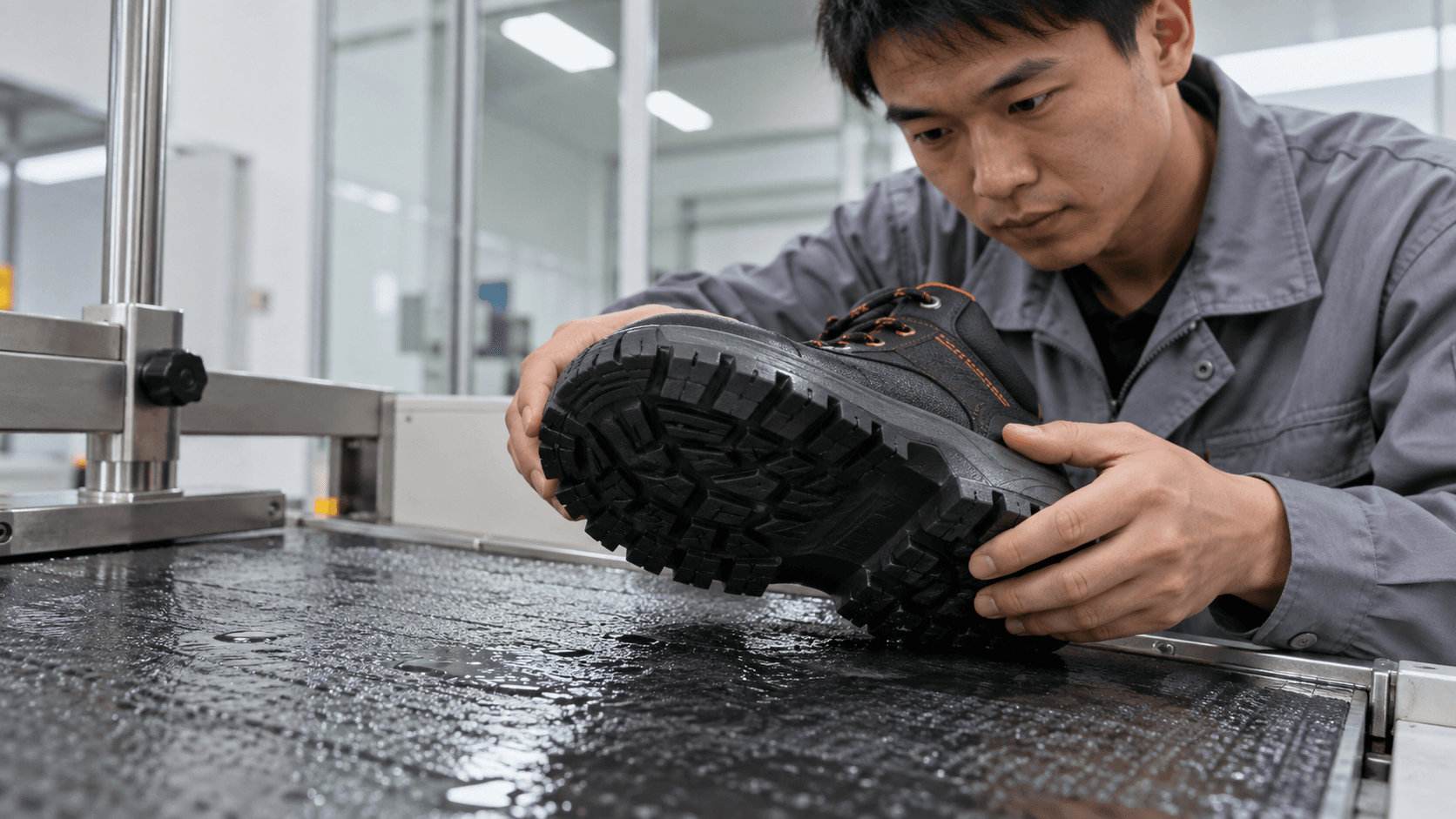
Illustrative image, not evidence of testing or a documented customer project. Procurement guidance does not replace product instructions or competent workplace assessment.
Primary topic: safety footwear toe cap clearance
Introduction
Approve safety footwear only after checking toe-cap position and internal volume on representative feet with normal work socks. The external size label and overall length are not enough; width, toe height, flex point, heel retention and walking comfort all affect fit.
This guide is written for distributors, importers, safety managers and private-label buyers. It explains how to turn a real work requirement into a quote-ready specification, how to review a sample without creating a hazardous demonstration, and how to keep an approved configuration stable through shipment and issue. It is not a substitute for a workplace risk assessment, competent safety advice, manufacturer instructions or destination-market law.
Quick answer: Approve safety footwear only after checking toe-cap position and internal volume on representative feet with normal work socks. The external size label and overall length are not enough; width, toe height, flex point, heel retention and walking comfort all affect fit.
Why this topic matters to B2B buyers
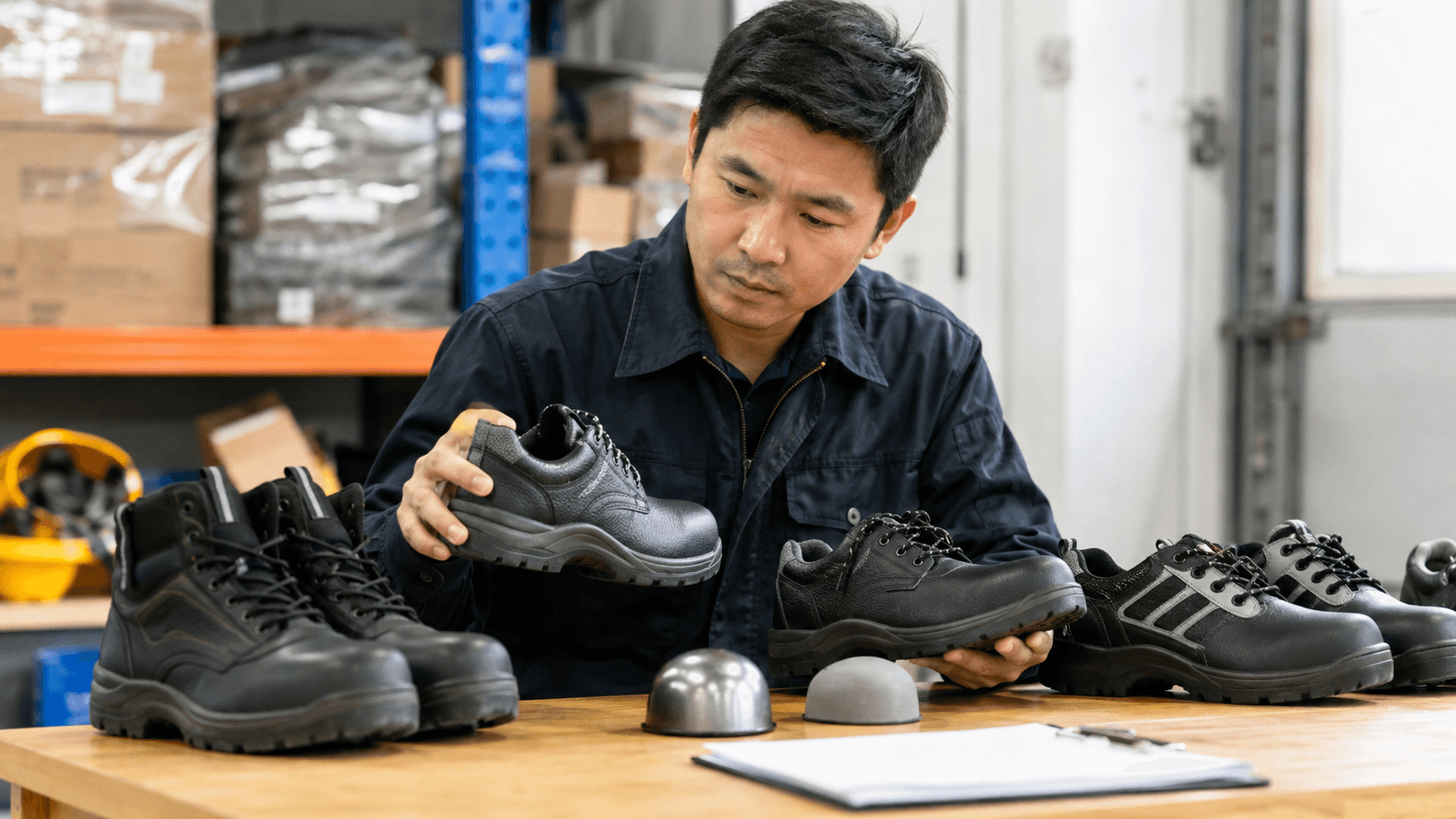
Search intent: Assess protective-toe footwear fit without treating the external size label as sufficient. Toe-cap position and internal volume can create pressure even when overall shoe length appears correct.
The purchasing risk is rarely limited to price. A vague specification can allow two suppliers to quote products that share a familiar name while differing in construction, intended use, limitations or compatible components. The lowest offer may therefore be based on a different problem from the one the buyer needs to solve.
Authoritative starting points include OSHA guidance, OSHA guidance, HSE guidance. These sources support a hazard-led, compatible and maintained PPE program. They do not endorse a particular PPEgen product, and they should be read with the rules that apply in the destination market.
Start with the task and hazard profile
Define impact and compression hazards, floor conditions, shift movements, ladders or kneeling, orthotic policy and seasonal socks. Collect a privacy-conscious size and width profile rather than ordering from casual shoe-size recollection.
Write the profile in plain operational language. Identify who uses the item, what happens before and after use, which other PPE is worn, how long the task lasts, and what conditions change between shifts or seasons. Include foreseeable misuse and the consequence of a wrong substitution. If the available information is incomplete, record an open question rather than turning an assumption into a product claim.
The product page for safety footwear is a catalog starting point. It is not a task-specific approval. Buyers can also use the safety footwear sizing guide and slip-resistance sourcing checklist to connect this decision with the wider PPE program.
Selection factors to put in the specification
1. Toe-cap position
The toes should not be forced against the front, top or side of the protective cap during ordinary work movement. Check the exact style because cap geometry differs.
For purchasing, convert this point into a field that can be answered with an exact model, drawing, instruction or controlled sample. Record the acceptance method and who has authority to approve a deviation. This prevents a persuasive catalog phrase from becoming an uncontrolled product substitution.
2. Internal width and height
A longer shoe is not the correct solution for every width or volume problem. Offer suitable lasts or widths where the workforce data requires them.
For purchasing, convert this point into a field that can be answered with an exact model, drawing, instruction or controlled sample. Record the acceptance method and who has authority to approve a deviation. This prevents a persuasive catalog phrase from becoming an uncontrolled product substitution.
3. Flex point and gait
The boot should flex in a location compatible with the wearer’s foot and task. Walk, turn and use a safe step platform during the trial.
For purchasing, convert this point into a field that can be answered with an exact model, drawing, instruction or controlled sample. Record the acceptance method and who has authority to approve a deviation. This prevents a persuasive catalog phrase from becoming an uncontrolled product substitution.
4. Heel retention and lacing
Extra toe room should not create heel slip. Evaluate the closure and sock combination across the shift conditions.
For purchasing, convert this point into a field that can be answered with an exact model, drawing, instruction or controlled sample. Record the acceptance method and who has authority to approve a deviation. This prevents a persuasive catalog phrase from becoming an uncontrolled product substitution.
5. Size-curve evidence
Use actual trial results to set the order ratio and hold a controlled exchange reserve. Country size conversions alone are insufficient.
For purchasing, convert this point into a field that can be answered with an exact model, drawing, instruction or controlled sample. Record the acceptance method and who has authority to approve a deviation. This prevents a persuasive catalog phrase from becoming an uncontrolled product substitution.
Evidence and document matrix
An evidence matrix keeps marketing, technical and purchasing documents aligned. Ask the supplier to identify the exact product on every relevant document and explain any family-level evidence. Do not copy a certificate number or test value onto an online listing until the scope, model and current status have been checked.
| Decision field | Supplier evidence to request | Buyer control |
|---|---|---|
| Toe-cap position | Exact-model statement, drawing, instruction or applicable evidence | Buyer acceptance rule and revision |
| Internal width and height | Exact-model statement, drawing, instruction or applicable evidence | Buyer acceptance rule and revision |
| Flex point and gait | Exact-model statement, drawing, instruction or applicable evidence | Buyer acceptance rule and revision |
| Heel retention and lacing | Exact-model statement, drawing, instruction or applicable evidence | Buyer acceptance rule and revision |
| Size-curve evidence | Exact-model statement, drawing, instruction or applicable evidence | Buyer acceptance rule and revision |
| User information | Current instructions, limitations, care and storage information | Approved destination language and document revision |
| Traceability | Model, size, lot or production reference and factory identity where applicable | Link shipment records to the approved product |
Where a standard or legal requirement applies, verify the current destination-market route with a competent adviser. PPEgen should not claim that one document automatically authorizes sale or use in every country.
Safe sample approval workflow
- Confirm the protective footwear specification.
- Try sizes near the wearer’s measured length and width.
- Use representative socks and approved orthotics policy.
- Walk turn kneel and use a safe step platform.
- Record style size width and fit outcome without unnecessary personal data.
The trial should answer a defined question. It should not expose a worker to chemicals, impact, noise, a fall, live electricity or another hazard to see whether the product works. Use approved laboratory evidence for protective performance and reserve the wearer trial for fit, compatibility, visibility, mobility, controls and other safe observations.
A buyer’s pilot finds that employees select a longer size to escape side pressure, creating heel movement. The team trials a wider approved last, updates the size curve and keeps exchanges controlled by style and width. This is an illustrative fitting workflow.
Mid-article CTA — Send Your Requirements: Share the task, destination market, order quantity, size range and required documents with PPEgen. We can organize a model-specific quotation and sample checklist. Contact us.
Write a quote-ready RFQ
A useful RFQ should contain the following:
- intended task, hazard assessment reference and prohibited uses;
- destination country and the applicable buyer-specified standard or legal route;
- exact construction, materials, dimensions, sizes, colors and compatible components;
- document list, user-instruction language, marking and packaging requirements;
- sample quantity and the written sample-approval method;
- bulk inspection, defect classification, packing ratio and acceptance criteria;
- change-notification, nonconformance, corrective-action and record-retention rules.
When comparing quotations, normalize the included product, spare parts, documents, packaging, inspection and delivery terms. Record exceptions line by line. An offer is not equivalent merely because the product name and headline rating look similar.
Shipment inspection and factory quality controls
Factory testing and shipment inspection should follow the approved specification and applicable method; they should not be represented by an unverified photograph. Before shipment, reconcile the production sample, bill of materials revision, markings, instructions, carton labels and packing ratio. Use a risk-based inspection plan agreed by the buyer.
- Style size and width marking: compare representative units from more than one carton with the approved sample and purchase specification.
- Toe-area symmetry and lining condition: compare representative units from more than one carton with the approved sample and purchase specification.
- Insole and closure components: compare representative units from more than one carton with the approved sample and purchase specification.
- Pair consistency and outsole condition: compare representative units from more than one carton with the approved sample and purchase specification.
- Carton size labels and packing ratio: compare representative units from more than one carton with the approved sample and purchase specification.
Inspect representative sizes and cartons rather than only the easiest top layer. Photograph identification and defects with lot context, not as proof that an unseen full shipment passed. Quarantine nonconforming stock, document the decision owner and keep rework separate from accepted goods.
Use, maintenance and change control after delivery
Track exchanges by model, size, width and reported pressure point. Repeated toe contact or heel slip should prompt a last and size-curve review, not advice to simply break in painful footwear.
Train users on the item’s purpose, fit, adjustment, pre-use checks, limitations, cleaning, storage and replacement triggers. Keep the instructions accessible. If a related product changes—such as eyewear, garments, helmets, footwear, cartridges or connectors—repeat the compatibility review where the interface can change.
Procurement data can strengthen the next order. Track returns, fit exchanges, damage modes, consumption and task changes by exact SKU and lot. Do not interpret fewer complaints as proof of protection; combine purchasing data with the safety program’s observations and competent review.
Important limitations
- Protective toe clearance does not establish slip resistance.
- Workers should not modify or remove internal protective parts.
- A successful sample in one size does not prove the full size run.
PPE remains one layer of risk control. Engineering, isolation, substitution, guarding, ventilation, traffic management, work procedures, training and supervision may be more effective controls and should be considered through the employer’s hierarchy and risk-management process.
FAQ
What is the first question a buyer should ask about safety footwear toe-cap clearance?
Approve safety footwear only after checking toe-cap position and internal volume on representative feet with normal work socks. The external size label and overall length are not enough; width, toe height, flex point, heel retention and walking comfort all affect fit.
Can the supplier choose the product from a short generic description?
Not safely. The buyer should provide the task, hazards, destination requirements, complete PPE combination and acceptance method. The supplier can then propose an exact model for review, but the responsible employer or buyer retains the selection decision.
Should the highest rating or most robust-looking design always be selected?
No. Selection must match the assessed task. Higher, thicker or longer can introduce fit, compatibility, heat, visibility or mobility problems. Compare the factors in this guide and require evidence for the exact product rather than choosing by appearance.
How should samples be approved before bulk production?
Use a controlled sample identified by model, size, materials, color and revision. Review documents first, perform only safe representative fitting or handling checks, record the result and retain the approved sample. A sample approval does not replace shipment inspection.
What should be checked during shipment inspection?
At minimum, verify style size and width marking, toe-area symmetry and lining condition, insole and closure components, packaging, quantities and traceability. Sample across cartons using the buyer's agreed inspection plan, quarantine deviations and obtain disposition before release.
How should product changes be managed after approval?
Require advance written notice for material, component, tooling, production-site, label or packaging changes that can affect the approved specification. Decide whether documents, samples or fit checks must be repeated before the changed product ships.
Conclusion
Safety Footwear Toe-Cap Clearance: Fit Checks for Bulk Buyers is best treated as a controlled procurement decision, not a catalog shortcut. Begin with the task and hazards, define the complete configuration, request exact-model evidence, approve samples safely, inspect shipments against the frozen specification and manage changes after issue. That process produces a clearer quotation and a more defensible PPE program without making claims that the evidence cannot support.
Final CTA — Get a Quote: Email your product requirements, destination, quantity and document checklist to info@ppegen.com, or use the PPEgen inquiry form. We will reply with the questions needed to prepare a model-specific quotation.
BUYER RESOURCES
Continue your PPE sourcing research.
Explore relevant PPE categories and a primary safety reference alongside this guide.Use this source alongside destination-market requirements for the exact product and application.
READY TO DISCUSS YOUR REQUIREMENT?