BUYER'S GUIDE - 5 MIN READ
Steel Toe vs Composite Toe Safety Footwear: How Industrial Buyers Should Choose
Editorial information, sources and corrections
Compare steel toe and composite toe safety footwear for industrial procurement, including hazards, standards, fit, quality control and packing checks.
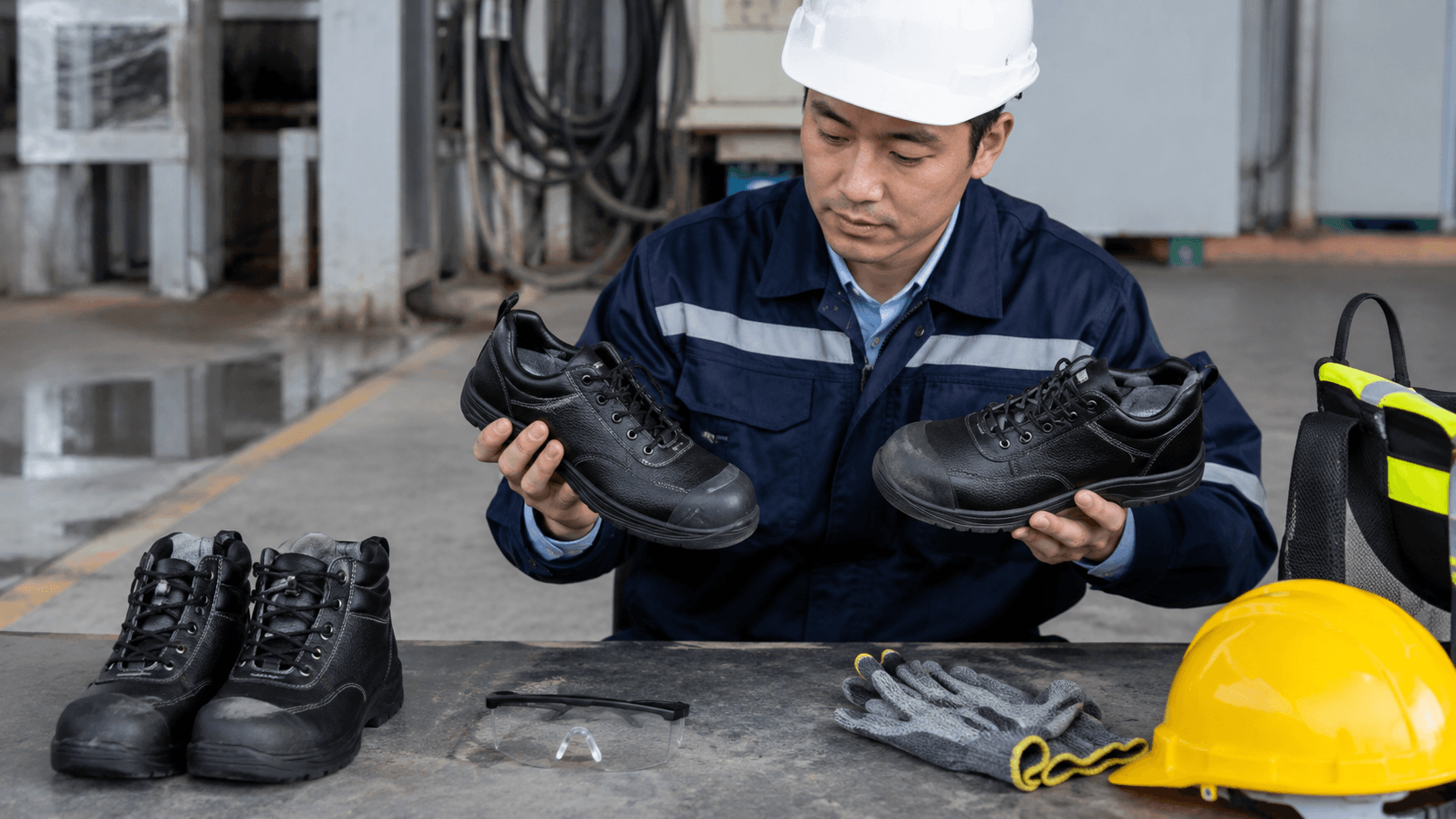
Primary topic: steel toe vs composite toe safety footwear
Introduction
The toe cap gets most of the attention in a safety-footwear quotation, but it is only one element of a protective system. A shoe can have a toe cap and still be a poor fit for the job if the outsole slips, the upper fails in wet conditions, the insole is uncomfortable, the size run is inconsistent or the marking does not support the requested market requirement.
Quick answer: Choose steel or composite toe after the workplace hazard assessment and customer standard are defined. Then compare the complete footwear construction—impact/compression protection, sole, slip resistance, penetration protection where needed, electrical properties, comfort, sizing and shipment quality control.
Steel toe and composite toe: the purchasing difference
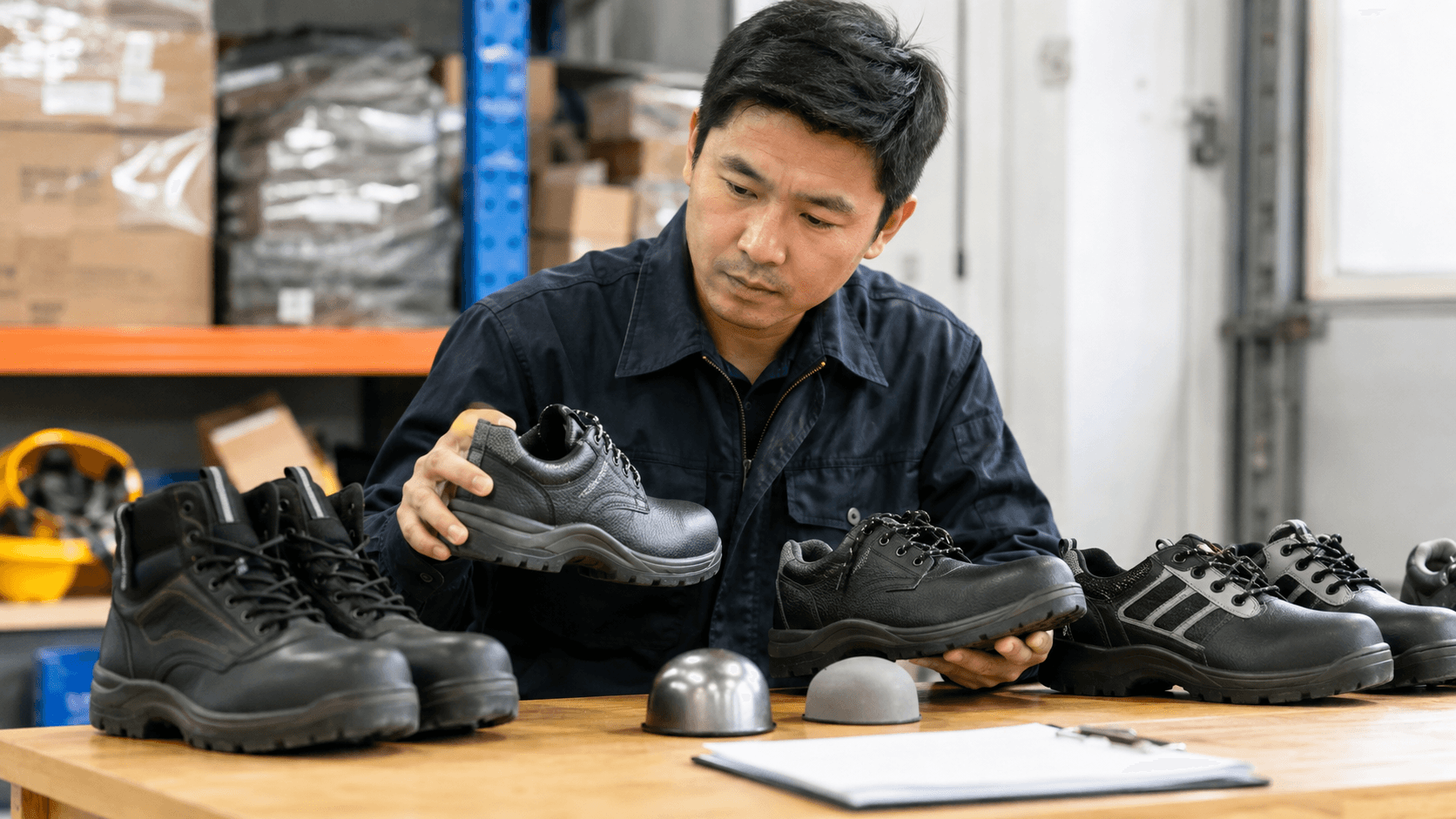
Steel toe caps are familiar, durable and often cost-effective for many industrial applications. Composite toe caps use non-metal materials and may be selected where lower metal content, thermal comfort or electrical-hazard considerations are part of the specification. Neither material is automatically “safer.” The required performance must be demonstrated by the complete footwear model under the applicable standard.
OSHA advises employers to conduct a workplace hazard assessment for foot protection. Its PPE assessment guidance is a useful starting point; buyers should confirm the standard and marking required in the destination market and contract.
| Factor | Steel toe | Composite toe |
|---|---|---|
| Material | Metallic cap | Non-metal cap construction |
| Buyer questions | Weight, corrosion exposure, model compliance | Bulk, fit, thermal conditions, model compliance |
| Critical point | The full shoe must meet the required performance | The full shoe must meet the required performance |
Start with hazards and working conditions
List the objects, surfaces and environment workers actually encounter. A construction worker on wet ground, a warehouse picker on polished concrete and a utility technician working around electrical hazards may all need different footwear features. Consider falling or rolling objects, underfoot penetration, slips, oils, heat, cold, water, chemicals and fatigue from long shifts.
Toe protection is not electrical protection
A customer may request composite toe because of electrical concerns, but the correct electrical property must be specified and evidenced for the actual shoe. A toe material does not by itself establish the required protection. OSHA’s foot-protection interpretation notes that selection must follow the workplace hazard assessment; ask the safety manager to define the required rating and standard before quoting.
Fit affects protection and adoption
Footwear that rubs, pinches or lacks heel support is less likely to be worn correctly. Request a size chart with insole lengths, trial the intended socks and check toe room, heel retention, instep pressure and lacing. For distributors, agree the size ratio by market rather than ordering the same range for every customer.
Build a footwear specification that factories can inspect
Write the model down in a way a production and inspection team can use. The specification should include upper material, toe-cap type, outsole material and pattern, lining, insole, closure, colour, size range, marking, standard evidence, packaging and branding. A pre-production sample should be retained as the reference.
During factory testing and shipment inspection, review the practical details that often cause disputes:
- Pair matching: left/right size, colour and model are correct.
- Upper workmanship: stitching, eyelets, adhesives and toe-box shape are consistent.
- Outsole: clean moulding, bonding, tread coverage and no obvious delamination.
- Size: insole or internal dimensions within agreed tolerance.
- Marking and packing: labels, box size stickers, barcodes, inner paper, carton count and shipping marks.
Type-test reports establish a performance claim for a defined model. They do not replace inspection of the actual shipment. If a material, outsole mould, toe cap, factory or construction changes, review whether the supporting evidence and customer approval remain valid.
Quote comparison: avoid a false like-for-like price
Ask each supplier to price the same controlled specification. A price difference can result from leather grade, upper thickness, outsole compound, insole, toe cap, packing, size range or standard evidence. Ask for net weight, carton dimensions and production lead time too; they influence freight planning and warehouse receiving.
Use the supplier questions in our PPE supplier selection article, then add footwear-specific checks to the shipment inspection checklist. For large orders, review a packed-carton sample before final balance payment or booking.
FAQ
Is composite toe safer than steel toe?
Not automatically. The right choice is the complete footwear model that satisfies the job’s documented hazard and applicable performance requirement, while fitting the wearer well.
Are all steel-toe boots the same?
No. Outsole, upper, toe-cap shape, penetration protection, construction quality, marking and sizing vary considerably between models.
What should a buyer inspect before shipment?
Inspect approved-material appearance, workmanship, pair matching, size range, labels, boxes, carton quantity and packing marks. Also verify any agreed product-specific test or conformity documents.
Conclusion
Steel versus composite is a useful starting conversation, not a finished specification. The better purchasing decision connects the job hazards, required standard, full shoe construction, wearer trial and shipment controls. That reduces returns and helps the end user receive footwear that can be worn for the intended shift.
CTA: Request a Safety Footwear Buying Checklist
Send your application, destination market, required toe protection, outsole conditions, quantity and brand requirements. PPEgen will help you prepare a quote comparison and sample-inspection list.
BUYER RESOURCES
Continue your PPE sourcing research.
Explore relevant PPE categories and a primary safety reference alongside this guide.Use this source alongside destination-market requirements for the exact product and application.
READY TO DISCUSS YOUR REQUIREMENT?