BUYER'S GUIDE - 11 MIN READ
Direct vs Indirect Vent Safety Goggles for Dust and Splash Tasks
Editorial information, sources and corrections
Compare direct- and indirect-vent safety goggles for dust and splash tasks, including marking evidence, fit trials, fogging and bulk procurement controls.
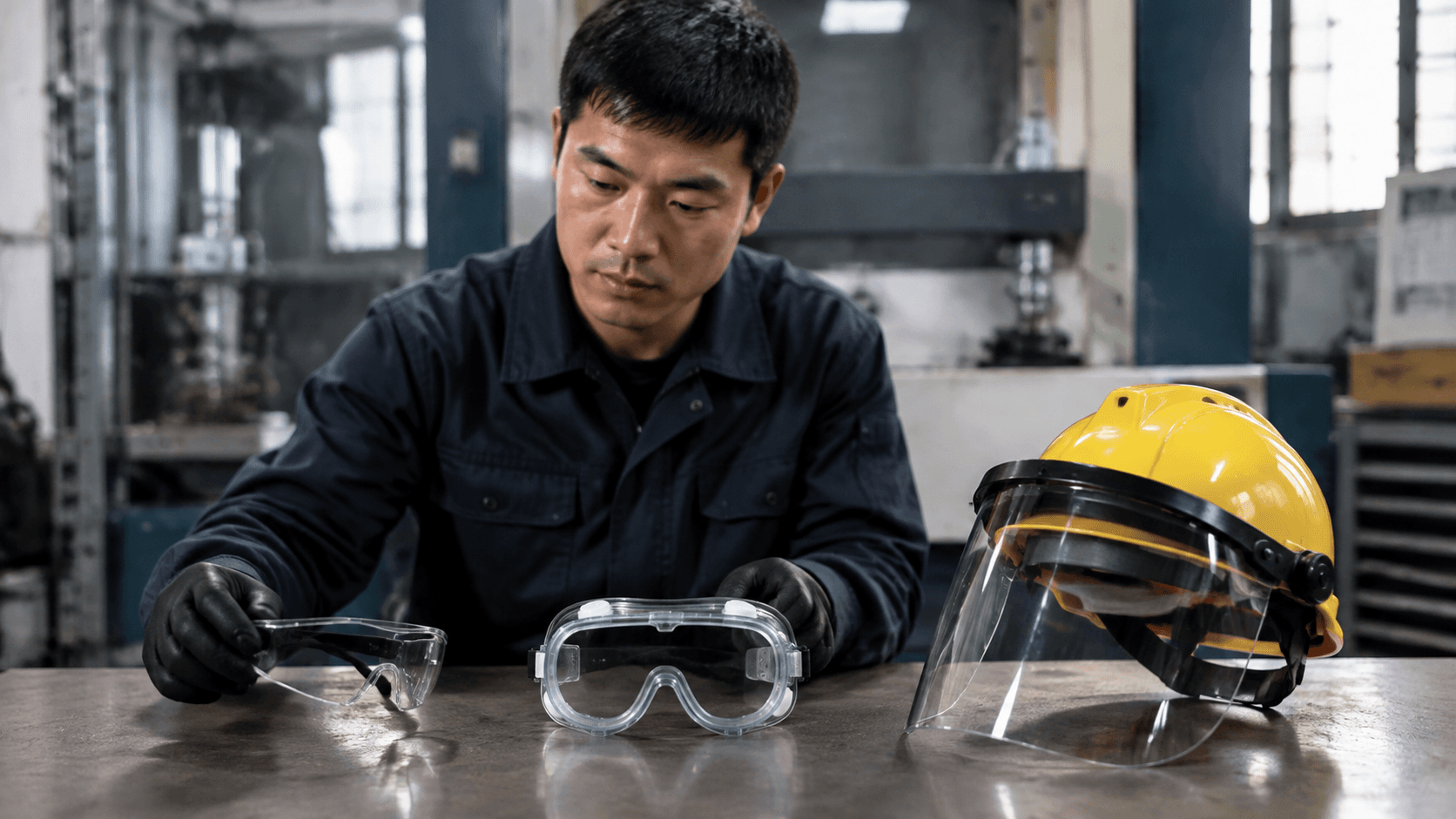
Illustrative image, not evidence of testing or a documented customer project. Procurement guidance does not replace product instructions or competent workplace assessment.
Primary topic: direct vs indirect vent safety goggles
Introduction
Ventilation affects comfort and fogging, but it also changes how a goggle may admit dust or liquid. A buyer selecting eyewear from a catalog photo should not treat "vented" as one protective category. Direct vents, covered or indirect vents, and unvented designs can serve different tasks; the right choice depends on the assessed hazard, exact-model evidence and how the goggles fit with other PPE.
This guide addresses product selection and purchasing—not permission to work near a chemical splash. The employer's eye/face risk assessment and product instructions must decide whether goggles, a face shield or another system is required for the actual operation.
Quick answer: For a splash hazard, do not assume a direct-vent goggle is adequate merely because it feels cooler. Compare the exact model's splash marking and instructions with the task. Indirect or non-vented designs may be appropriate in some scenarios, while dust tasks have their own entry and fit concerns. Test wearer fit and fogging safely before bulk purchase.
Identify the route by which the hazard reaches the eye
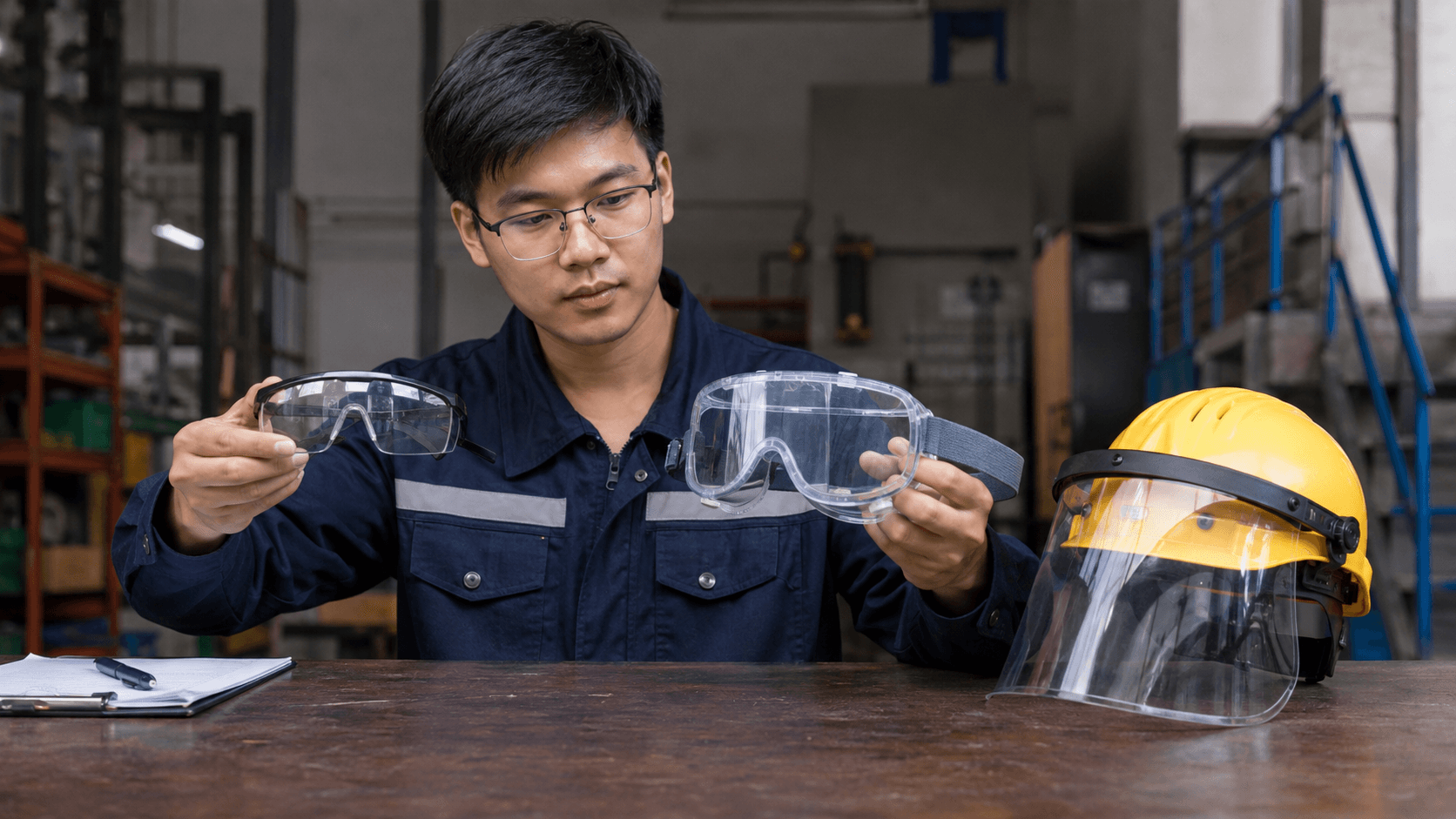
Ask whether the task generates airborne dust, large particles, mist, liquid splash, impact debris or more than one of these. Note the direction of exposure, frequency, duration and whether the wearer bends over or works overhead. The OSHA eye and face rule requires appropriate protection when employees face specified eye/face hazards. The OSHA selection chart differentiates goggle designs for dust and splash contexts.
The buyer should describe the task rather than requesting "anti-fog lab goggles". Anti-fog is a useful feature but does not establish splash protection. Conversely, a splash-focused goggle that fogs so badly that a wearer lifts it is not working as intended. Selection balances verified protection and practical wear, with the safety team deciding the necessary minimum.
Vent designs in plain language
- Direct vents are openings that allow relatively direct air movement. They may reduce fogging but require careful review where liquids or fine dust can enter.
- Indirect vents use covered or baffled paths. They can restrict a more direct route while permitting some airflow, but exact-model splash or dust suitability still needs evidence.
- Unvented designs reduce air exchange and may be preferred for some exposure patterns; fogging and comfort must be addressed without weakening the required barrier.
These are design descriptions, not a guarantee. A goggle's tested classification, marking, instructions and fit are what connect a design to a specific application. A face shield used for additional face coverage normally does not replace properly selected primary eye protection for a splash task unless the applicable assessment and product instructions support the complete system.
Ask for the exact-model evidence
Request the relevant destination-market standard, impact/splash/dust markings where applicable, lens and frame model, vent type, instructions and compatible accessories. A test report for an unvented variant cannot silently stand in for a direct-vent variant that looks similar. If a supplier offers several colors or lens coatings, confirm which versions the evidence covers.
| RFQ question | Why it matters | Follow-up if unclear |
|---|---|---|
| What are the assessed hazards? | Distinguishes impact, dust and splash | Ask site safety lead for task detail |
| Which exact goggle is offered? | Links documents to physical goods | Request model/revision and sample |
| What does its marking mean? | Avoids marketing interpretation | Request standard, declaration and instructions |
| Which vent design is supplied? | Prevents wrong substitution | Inspect frame sample and pack label |
| Which other PPE is worn? | Fit can be disrupted | Trial complete configuration |
The HSE guidance on suitable PPE calls out fit and compatibility with other equipment. Procurement should record those checks, especially if goggles overlap a half-mask respirator or helmet.
Run a safe fit-and-fogging trial
Give representative users several sizes or adjustable models that already meet the documented hazard requirements. In a hazard-free area, assess the seal at the brow, cheeks and nose, strap position, pressure points, peripheral view, compatibility with corrective eyewear and ability to keep the goggles on throughout normal movement. Do not spray hazardous chemicals toward a user to improvise a splash test.
Fogging can be affected by temperature, humidity, respirator exhalation, lens treatment and fit. Ask the supplier how the anti-fog treatment should be cleaned and whether replacement lenses are available. A worn or improperly cleaned lens may alter visibility. The safety-eyewear maintenance guide describes replacement decisions for damaged lenses.
Document the model and trial conditions. Do not rely on "most users liked it" if the sample missed people who wear prescription spectacles or other PPE. If one model fails to fit a group, plan an approved alternative rather than encouraging users to loosen the strap. A clear route to reorder the approved sizes is part of the buying decision.
Mid-article CTA — Ask for Product Catalog: Tell PPEgen whether your task is dust, splash, impact or a combination, and what respiratory/head protection is worn. Request exact-model eyewear options and a document checklist at our contact page.
Write a purchase specification that blocks mistaken swaps
Record the approved goggle model, vent construction, lens material and coating, relevant marking, strap and size details, destination-market instructions, packaging and spare-part needs. If the supplier offers an "equivalent" model, make it subject to the same evidence and fit review. The cheapest goggle can become expensive if users reject it for fogging, but comfort alone should not override a splash requirement.
At pre-shipment inspection, compare carton labels and representative units with the approved sample. Look for wrong vent patterns, lens defects, missing straps, packaging damage and label/marking mismatches. Photograph exceptions and quarantine unexplained variants. Sample enough cartons for the agreed risk level; a single display box is not evidence for a whole production lot.
Our eye and face protection category provides a product starting point. For a wider site kit, the PPE compatibility guide can help structure a multi-equipment trial.
Illustrative decision example
A warehouse team handles dusty cartons, while a maintenance team uses a liquid cleaning product. Procurement proposes one comfortable direct-vent goggle for both teams. The buyer should hold that cross-use assumption until the site confirms the hazards, the exact goggle's evidence is checked for each task and wearers trial the PPE combinations. Separate approved models may be justified. This example illustrates a decision process, not an actual customer result.
Maintain goggles after purchase
Follow manufacturer instructions for cleaning, storage and lens replacement. Do not use an unapproved solvent to remove grime. Inspect frames and straps for damage or loss of elasticity; replace the whole protector where replacement parts are not authorized or where the frame no longer holds position. Provide a clean storage method so lenses are not scratched between shifts.
Train users to keep goggles in place in the hazard area, report fogging that causes unsafe adjustment, and replace a damaged unit. Supervisors need a way to issue an approved alternative quickly. Record failures by model and task to improve the next procurement cycle rather than changing product labels without evidence.
A task-to-goggle decision sheet
Create a row for each work task, not each department name. One maintenance department may perform dry grinding, handling of dusty filters and decanting a cleaning liquid; a single goggle may not suit all three. Record the hazard form, exposure direction, need for impact protection, other PPE and whether the wearer uses prescription spectacles. The site's safety team sets the required protection, then procurement filters models by evidence and fit.
For each model, record vent design, standard/marking, splash or dust claim where applicable, lens coating, strap and frame material, size range, instructions and compatible replacement parts. Do not rank a product with a missing marking as equivalent to a fully documented one. If a supplier's marketing page says "chemical goggle" but the report or instruction does not describe splash use, request clarification.
Fogging should be investigated, not bypassed
Ask when fogging occurs: at the start of a shift, during strenuous work, after a respirator is donned, or after repeated cleaning. Check whether the goggle is being worn correctly and whether the anti-fog treatment is still intact. If a respirator directs exhaled air upward, trial the full approved combination. A different compatible model or coating may help. Drilling vents, cutting the foam or wearing goggles below the nose are not acceptable fixes for comfort.
Document fogging complaints by model and task. If the problem happens only after an unapproved solvent cleaning, the care procedure may be the issue. If every tested wearer has poor visibility in a humid environment, the model may be unsuitable for that application despite a useful protective rating. Keep safety and practicality together in the approval decision.
Specify and inspect the lens and frame
A clear lens is not enough to identify a goggle. Record coating, tint if allowed, optical and impact information, frame version and ventilation design. A slight frame change can alter vent route and fit. Private-label packaging should not hide the original model or required instructions. At receipt, compare representative units to the approved sample under ordinary light; inspect lens clarity, straps, vent covers and labels.
Where replacement lenses are offered, check exact compatibility and installation instructions. Do not fit a spare lens that was intended for a different frame simply because it clips in. The completed assembly must remain the approved protective unit. Store lenses in clean, protected packaging to avoid scratches before issue.
Illustrative field-trial plan
Take three candidate models that have passed the paper review. Have a representative group don them with normal helmets, respirators and prescription eyewear in a safe area, then complete ordinary nonhazardous motions. Record pressure, gaps, field of view, ability to adjust straps and fogging under the usual ambient conditions. Do not deliberately splash chemicals or send flying particles toward wearers. The trial decides usability; the formal test documents decide protection claims.
If no candidate meets both task evidence and practical fit, the answer is not to waive one criterion. Ask the safety team whether the work method, other PPE or product search should change. A documented failure to fit is valuable procurement information.
FAQ
Are indirect vents always acceptable for chemical splash?
No universal design label is enough. Review the exact model's splash suitability, the assessed chemical task and its instructions. Some tasks may call for a different eye/face system.
Are direct vents better for fine dust because they breathe more?
Airflow can improve comfort, but it can also create an entry route. Choose from the dust hazard assessment, tested model and fit—not from ventilation comfort alone.
Can a face shield replace goggles for splash work?
Do not assume it can. The assessment may require primary eye protection under a face shield. Verify the complete combination and applicable instructions.
How should fogging be handled without reducing protection?
Trial approved lens treatments and compatible models, check fit and interaction with respiratory PPE, and follow cleaning instructions. Do not create new vent holes or wear goggles lifted off the face.
What is the most important receiving check?
Confirm that the actual vented frame, model, markings and instructions are the same as the approved sample and order. A document for a different variant does not close the gap.
The receiving team should understand that the difference between direct and indirect vents may be small in a folded product photograph. Put a close-up of the approved vent path on the inspection sheet and check actual frames from multiple cartons. If two frame styles are mixed under one stock code, separate them before issue. The safety reviewer must know which style was tested and approved for the task. This is particularly important when a supplier markets several lens coatings under one family name: the vent design can change while the front view looks similar.
When a worker reports misting or discomfort, record the full PPE combination, task and cleaning history. A change in respirator, helmet or face shield may explain why an earlier successful goggle trial no longer describes the current job. Reassess the combination rather than blaming the lens coating alone.
When should a user be offered another approved goggle model?
If a documented wearer trial shows persistent gaps, inability to fit with a respirator, severe pressure or visibility problems despite correct use, the answer may be an alternate approved model. Do not ask the user to loosen the strap, cut the frame or accept a different vent type without technical review. Procurement should make alternatives available in sufficient sizes and retain their exact markings and instructions. A multi-model program is more complex to stock, but it can be safer than a one-model mandate that part of the workforce cannot wear correctly. Record which model is approved for which task, especially when dust and splash work coexist.
Conclusion
Ventilation is a design feature, not a stand-alone safety rating. Translate the hazard into a specification, inspect exact-model evidence, run a safe fit trial and stop substitutions that change the protective configuration. The right goggle is the one that meets the task requirement and can be worn correctly with the rest of the site's PPE.
Final CTA — Get a Quote: Send PPEgen your work task, destination-market requirements, required quantity and any other PPE worn with the goggles. We can prepare an exact-model quotation and evidence list. Email info@ppegen.com.
BUYER RESOURCES
Continue your PPE sourcing research.
Explore relevant PPE categories and a primary safety reference alongside this guide.Use this source alongside destination-market requirements for the exact product and application.
READY TO DISCUSS YOUR REQUIREMENT?