BUYER'S GUIDE - 10 MIN READ
Flame-Resistant Workwear: Fabric Claims, Layering and Buyer Evidence
Editorial information, sources and corrections
Separate FR fabric properties from finished-garment claims, review arc and flame hazards, layering, labeling and sample control before bulk ordering.
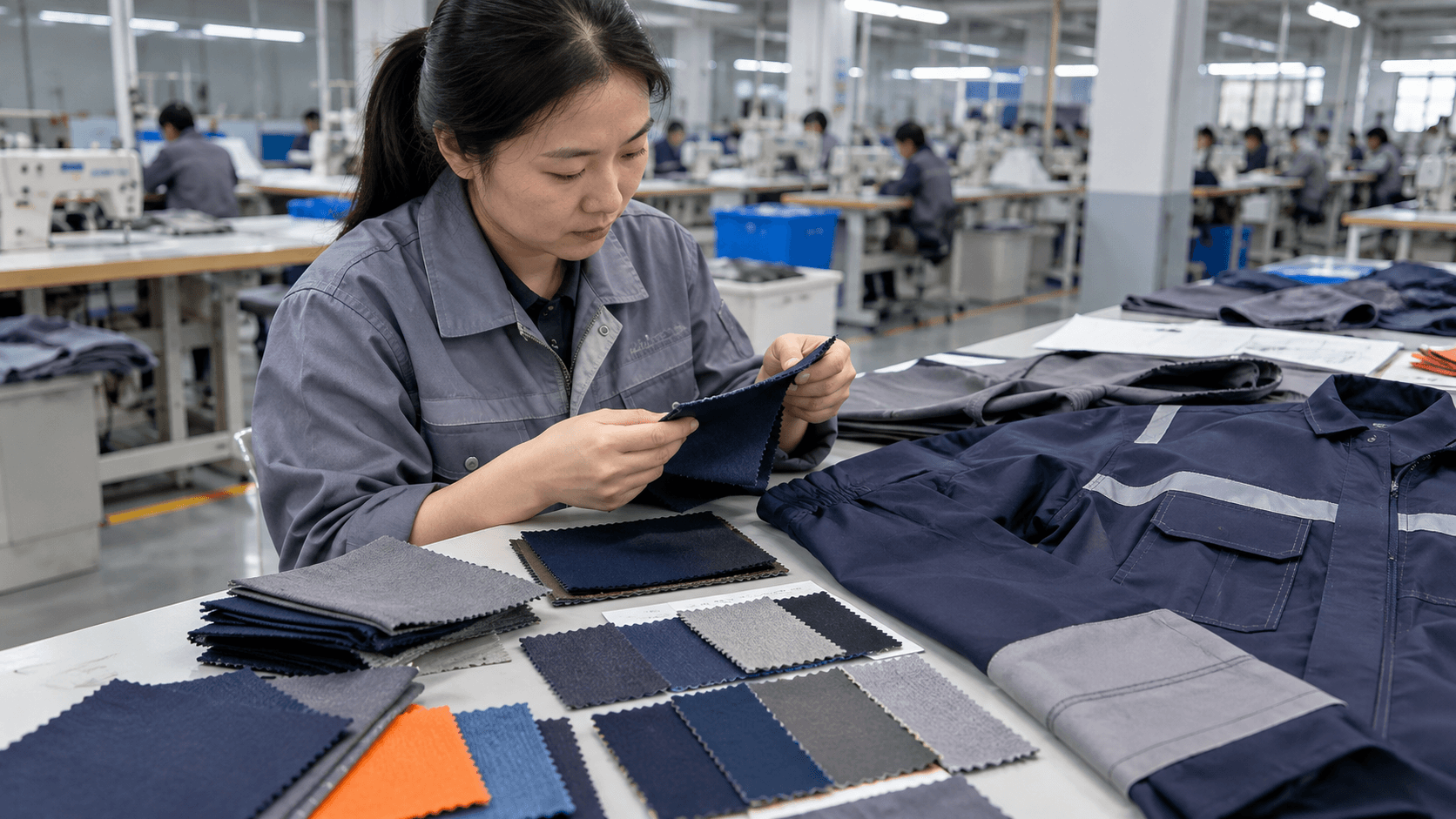
Illustrative image, not evidence of testing or a documented customer project. Procurement guidance does not replace product instructions or competent workplace assessment.
Primary topic: flame resistant workwear buyer evidence
Introduction
"FR" on a fabric swatch, shirt tag or supplier email does not answer every question about workplace flame and arc hazards. The finished garment, its closures and trims, the layers worn beneath it, and the exact work task can all matter. An importer should not substitute an attractive fabric data sheet for the employer's hazard assessment or for garment-level evidence required by the destination market.
This guide helps buyers define the RFQ and review claims without promising that any garment is universally flameproof. PPEgen does not claim a particular item meets a stated FR or arc requirement unless exact-model documentation supports it.
Quick answer: Ask the customer which thermal or electrical hazard is present and which standard/level is required. Obtain evidence tied to the finished garment and exact configuration, not only a raw fabric sample. Check labels, seams, closures, trims, layering instructions and size fit, then preserve the approved construction through production and shipment.
Separate flame and arc questions
An open-flame exposure and an electric-arc scenario are not interchangeable. The employer's risk assessment must identify the hazard and required protective system. The OSHA PPE rule requires assessment and suitable PPE. The NIOSH electrical-safety overview stresses prevention and safe-work controls for electrical hazards. Clothing is only one layer, never authorization to perform energized work.
Do not write "arc resistant" solely because a fabric does not continue burning in one test. Arc-rated claims need their own applicable evidence. Likewise, a garment tested under a particular method cannot automatically be marketed for every flash-fire task. Ask the safety team to provide the target performance and the standard/edition relevant to the destination.
Questions before a quotation
What work creates the exposure? Is the garment worn as an outer layer or under a jacket? Could rainwear or high-visibility tape cover it? Is the site using gloves, hood and face protection as a coordinated system? Will uniforms be commercially laundered? The answers influence both technical approval and the commercial specification.
Understand fabric evidence versus garment evidence
Fabric test data can describe material behavior under a stated method. It may not cover the impact of seams, zippers, thread, pockets, labels or fit in a finished garment. Ask for the finished-product model, tested configuration, garment instructions, applicable rating and limitations. Confirm whether color, weight or supplier batch changes are covered.
| Evidence offered | Useful for | Gap to resolve |
|---|---|---|
| Fabric test report | Identifying material behavior | Finished-garment design and claim |
| Finished-garment test/declaration | Linking claim to model | Which sizes, colors and revisions included |
| Care label | Safe laundering process | Whether actual laundry follows it |
| Marketing brochure | Product overview | Formal evidence and limitations |
The HSE product-safety and supply guidance reminds distributors to understand applicable PPE duties. Destination requirements can differ; the buyer should obtain qualified local review before adopting a claim from another market.
Check small components
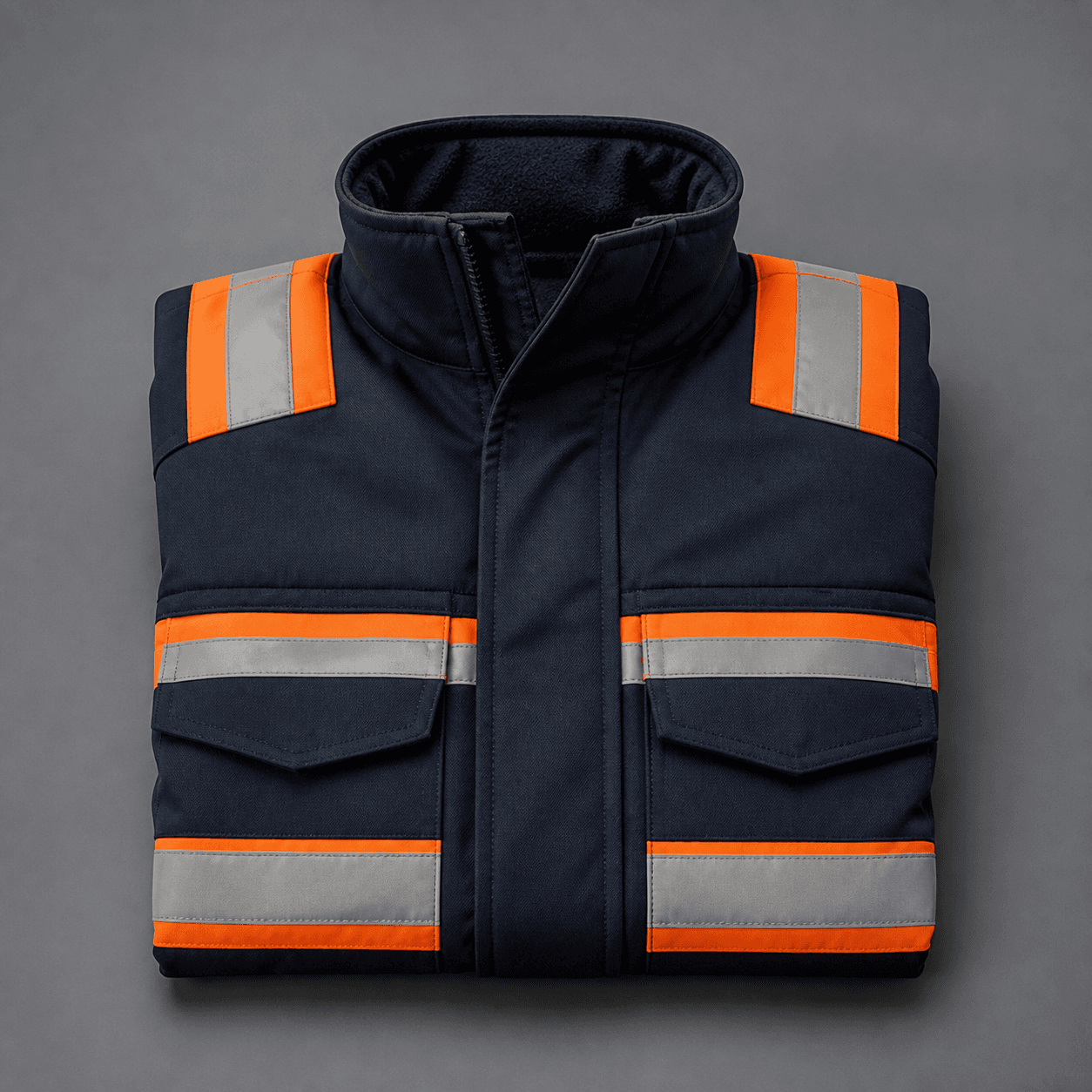
Review sewing thread, zipper or snap construction, reflective tape, logo decoration and any stretch panels. A garment can contain a suitable main fabric yet have an unreviewed component that changes its behavior. Do not assume all parts become FR because they are sewn to an FR textile. Ask the manufacturer what the finished-garment evidence covers and retain a bill-of-materials revision under change control.
Consider layers and fit as a system
Layering can change protection and comfort, but buyers should not add label values from unrelated garments as simple arithmetic. Ask the manufacturer and safety specialist how the intended layers were assessed. An ordinary synthetic base layer, rain shell or branding vest may be unsuitable for the stated thermal hazard. Review the entire clothing system, including gloves, head and face equipment, before approving a uniform package.
Trial size runs with normal underlayers in a safe environment. Check arm reach, crouching, closures, cuff overlap and hem coverage. A too-small shirt may ride up; an oversized one may snag. Record representative wearer feedback without treating a comfort trial as proof of thermal protection.
Mid-article CTA — Send Your Requirements: Share the thermal hazard assessment, required standard, intended layers, sizes and destination with PPEgen. We can organize a model-specific documentation and sampling request. Contact us.
Control labels, care and production
An FR claim must be traceable to the product and correct market. Check the garment label for model, required marking, size and care information as applicable. Ask what happens when laundering conditions are exceeded, the garment is contaminated or it is repaired. Do not promise unlimited service life. The site should have withdrawal criteria and replacement stock.
Sample approval should include material, weight, cut, seam type, components, labels and packaging. Require notice before a fabric mill, trim, dye or production-site change. At shipment inspection, compare representative garments and carton labels against the signed sample and approved documents. If an unfamiliar zipper or trim appears, hold the relevant lot for review rather than calling it "cosmetic."
An illustrative procurement scenario: a buyer asks for FR workwear but receives a fabric report and a photograph of a completed jacket. The gap is whether the jacket's seams, closures, reflective tape and label form part of an approved configuration for the customer's hazard. The buyer requests finished-garment evidence before issue. This is a hypothetical workflow, not an actual PPEgen project.
The electrical-work PPE procurement guide covers a broader task-based kit. The high-visibility rainwear guide helps when weather and visibility requirements overlap with thermal protection and must be reviewed as a combination. Our protective workwear category is a starting point for a model-specific inquiry.
Write a claim-by-claim evidence register
An FR garment quotation may contain several different claims: fabric flame behavior, finished-garment performance, an arc rating, high-visibility classification, anti-static property and a comfort claim. Put each in a separate row with the exact evidence, test method, model/version, destination applicability and responsible reviewer. A single fabric report should not be pasted into every row. Mark claims as supported, out of scope or unresolved. This makes the remaining questions visible before private-label artwork is approved.
The register should also distinguish what was tested from what will be shipped. Was the sample a shirt, jacket or fabric panel? Did the test include the same thread, closure and reflective trim? Do all colorways use the same material? Does a logo transfer alter the finished configuration? These questions are more useful than asking whether the supplier has "any certificate."
A controlled branding review
Importers often want their logo embroidered, printed or heat-transferred. Before making artwork, ask the garment manufacturer whether that decoration method and placement are compatible with the protective claim. Keep approved dimensions and position in the product file. A large decorative patch may cover a required marking or change how the garment behaves. Do not assume a decoration is harmless because it is small relative to the whole jacket.
Request a pre-production sample after any branding change. Compare it with the approved unbranded sample, document every component difference and obtain technical sign-off. This also protects commercial quality: inconsistent logo color or placement can be identified before full production without conflating cosmetic and protective defects.
Plan a safe user trial and aftercare
The trial should assess fit over intended base layers and with other PPE in a hazard-free setting. Have users close all fasteners, reach overhead, crouch, sit and operate normal nonhazardous controls. Observe whether sleeves ride up, the collar stays positioned and the hem covers the intended area. Do not expose a wearer to flame or arc energy to test a sample informally. Protective claims belong to relevant controlled tests and program assessment.
Aftercare is part of procurement. Ask whether the garment can be laundered by the site's existing service, what detergents or temperatures are permitted, how contamination is handled and when the item must be withdrawn. A fabric may retain a property under one care method while the finished garment becomes damaged through harsh laundering. Store the care label and instructions with the purchase file and convey them to the actual laundry provider.
Provide a replacement route for damaged or contaminated garments. A repair to an FR garment should not be treated as ordinary uniform mending without manufacturer approval. Replacement stock should be by size and model. If a supplier's next lot changes fabric mill or trim, re-evaluate the claim instead of relying on an old sample photo.
A supplier-comparison example
Suppose two offers both say "FR cotton blend." One includes finished-garment information for the exact jacket and documented components; the other provides only a textile test and no answer about the zipper. Procurement can compare price only after the missing technical information is resolved. This is not an assertion that the first is automatically adequate for any particular hazard. The customer still needs the site requirement and destination-market review.
FAQ
Is FR the same as arc-rated?
No. The terms address different evidence and hazards. Ask for the applicable standard and exact-model documentation for the task.
Can fabric certification alone support a finished-jacket claim?
Not automatically. Seams, closures, trims and construction may matter. Request finished-garment evidence where required.
Can any logo or reflective tape be added to FR clothing?
Do not assume so. Ask the garment maker whether the addition is approved under the intended protective configuration.
Can arc ratings from two garments simply be added?
No. Layered-system performance should be assessed under the appropriate method and instructions; numerical addition without evidence can mislead.
What should an importer check at receipt?
Exact garment model, fabric and component specification, labels, size mix, care instructions and lot identity against the approved sample and documents.
What if the site also requires high visibility?
Treat visibility and thermal protection as separate requirements on the finished garment or approved clothing system. Reflective tape, fluorescent fabric and rain layers can introduce components that need technical review. Do not put an ordinary high-visibility vest over FR clothing merely because both items individually have attractive labels. Ask which exact garment combination the site will use, what evidence applies, and whether the outermost visible layer retains the needed protective characteristics. The same principle applies to cold-weather layers and logo patches.
Which samples should be kept after approval?
Retain a signed fabric swatch, a finished garment in a representative size, component and label photos, and the document versions used for technical approval. A later shipment can be compared with this reference. Keep the sample clean and identified; do not use it as regular issue stock. If a production change is approved, archive the earlier sample and record the date the new version enters supply. This makes quality complaints and repeat orders much easier to assess.
Should procurement accept a fabric mill change for faster delivery?
Only after the exact technical implications are reviewed. Ask which material, weight, finish and documented claims are changing, whether finished-garment evidence remains applicable, and whether care instructions or labeling need revision. A deadline is a commercial fact, not evidence of equivalence. If the substitution cannot be approved in time, communicate the delay and consider another already-approved model rather than shipping an unreviewed garment under the old specification.
For annual contracts, ask how the manufacturer controls fabric and trim sourcing over time. A new dye lot may be commercially acceptable, while a different main fabric or closure can require technical review. The contract should identify which changes require notice, which documents must be updated and who signs off a new pre-production sample. Reconfirm destination labels and care directions after a change, especially if the same article is shipped to multiple markets.
If a worker reports that an FR garment shrank, tore or became uncomfortable after laundry, preserve a sample and the actual cleaning history. The cause may involve care conditions, fit, manufacturing quality or unsuitable selection. A measured investigation is more credible than immediately claiming the fabric lost all protection or that no problem exists. Procurement should route the finding to the technical and supplier teams with exact model and lot information.
How should a tender compare two FR garment offers?
Use the customer's assessed hazard and required standard as the baseline. Compare exact finished-model evidence, arc or flame claims as relevant, fabric and component construction, size coverage, care directions, labeling, availability and change-control terms. A lower unit price should not win merely because one bidder omitted garment-level testing or used a different protective scope. If the two offers use unlike standards, request technical interpretation rather than converting ratings by appearance. Document unresolved questions and keep the reviewer who owns the hazard assessment involved through sample approval. Procurement can then compare commercial terms on technically acceptable offers.
Conclusion
FR procurement is a finished-system decision, not a fabric adjective. Define the hazard, request the relevant garment evidence, verify components and layering, and control changes through shipment. If documentation covers only a fabric swatch, keep the garment claim unresolved until reviewed.
Final CTA — Get a Quote: Send PPEgen your work task, destination requirement, size schedule and planned volume. Ask for exact-model documentation and a quotation at info@ppegen.com.
BUYER RESOURCES
Continue your PPE sourcing research.
Explore relevant PPE categories and a primary safety reference alongside this guide.Use this source alongside destination-market requirements for the exact product and application.
READY TO DISCUSS YOUR REQUIREMENT?