BUYER'S GUIDE - 11 MIN READ
High-Visibility Vest Layering and Size Approval: A Buyer’s Guide
Editorial information, sources and corrections
Approve high-visibility vest sizes over actual work layers, checking closure, movement, garment identity and documented design requirements.
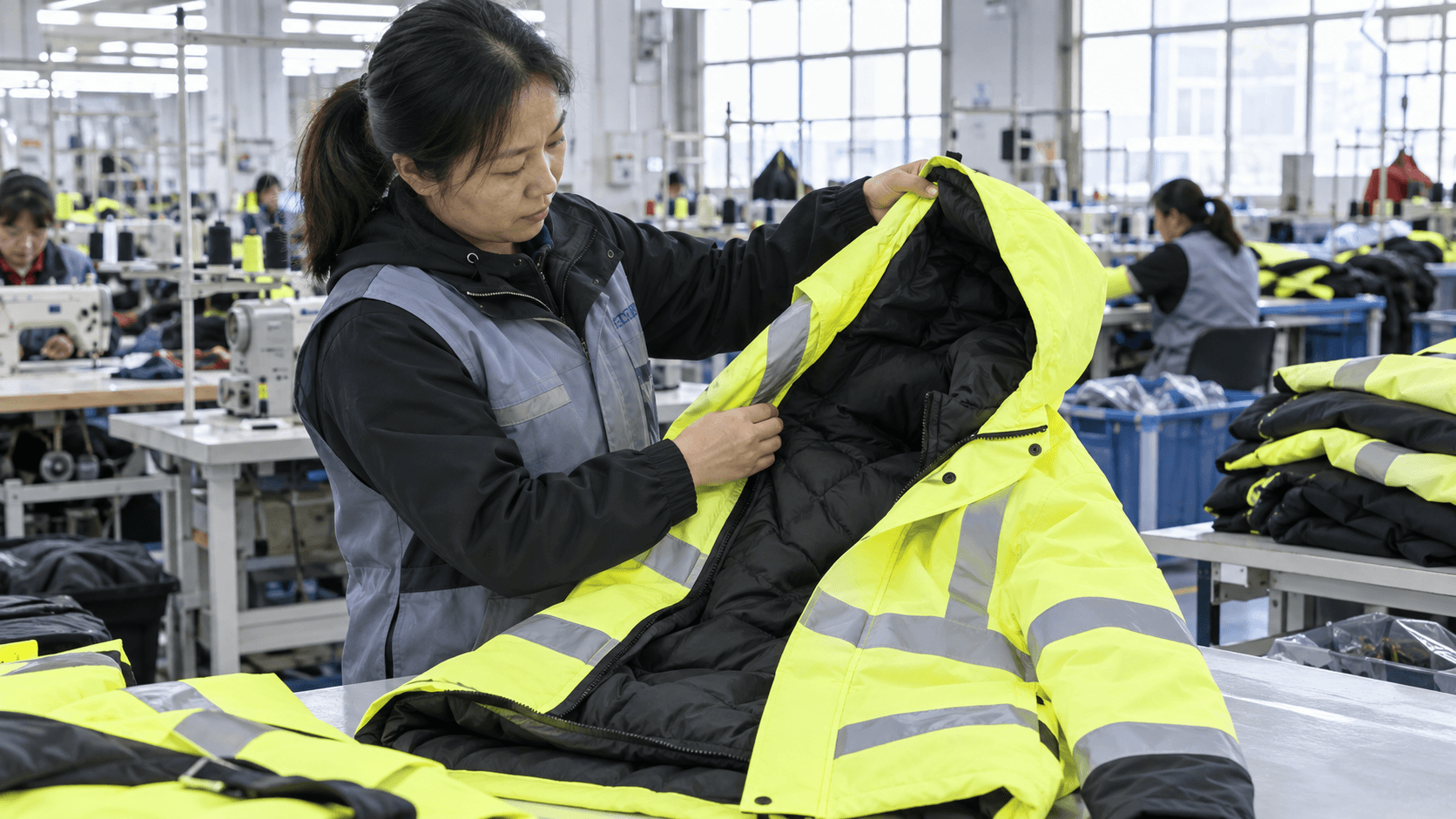
Illustrative image, not evidence of testing or a documented customer project. Procurement guidance does not replace product instructions or competent workplace assessment.
Primary topic: high visibility vest layering
Introduction
High visibility vest layering should be assessed with the clothing actually worn at work. A vest that fits over a shirt may not close properly over a jacket, and simply choosing a much larger size can create loose fabric or movement problems. Buyers should approve the exact garment design and relevant size range in the intended wearing configuration.
For distributors and project procurement teams, this decision connects sizing with the garment’s documented visibility design. Required background and reflective materials, closures, logos and smallest sizes can all affect the approval. A color or a generic hi-vis label is not enough to establish the exact product’s suitability.
This guide provides a sample and order workflow. It does not prescribe a universal garment class or minimum material area for every market. The technical team should verify the applicable standard, edition, intended application and exact-model evidence before commercial release.
Quick answer: Trial high-visibility vests over the actual approved clothing layers, checking closure, movement and fit across relevant sizes. Verify the exact garment’s visibility design and documentation, especially where logos or size changes alter the construction. Order the accepted size distribution and require review before substituting a different pattern or closure.
Define the intended wearing configuration

List the base clothing, jacket or other layers worn in the work setting. Identify seasonal and task variations. A summer fitting does not automatically approve winter use. Request separate sample review where layers materially change the garment’s fit or operation.
Record other equipment, such as a harness or tool arrangement, that the responsible team wants assessed. The vest should be reviewed within that configuration using the relevant instructions. Do not assume that a visibility garment can be covered, modified or rearranged without considering the effect on its intended use.
Start with the protection requirement
Ask the technical team to define the application and destination-market requirement. The Health and Safety Executive’s PPE guidance provides the broader suitability context. The garment’s exact documents should identify the offered design and applicable claims. Avoid presenting every fluorescent vest as equivalent.
Our high-visibility standards comparison supports the documentation discussion. Confirm the current requirement for the intended product and market rather than copying a class from an unrelated project or another supplier’s catalog.
Understand size labels and finished dimensions
Request the manufacturer’s size chart and measurement method. Distinguish body measurements from finished garment dimensions. A chest label alone does not establish how much room the vest provides over other clothing. Ask for the relevant pattern, closure and length information.
Define measurements using shared landmarks and the garment’s specified state. A laid-flat measurement and a worn measurement answer different questions. If tolerances are agreed, write them before production. Do not invent an acceptance tolerance after discovering that bulk sizes differ from an informal fitting sample.
Check the smallest and largest relevant sizes
A sample in the middle of the range cannot establish every size’s fit or documented design. Review representative sizes important to the order and ask which size range the evidence covers. Pattern scaling can affect closure, length and material layout. Keep accepted size references rather than approving a family name alone.
An illustrative sample set might cover 3 sizes and 2 wearing layers. These are planning examples, not a certification or universal minimum. The actual set should reflect the project’s users, quantity distribution and technical questions that remain unresolved.
Evaluate closure and movement
Have representative users close the vest as intended over the relevant layers. Check whether adjustment is within the manufacturer’s permitted range. Observe safe reaching, bending and ordinary movement. Record pulling, excessive looseness, blocked pockets or interference with the task.
Do not treat an open vest as a fit solution if the intended use requires the specified closure. Likewise, do not add unapproved extension panels or fasteners to make a sample fit. Request another approved size or design and review its documentation and configuration.
Keep observations specific
Record the model, size, layer and closure condition for every observation. A comment such as too small is more useful when connected to the exact jacket and adjustment state. Separate length, chest room, movement and acceptance rather than collapsing all fit feedback into one score.
Our winter high-visibility workwear guide provides broader seasonal context. The layering decision here should identify what was actually evaluated. An accepted shirt-and-vest combination should not be advertised as a validated combination for every winter jacket.
Verify the visibility design after customization
Logos, pockets, panels and other changes can affect the garment construction and visible material arrangement. Ask the manufacturer how the exact customized design relates to its evidence. Do not infer that an unbranded sample’s documents automatically cover a changed branded version.
The International Safety Equipment Association’s standards information provides a starting point for identifying the relevant industry framework. Use exact-model documents and the applicable standard for technical decisions. Avoid calculating an unsupported class from color or approximate photographs.
Review artwork at actual scale
Specify logo location and dimensions on the garment drawing. Identify what it covers and whether it changes the approved pattern. Review the smallest relevant size as well as the display sample. A decoration fitting comfortably on a large sample may interact differently with material layout on a smaller size.
Keep artwork approval separate from garment performance approval. Both can be required, and one does not complete the other. Request a written record of accepted customization and any limitations. This is especially important when distributors reorder the same brand design across several size ranges.
Plan a representative fit trial
Select users and layers relevant to the order. Provide identified samples and the current instructions. Keep the trial within safe conditions; it is not a demonstration of conspicuity in uncontrolled traffic. The technical team should decide how application suitability is assessed.
| Trial field | What to record | Reason |
|---|---|---|
| Garment identity | Model, size and revision | Links the observation to the product |
| Layer | Shirt, jacket or approved combination | Makes fit reproducible |
| Closure | Intended fastening and adjustment | Checks correct wearing |
| Movement | Safe task sequence | Identifies restriction or looseness |
| Design | Logo and material layout | Preserves the reviewed configuration |
Use trial feedback to choose sizes and alternatives. If a user cannot achieve acceptable fit, record the issue and request another approved design. Do not approve a oversized vest solely because it closes. Loose material and task interference still need assessment.
Send Your Requirements: Share your target market, application, clothing layers, logo drawing and estimated size distribution through PPEgen’s inquiry page. Request identified sample sizes and exact-design documentation. That allows both fit and garment configuration to be reviewed before bulk production.
Convert accepted fitting into the size curve
Use reliable issue or trial information to allocate quantities. Record unresolved users or untested layers separately rather than guessing silently. A total order quantity without a size distribution cannot support controlled production. Keep the size chart revision attached to the order.
For illustration, an order of 200 vests might allocate 40, 100 and 60 units across 3 accepted sizes. The values are arithmetic examples, not a recommended market curve. Your actual distribution should reflect the users and wearing conditions evaluated, with any estimate labeled as such.
Include exchange and seasonal needs
Discuss unused size exchanges and replenishment conditions before purchase. A workforce may change layers seasonally or add new users. Keep the relevant approved combinations and available sizes accessible. Do not substitute another pattern during a shortage without reviewing its fit and documentation.
Our high-visibility vest size-curve guide offers broader distribution planning. Use the layering trial as input rather than treating a generic sales ratio as evidence of your project’s needs. Preserve the link between accepted sizes and the actual model.
Write a clear production specification
Identify model, pattern, sizes, finished dimensions, closure, reflective material, background material, artwork and packing. State the required documents and evidence scope. Ask the supplier to list exceptions. An offer for a standard reflective vest is too broad when the decision depended on a particular layered fit and customized layout.
Request review before changing material, tape, pattern or closure. A small-looking modification may change fit or documentation applicability. Factory testing should identify relevant methods and exact samples. The buyer’s fit trial remains an application record rather than a replacement for required product testing.
Define inspection criteria before manufacture
Agree measurable features and workmanship criteria through the specification. Reference the accepted samples and drawings. Include how dimensions are checked and how artwork position is reviewed. Avoid judging bulk goods against a memory of a fitting session when the approved reference can be retained.
Normalize prices by garment variant, branding, packing and delivery basis. A cheaper quotation that omits required sizes or uses a different closure is not a direct equivalent. Compare the complete accepted configuration rather than only fabric color or a headline class description.
Inspect the bulk size range
Shipment inspection should include representative sizes and cartons according to the agreed plan. Check labels, dimensions, closure, workmanship, layout and artwork against approved references. Verify physical quantities by size and any permitted mixed-carton arrangement. A correct total can conceal a shortage in a critical size.
Review model documents and any customization approval alongside the physical inspection. Visual checks alone do not establish every visibility requirement. Our PPE quality-control guide supports the release record. Hold unexplained pattern or material changes for technical review.
Retain a repeat-order reference
Keep the accepted sample, size chart, artwork and document revision together. Record complaints about closure, movement and seasonal layering separately from workmanship defects. That information can identify whether a new size, pattern or issue instruction is needed.
When reordering, confirm that the supplier offers the same approved construction. A similar-looking vest may differ in dimensions or material layout. Request change notification and review relevant samples before treating a revised garment as interchangeable with the previous product.
Example: prepare a seasonal vest order without guessing sizes
Imagine that a project’s summer vest closes correctly over a shirt, but winter clothing creates fit complaints. Identify the actual jacket and other layers before requesting larger vests. Review the current garment and permitted wearing configuration with the technical team. An open closure or informal extension should not become the default solution.
Request identified samples in relevant sizes and record the winter configuration. Check closure and safe movement, then review the exact design evidence and any artwork. If a different pattern is proposed, treat it as a new configuration requiring the relevant approval rather than a simple size replacement.
Keep summer and winter allocations distinguishable where they differ. The warehouse may need separate issue notes even if the commercial model remains the same. A generic quantity increase can leave the critical size unavailable and create surplus elsewhere. Use accepted fit information and state estimates clearly.
Review the smallest size in any customized range. Artwork that fitted the large display sample may interact differently with the revised pattern. Ask the manufacturer to confirm the evidence basis for the exact branded design. Do not copy the previous order’s document references without checking applicability.
Send the accepted size chart, sample list and artwork revision to the supplier and inspector. During shipment inspection, compare those references and count physical sizes. A carton marked winter vest is not sufficient if the delivered dimensions or closure differ from the reviewed sample.
After issue, record whether complaints concern size allocation, layering, task movement or workmanship. These patterns support different changes. The buyer may need more of an accepted size, another documented pattern or better issue instructions. Treating every complaint as a reason to buy a larger vest can create an assortment that is easy to order but difficult to wear correctly.
Keep issued-size feedback linked to the season and underlayer configuration. A summer fit complaint and a winter closure problem may call for different changes. Update the approved size matrix when the evidence supports it, and communicate the revision to purchasing and receiving. This prevents a later reorder from silently reverting to an old size curve that no longer reflects the intended clothing combination.
FAQ
Can a larger vest solve every layering problem?
No. Additional room can help closure but may introduce excessive looseness or task interference. Evaluate the exact size over the intended layers with safe movement. If fit remains unsuitable, review another approved design rather than adding informal extensions or assuming an open closure is acceptable.
Is one sample size enough to approve a whole range?
It may leave fit and design questions unresolved at other sizes. Review representative sizes relevant to the order and ask which range the documentation covers. Keep sample references and limitations clear. The technical team should decide the additional evidence needed before approving the complete distribution.
Does adding a logo leave the garment’s claim unchanged?
Do not assume so. Request review of the exact customized design, including logo dimensions and placement. Changes can affect material layout or documentation applicability. Keep artwork and product approval separate, and record the manufacturer’s basis for the claim on the branded version.
Should the vest be trialed over winter jackets?
If that is an intended use, evaluate the actual relevant jacket or approved layer. A shirt-only trial does not establish winter fit. Record the configuration, closure and safe movement observations so that purchasing and stores staff know which combinations were accepted and which remain unreviewed.
What should an importer check before release?
Verify model, size range, quantities, dimensions, closure, material layout, artwork and markings against the accepted references. Review required exact-design documents separately. Use representative sampling and hold unexplained substitutions. A correct fluorescent color or carton label does not prove the whole specification has been met.
Conclusion
High visibility vest layering belongs in sample approval, size planning and production control. Evaluate actual layers, verify the exact design and retain clear fit records. Shipment inspection can then check the accepted construction and distribution, giving buyers a more reliable basis for issue and repeat orders.
Request a layered-fit vest quotation
Explore PPEgen high-visibility products and request samples or a quote. Send application requirements, layers, artwork, quantities and target market. Ask for model-specific size information and documentation before approving the bulk order.
BUYER RESOURCES
Continue your PPE sourcing research.
Explore relevant PPE categories and a primary safety reference alongside this guide.Use this source alongside destination-market requirements for the exact product and application.
READY TO DISCUSS YOUR REQUIREMENT?