BUYER'S GUIDE - 12 MIN READ
Industrial Workwear Seam and Pocket Quality: A Bulk Buyer’s Checklist
Editorial information, sources and corrections
Specify industrial workwear seam and pocket quality using task needs, construction samples, agreed workmanship criteria and shipment checks.

Illustrative image, not evidence of testing or a documented customer project. Procurement guidance does not replace product instructions or competent workplace assessment.
Primary topic: industrial workwear seam quality
Introduction
Industrial workwear seam quality depends on the accepted garment construction, intended use and reproducible workmanship controls. Strong-looking stitching is not a complete specification. Seam type, thread, material, reinforcement, placement and fit can all influence the result. Pockets also need task-specific decisions about access, loading and potential interference.
This guide is for uniform buyers, distributors and private-label teams reviewing industrial work clothing. It focuses on construction and inspection. Where a garment carries a protective claim, the exact finished model and relevant evidence must be reviewed separately. Ordinary workwear workmanship does not establish flame, chemical or other protection.
A practical purchase should identify where stress occurs, approve the sample and define what factory and shipment checks will compare. The examples below are suggested procurement methods, not claims about a completed PPEgen garment project or a universal seam-strength threshold.
Quick answer: Specify seams and pockets against the actual work, accepted pattern and fabric. Review high-stress locations, safe movement and pocket access. Agree construction and workmanship criteria before production, verify any protective claims separately, and inspect representative sizes and cartons against the retained sample and drawings.
Map task needs before adding pockets
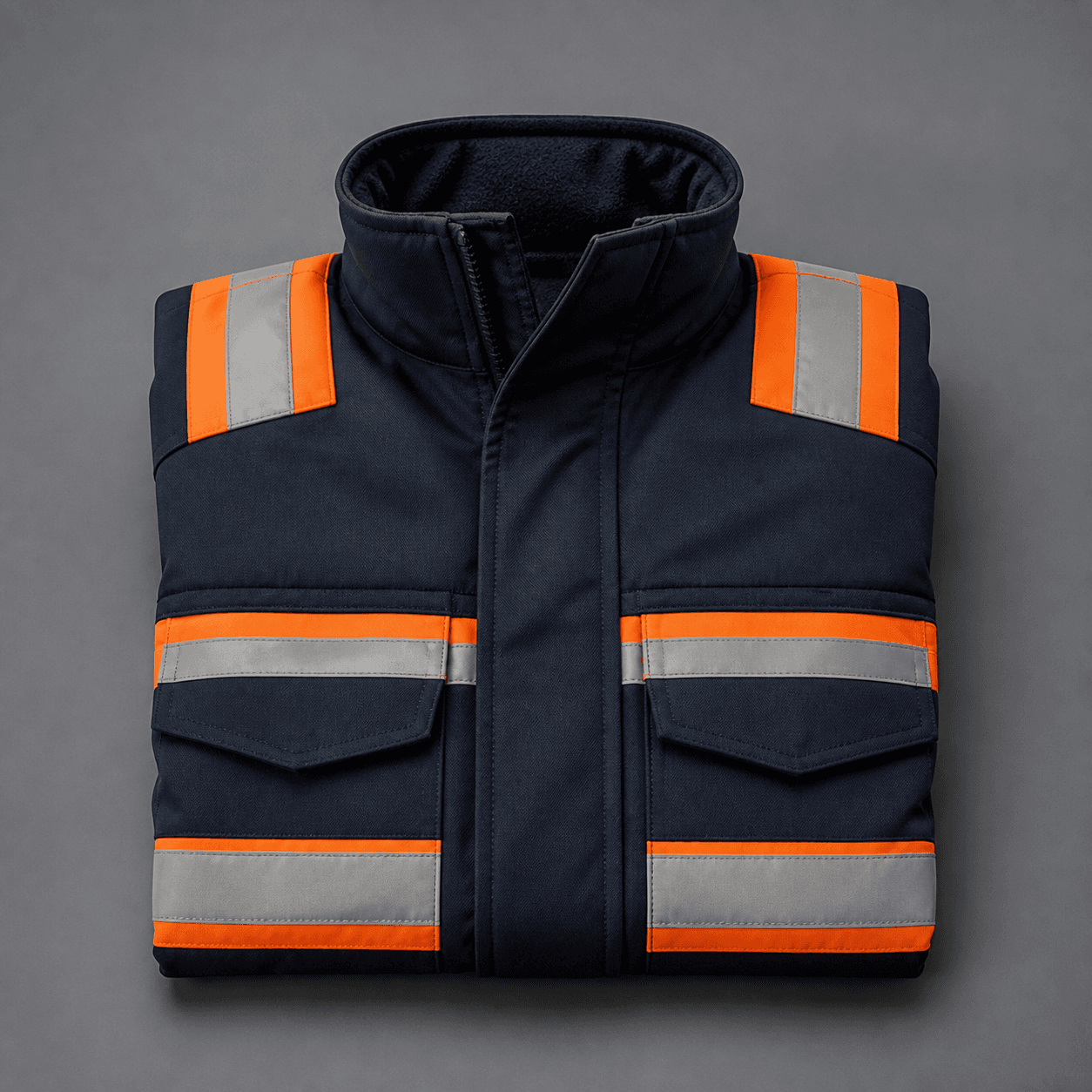
Ask what workers carry, how they move and which items should not be carried in clothing. More pockets are not automatically better. A pocket may interfere with bending, a harness, equipment or another task requirement. The responsible workplace team should identify relevant restrictions before the garment pattern is selected.
Describe whether the garment is a general uniform or an identified protective product. The Health and Safety Executive’s PPE guidance provides the broader selection context. Keep the commercial workwear description accurate and avoid adding protective claims based on fabric weight or reinforced appearance alone.
Identify high-stress areas
Review crotch, seat, underarm, knee, pocket opening and other locations relevant to the pattern. Use safe wearer observations and returned-garment information where available. Record the model and reason for retirement. A torn seam, damaged fabric and poor fit are different issues and may need different solutions.
Do not assume a heavier seam solves a pattern problem. A garment pulling during movement may need fit or pattern review. Likewise, adding reinforcement can change bulk and comfort. Ask the supplier to explain the proposed construction and provide a sample that addresses the identified issue.
Define the seam construction
Request seam type, thread information and relevant finishing details. Identify where different seam constructions are used. A specification stating double stitched everywhere may be both vague and inappropriate for some locations. The accepted pattern should show the important construction features and their purpose.
If stitch density or another measurement matters, agree a method and range with the supplier before manufacture. Do not impose an arbitrary number copied from another fabric. The appropriate construction depends on the material and intended garment. Retain the sample and drawings so that inspection can reproduce the decision.
Separate appearance from strength evidence
A straight seam can still have a different performance characteristic from another construction. Ask for relevant factory testing when a strength claim is required, including method, sampled configuration and acceptance criteria. Do not call a manual pull demonstration a standard test without an appropriate basis.
Our workwear fabric specification guide supports the material discussion. Seam and fabric must be evaluated together. A thread change or new fabric finish can affect the accepted construction and should enter the change-control process.
Specify pocket construction and reinforcement
Record pocket location, opening, dimensions, closure and intended contents. Ask whether loading is permitted or limited in the product instructions where relevant. A tool pocket should not be treated as appropriate for every object or work activity. The site needs to review how the garment will actually be used.
Identify reinforcement at openings or other stress locations through the drawing and accepted sample. Inspect whether it creates bulk, pressure or difficult access. A reinforced corner is useful only when the complete pocket remains usable and appropriate for the task. Do not approve it from a close-up photograph alone.
Check access with normal equipment
Use the intended gloves and other PPE in a safe trial. A wearer may need to reach a pocket without awkward movement, but accessibility should not compromise another task rule. Compare the actual pattern and sizes. A pocket acceptable on one size may sit differently on another.
Our PPE compatibility checklist helps organize the complete equipment set. Identify where a pocket or closure conflicts with another item. Record the outcome and any pattern change rather than solving the issue through an informal user modification.
Trial movement across relevant sizes
Provide identified samples with the intended base layers. Ask users to perform safe movements approved for the trial, such as reaching and controlled bending. Record restriction, pulling and pressure by garment location. Do not ask users to reproduce a hazardous task to prove durability.
Evaluate length, room and closure along with seam observations. Incorrect fit can load a seam in a way that the intended garment does not accommodate. If the pattern is changed after the trial, review relevant samples again. Approval belongs to the accepted revision, not the first sample’s product name.
Use a clear observation form
For an illustrative plan, compare 2 pattern candidates in 3 representative sizes with 5 observation fields. These are planning choices rather than a standard qualification sample. The actual trial should represent the order and the important technical questions.
| Trial area | Useful observation | Purchasing response |
|---|---|---|
| Seam location | Pulling or discomfort during safe movement | Review fit and construction |
| Pocket access | Reach and closure with intended gloves | Review location or opening |
| Reinforcement | Bulk or pressure | Review accepted detail |
| Size scaling | Different behavior across sizes | Review pattern grading |
| Care | Change after permitted laundering | Review complete construction |
Send Your Requirements: Share garment drawings, tasks, pocket needs, fabric and target market through PPEgen’s inquiry page. Include quantities and size distribution. Request an identified construction sample and documented exceptions before approving bulk production.
Evaluate laundering through the finished garment
Ask for permitted care instructions and evidence supporting relevant claims. Review seams, pocket shape, closures and reinforcement after an agreed care trial. A fabric swatch can support early investigation, but the finished garment captures construction interactions. Do not claim a universal number of washes without supporting evidence.
Record the method, sample, cycles where justified and observations. Distinguish shrinkage, seam distortion, thread damage and pocket changes. A garment that remains visually intact may still need additional testing for a protective claim. Our workwear laundering guide explains the procurement record.
Keep care labels connected to approval
The label should reflect the accepted complete product. A generic uniform label may not match a revised trim, closure or protective construction. Review it before packing. Where market-specific labeling needs professional review, include that step in the document plan rather than assuming branding artwork covers it.
Require supplier notification before a material or care change. A similar garment photograph does not show whether thread, reinforcement or finishing has changed. Retain the accepted sample and revision so that repeat-order comparison is meaningful.
Write measurable workmanship criteria
Define the observations that inspectors will classify. Examples include skipped or broken stitches, untrimmed ends, open seams, unapproved puckering, misaligned pockets and incorrect closures. Agree the accepted reference and defect definitions before production. Avoid vague instructions that every garment must be perfect.
Some appearance variation may be permitted under the agreed criteria; some construction discrepancies may require a hold. The buyer and supplier should decide that in advance. Inspectors need a shared basis rather than personal preference. A clear defect catalog can include annotated photographs of accepted and rejected examples.
Specify measurement consistently
Identify landmarks for pocket placement, dimensions and garment measurements. State the garment condition and method. If measuring before or after laundering, record which state the requirement covers. Comparing two different methods can create a false discrepancy or hide a real one.
Use the relevant technical methods when a claimed performance requires testing. The International Organization for Standardization’s standards search can help identify applicable published methods, but the buyer should verify the exact method and report rather than cite an unrelated standard number as authority.
Plan factory follow-up
Request appropriate records for the accepted construction and relevant process controls. Review incoming material identity, sample approval and any agreed in-process checks. Factory testing should be tied to the exact garment and method. A general factory certificate does not establish the workmanship of a particular order.
Focus follow-up on features that matter to the purchase. If pocket location is critical, check it before the whole lot is completed. If the accepted seam requires a specific operation, confirm the factory’s plan. Buyers can request evidence of controlled output while respecting legitimate process confidentiality.
Manage revisions visibly
Record changes to pattern, fabric, thread, closures or reinforcement. Identify affected sizes and samples. A revised sample should not quietly replace the accepted reference without an approval record. Keep the commercial and technical implications in the same change log.
If the factory proposes an alternative, ask for differences, evidence and a sample. A statement that the new construction is stronger is not enough. The technical team should review fit, care and any claimed protection as well as the local seam detail.
Inspect the finished shipment
Use representative sizes, variants and cartons under the agreed plan. Compare seams, pockets, closures, labels and measurements with the accepted specification. Verify size quantities and packing. A correct invoice total can conceal incorrect size distribution or unapproved pattern variants.
Our PPE shipment inspection guide supports the release process. Visual inspection and sampled measurements have a defined scope. Keep required performance documents separate and review them alongside the physical lot when applicable.
Respond to discrepancies with evidence
Record model, size, lot and location of the issue. Photograph the whole garment and detail. Decide whether containment, additional sampling, rework or replacement is appropriate through the agreed process. A corrected display sample does not prove every affected packed garment was corrected.
Review reworked output using the accepted criteria and record the result. If the correction changes the construction, it may require additional approval. Do not treat a commercial credit as resolution of a technical or protective discrepancy.
Compare cost through usable garments
Normalize quotations for the same pattern, fabric, pocket details, branding and packing. A cheaper garment omitting reinforcement or using a different closure is not a direct equivalent. Ask which differences drive cost and availability. Include sample development and inspection where those services are part of the purchase.
For illustration, USD 1,500 divided by 100 accepted garments yields USD 15 per accepted garment. A claimed cost per year needs reliable issue and replacement records. Do not infer service life from stitch count or a heavy-looking seam. Track retirement reasons and use the evidence to refine the next order.
Example: investigating a pocket complaint before revising every garment
Imagine a distributor receives reports of separation near the lower corner of one pocket. The complaint describes a mixed-size order used by workers who carry different items. It would be premature to conclude that every seam needs heavier thread. First identify the affected garment model, size, production lot and location of the failure, and retain examples if possible.
Ask what the pocket was intended to hold and what it actually carried. Compare the approved pocket dimensions, attachment pattern and reinforcement with the returned examples. Separately review whether the garment fit restricted movement or placed additional tension on the pocket. These questions distinguish a production discrepancy from an unsuitable design or an incorrect product application; more than one factor may be present.
Translate the finding into an inspectable requirement
If review identifies an omitted approved reinforcement, a corrected sample should reproduce the agreed construction. If the design needs revision, specify that change and evaluate it before bulk approval. Avoid an instruction such as make the pocket stronger without defining the reference, dimensions, workmanship and relevant evaluation. An inspector cannot consistently enforce an undefined adjective.
The buyer and supplier should also decide how the change affects existing stock. A rework proposal needs a stated scope and review route. Do not assume that adding stitches to a finished garment preserves every required protective property or produces the intended construction. Changes to protective workwear should be assessed against the applicable model requirements and instructions.
Verify the next lot against the revised sample
Give the shipment inspection team the current revision, not only the complaint photographs. Identify the sizes and construction points to check under the agreed sampling plan. Keep workmanship checks separate from any required laboratory evidence. A neat-looking repaired pocket does not establish every performance claim for the garment.
After release, record whether further complaints arise in the same location and circumstances. Treat that feedback as evidence for the defined order, not proof of universal durability. This approach gives procurement a practical corrective-action record and gives the factory a precise reference to reproduce on repeat orders.
FAQ
Does more stitching always mean better workwear?
No. The seam needs to suit the fabric, pattern and task. Additional stitching can change bulk or flexibility without resolving a fit problem. Review the accepted construction and relevant evidence. Do not rank garments solely by the number of visible stitch rows or a broad reinforced description.
Can one pocket layout suit every job?
Not necessarily. Contents, movement and other equipment can create different requirements. Define the intended task and trial access safely with normal gloves and PPE. The responsible workplace team should review restrictions. Keep approved layouts identifiable rather than allowing informal pocket additions after purchase.
Is a manual pull enough to prove seam strength?
It can be a limited demonstration if clearly documented, but it does not automatically establish a recognized test claim. Request the appropriate method, sample identity and acceptance criterion when strength evidence is required. Keep appearance inspection, demonstration and formal testing separate in the approval record.
Should laundering be evaluated before bulk approval?
Where care is important to the decision, review the finished garment using the permitted method and an agreed trial. Record construction changes and limitations. A visual result does not replace all protective testing, and an unsupported wash count should not be used as a universal lifespan claim.
What should trigger a repeat-order sample review?
Changes to pattern, fabric, thread, pockets, closures, reinforcement or care instructions can affect the accepted product. Repeated user issues may also justify review. Require supplier notification and keep revisions linked to the sample and documents so that a similar-looking garment is not accepted automatically.
Conclusion
Industrial workwear seam quality is controlled through task needs, pattern and material identity, sample trials and agreed workmanship criteria. Evaluate pockets and movement together, review permitted care and inspect finished output. The result is a practical production specification that purchasing and receiving teams can reproduce.
Request a workwear construction review
Explore PPEgen protective workwear and request a quote. Send tasks, drawings, pocket requirements, fabric, quantities and size distribution. Ask for a construction sample and clear documentation before approving the bulk order.
BUYER RESOURCES
Continue your PPE sourcing research.
Explore relevant PPE categories and a primary safety reference alongside this guide.Use this source alongside destination-market requirements for the exact product and application.
READY TO DISCUSS YOUR REQUIREMENT?