BUYER'S GUIDE - 12 MIN READ
Glove Abrasion Ratings vs Service Life: How Buyers Should Compare Evidence
Editorial information, sources and corrections
Understand glove abrasion ratings without confusing laboratory results with service life. Compare work tasks, wear trials and bulk buying costs.

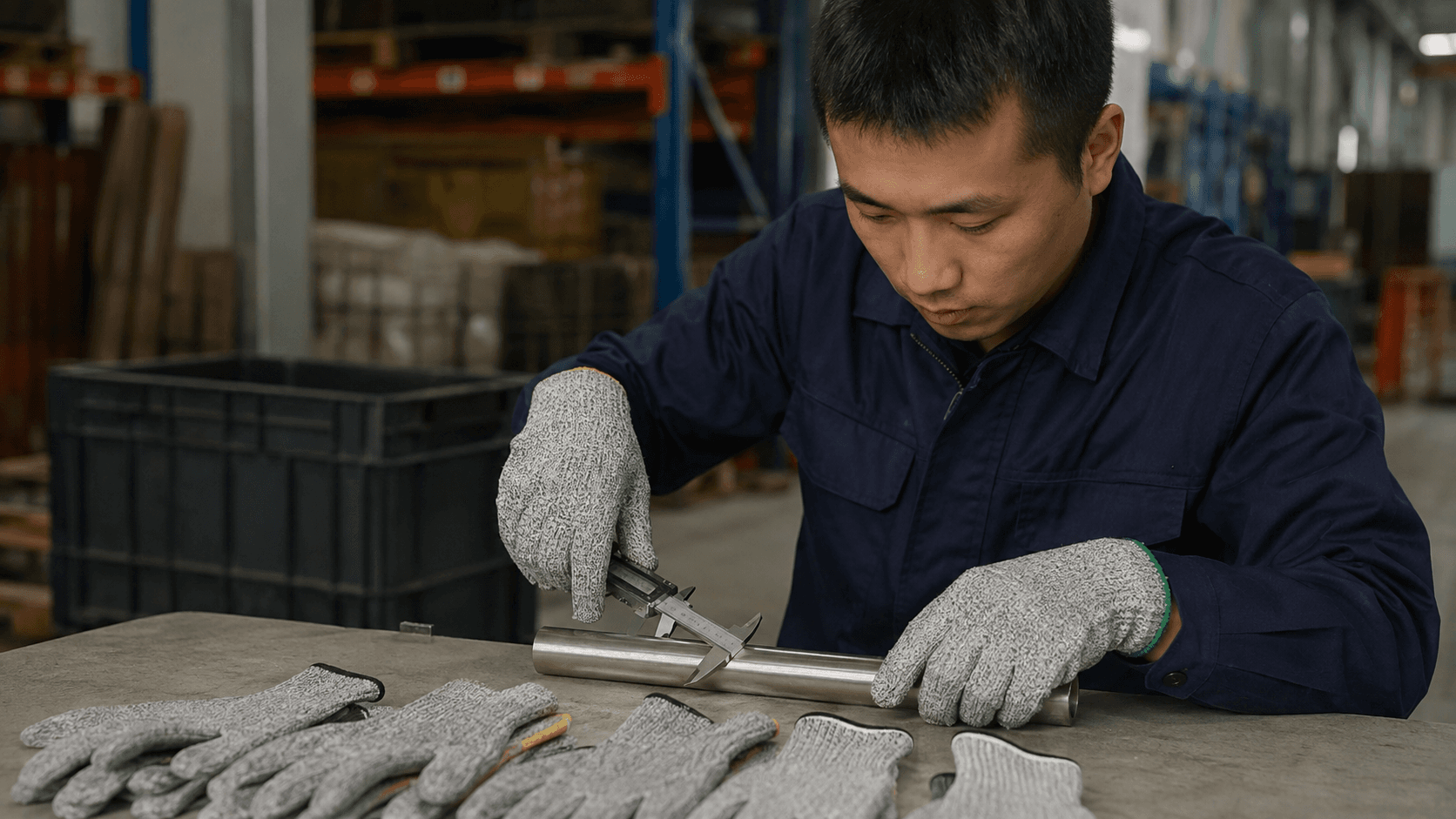
Illustrative image, not evidence of testing or a documented customer project. Procurement guidance does not replace product instructions or competent workplace assessment.
Primary topic: glove abrasion ratings vs service life
Introduction
Glove abrasion ratings vs service life is a distinction that matters whenever a supplier promises a glove will last longer. A laboratory abrasion result describes performance under a defined test method and conditions. Service life describes what happens in a particular workplace, including contact surfaces, task intensity, fit, contamination, cleaning and replacement rules. One cannot be converted into the other through a universal multiplier.
Distributors need accurate product language, while employers and procurement teams need a realistic basis for reorder planning. Both benefit from separating documented classifications from local wear observations. A high rating can be relevant to selection without predicting how many shifts every wearer will complete.
This guide shows how to read the evidence, plan a safe comparison and calculate an operational cost measure. The numerical examples are illustrative arithmetic. They are not PPEgen prices, measured factory results or claims about a customer’s reduction in glove consumption.
Quick answer: Use abrasion ratings to compare documented performance within the same applicable test system. Use controlled task observations to estimate replacement behavior in your workplace. Record the exact models, size, use conditions and retirement reasons. Do not translate a laboratory classification directly into guaranteed hours, shifts or reusable cycles.
What an abrasion result can tell a buyer
An abrasion test uses a defined setup to evaluate resistance to a specified form of rubbing or wear. The test method, material location, conditioning and classification system determine what the result means. Buyers should identify those details before comparing two catalog numbers. A number without its method and exact product identity is incomplete evidence.
Different standards or editions may use different procedures and classification boundaries. Do not place results from separate systems in one ranking table unless a qualified explanation supports that comparison. Even within one system, confirm that the report applies to the offered model and construction rather than another glove in the range.
Read the report before repeating the claim
Request the model code, test method, date, sample description and report reference. Check whether the coating, liner and any reinforcement match the product offered. If a supplier claims that a change does not affect the report’s applicability, request its documented basis rather than relying on a verbal statement.
The International Safety Equipment Association’s hand-protection classification explanation provides useful context for mechanical protection attributes. It is not a substitute for the exact glove report. Keep your product description close to the documented classification and avoid adding unsupported service-life language.
Why laboratory ranking does not equal shift count
Workplace wear rarely follows a single repeated laboratory contact. A glove may rub against cartons, grip oily components, stretch at the fingertips and become contaminated during the same shift. Any one of those conditions may trigger retirement. A glove that withstands rubbing may still be replaced because of a tear or loss of an important handling characteristic.
The wearer also matters. Incorrect sizing can move seams or coating boundaries into contact zones and increase localized stress. Repeatedly pulling a glove off by its fingertips creates another pattern. A fair purchasing comparison therefore considers the whole work process rather than assigning every early replacement to an abrasion result.
Define the retirement reason
Use specific categories such as coating wear, hole, tear, contamination, unacceptable grip, poor fit or required scheduled replacement. Allow an “other” field with a short description. Without that separation, buyers may conclude that an abrasion feature failed when most gloves were actually retired for unrelated reasons.
The Occupational Safety and Health Administration’s hand-protection selection rule considers the tasks, conditions and duration of use. That is the correct setting for service-life discussions. Do not extend an abrasion comparison to unrelated chemical, heat, electrical or cut hazards without their own relevant evidence.
Establish a baseline before changing the glove
Record the current glove and the tasks for which it is approved. Review a practical period of normal issue and replacement records, using reliable information already available. Describe gaps clearly. If the warehouse only records monthly purchasing, it cannot support an exact claim about hours of use per pair.
Review retired examples when this can be done hygienically and safely. Photograph location and type of wear, and record size and task where known. Identify whether damage is concentrated at the thumb web, fingertips or palm. This helps choose a meaningful candidate rather than simply buying the highest abrasion classification available.
Keep the baseline comparable
Changes in production volume, staffing or workpiece type can alter glove demand independently of the product. Record these changes alongside consumption. A decrease in pairs issued after a quiet production month does not prove an improvement in glove durability. Compare within similar task groups and describe unavoidable differences.
For instance, an illustrative baseline might separate 3 workstations and 2 glove sizes frequently issued. Those counts are a planning example, not a standard trial size. The essential feature is that observations remain connected to identifiable conditions, making later comparisons interpretable.
Plan a safe wearer trial
Choose candidate gloves that meet the required protection and application conditions before trialing wear. Compare appropriate sizes and provide instruction for use and inspection. Do not ask workers to continue using damaged gloves to generate a longer service-life result. The approved replacement rule takes priority over the trial’s purchasing objective.
Define who records issue, task assignment and retirement. A short form can capture date, model, size, work group and replacement reason. Add a way to report poor handling immediately. Our work-glove wearer trial protocol offers a wider framework for keeping the evaluation structured.
Avoid common comparison errors
Do not alternate candidates between unrelated tasks and combine the results. Avoid giving one product additional cleaning while leaving another untreated. Do not count unopened spare pairs as failures or omit uncomfortable models from the denominator without explanation. State whether a wearer withdrew and why.
Keep the accepted protection requirement constant. A cheaper glove that falls outside the required hazard assessment is not a valid cost-saving candidate. Similarly, a heavier glove that introduces handling difficulty may not be acceptable even when visible wear is slower. Record protection, user acceptance and cost as distinct decision fields.
Translate observations into useful purchasing measures
Choose a measure that the operation can support. Pairs issued per defined work volume may be more reliable than estimated hours per pair. Where issue and retirement are recorded consistently, a distribution of use duration can be informative. Explain missing data and avoid presenting a single average as a guarantee for every user.
Calculate cost per usable issued pair separately from any estimate of cost per hour. Include landed cost and known rejects using the same basis across candidates. An illustrative USD 900 purchase yielding 450 accepted pairs equals USD 2 per accepted pair. It says nothing yet about how long each pair remains suitable.
Example of a limited comparison
Suppose a trial logs 100 retirements for candidate A and 80 for candidate B under otherwise comparable recorded work. The observed difference is 20 retirements in that trial. It does not establish a universal 20 percent saving without checking issued quantities, exposure, task allocation and the reasons for retirement. State the denominator and limitations.
If contamination drives most replacement, a higher abrasion result may have little effect on consumption. If local thumb wear dominates, reinforcement position may deserve attention. Use the result to choose the next investigation, rather than turning every purchasing observation into a broad durability claim.
Send Your Requirements: Tell PPEgen’s export team the current glove, work surface, wear location, required classification and size demand. Include reliable replacement observations where available. A candidate comparison should address the actual retirement pattern and provide model-specific evidence for review.
Specify factory testing and bulk consistency
The RFQ should identify required classification, relevant method and exact product construction. Request evidence that applies to the offered model. Where additional buyer testing is agreed, define the laboratory, sample selection, conditioning, report ownership and acceptance criteria before production. A vague “abrasion test passed” cannot support a reproducible decision.
Discuss how important coating and liner characteristics are controlled during manufacture. Buyers can request appropriate process records and lot identity without demanding that a supplier disclose every proprietary parameter. The practical objective is consistent, traceable output matching the accepted model.
| Evidence type | Useful question | What it does not establish |
|---|---|---|
| Laboratory report | Which method and exact model were tested? | Guaranteed shifts for all users |
| Factory process record | How is the accepted construction controlled? | Site suitability by itself |
| Shipment inspection | Does the lot match identity and workmanship requirements? | Full performance testing of every pair |
| Wearer trial | What happened under the recorded task conditions? | Universal lifespan across industries |
Inspect shipments without inventing a durability test
During shipment inspection, compare model identity, sizes, markings, coating finish and workmanship with the approved specification. Record discrepancies such as unexpected thickness, bare spots, weak seams or a changed liner. These may justify holding a release decision, but visual similarity alone also does not prove equivalent abrasion performance.
Do not rub a random glove against an unspecified surface and call the result a standard test. A buyer may agree a supplemental demonstration, but it should be labeled and documented according to its limited purpose. Formal performance claims need the relevant test method and evidence.
Our PPE quality-control guide explains the relationship between specification, sample and shipment review. Keep all three linked through model and revision. A report for one construction should not quietly remain attached after a supplier changes the coating or yarn.
Manage cleaning and replacement honestly
Follow the manufacturer’s care instructions and approved-use limits. Cleaning can affect construction or performance and may not be permitted for every glove. Do not assume that a visibly clean product has retained all its relevant protection. Equally, do not add unverified washing cycles to a commercial cost comparison.
Provide a clear replacement route so that wearers do not delay exchanging an unsuitable pair to meet a consumption target. Purchasing metrics should support correct use, not reward extended wear beyond the approved condition. The Health and Safety Executive’s PPE guidance is a program reference; exact-model instructions remain central to product care.
Example: interpret a trial that appears to show lower consumption
Consider a trial in which the purchasing record shows fewer pairs issued after a new glove enters the stockroom. Before reporting a saving, ask whether production volume, staffing, issue rules or inventory transfers changed. A purchasing total can decrease because old stock was issued elsewhere or because the task became less intensive, even when the product’s wear behavior stayed the same.
Reconcile the beginning stock, receipts, transfers and ending stock for the trial area. Link the resulting issue quantity to a defined work measure if the operation maintains one reliably. Avoid estimating detailed exposure hours after the event when the underlying records do not support them. An honest limited comparison is more useful than a precise-looking invented result.
Next, review retirement reasons. If the new glove is comfortable but users retain contaminated pairs longer because replacements are hard to obtain, lower consumption is not necessarily a desirable outcome. The approved retirement rule should be consistent and visible. Make sure trial incentives do not discourage reporting a damaged or unsuitable pair.
Check whether the same sizes and construction were actually issued. A mixed shipment or an unrecorded substitute can weaken the comparison. Keep the supplier model, buyer SKU and accepted sample revision on the trial record. If the product changed mid-period, split the observations rather than combine them into one result.
The report can state what was measured: for example, issued pairs and recorded replacement reasons under the observed work conditions. It should separately state what remains unknown, such as exact hours per pair or performance in another task. Do not convert a useful local observation into a guaranteed life claim for a distributor’s entire customer base.
Finally, use the trial to make a purchasing decision with a review date or trigger. The buyer may accept a candidate, request a longer observation period or investigate another failure mode. Keep laboratory evidence alongside the trial but label its role. An abrasion classification and an operational issue record strengthen the decision in different ways; neither should be made to stand in for the other.
FAQ
Does a higher abrasion rating guarantee a longer glove life?
No. It describes performance under a specified test system. Workplace life also depends on the task, fit, contamination, handling and replacement rules. Use the rating as one documented selection attribute, then assess operational use through a controlled trial that keeps the required protective capability and safe retirement criteria constant.
Can results from different abrasion test systems be ranked directly?
Do not assume that they can. Methods and classification boundaries may differ. Identify the standard, edition and test procedure before comparing numbers. Request a qualified explanation if a supplier claims equivalence, and avoid publishing a conversion that is not supported by the relevant documentation.
Should a purchasing trial continue until the glove fails?
Only follow the approved safe replacement criteria. Workers should not continue using an unsuitable or damaged glove to extend a trial result. Record why the glove was retired and what work it completed within the approved conditions. That information is more useful than an artificially long duration.
What if only monthly consumption data is available?
Use it with explicit limitations and account for work volume, stock movements and staffing. Monthly purchasing is not the same as measured wear time. A prospective trial can add model, task and replacement reasons so that future procurement decisions have a more reliable operational basis.
Can an importer advertise a lifespan measured in one trial?
Describe the trial’s conditions and limits accurately, and avoid turning a local observation into a guarantee. Verify the supporting records and applicable market requirements before making the claim. Documentation should distinguish laboratory classification, proposed application and measured field observations so that customers understand each evidence type.
Conclusion
Glove abrasion ratings vs service life should remain a clear distinction throughout sourcing. Verify the laboratory method and model, investigate actual retirement reasons, compare safe trials and calculate costs using reliable denominators. This provides a purchasing decision that is more useful than a promised number of shifts detached from the work.
Ask for an evidence-based glove comparison
Review PPEgen’s safety gloves and request a sourcing comparison. Send the task, current model, wear observations, destination market and required classification. Ask for identified alternatives and evidence so that sample approval addresses protection, use and repeat-order consistency together.
BUYER RESOURCES
Continue your PPE sourcing research.
Explore relevant PPE categories and a primary safety reference alongside this guide.Use this source alongside destination-market requirements for the exact product and application.
READY TO DISCUSS YOUR REQUIREMENT?