BUYER'S GUIDE - 12 MIN READ
Work Glove Thumb Reinforcement: What Bulk Buyers Should Verify
Editorial information, sources and corrections
Specify work glove thumb reinforcement with task trials, construction checks and clear acceptance criteria before a bulk order.

Illustrative image, not evidence of testing or a documented customer project. Procurement guidance does not replace product instructions or competent workplace assessment.
Primary topic: work glove thumb reinforcement
Introduction
Work glove thumb reinforcement adds material or a modified construction around a frequently loaded area between the thumb and index finger. It can be useful when repeated gripping concentrates wear there, but the benefit depends on task, patch position, attachment, fit and the underlying glove. A reinforcement photograph does not establish a separate cut, puncture or chemical protection claim.
This guide is for distributors comparing reinforced glove quotations and purchasing teams investigating recurring wear. Start with returned-product observations and the work task rather than requesting a thicker patch automatically. Additional material may change bending, tactile feedback and the ability to close the hand around a small object.
A good procurement decision connects the observed failure location to a candidate construction, evaluates safe use, and records what the factory must reproduce. The workflow below is a proposed evaluation method. It does not describe a verified PPEgen field study or promise a particular increase in glove life.
Quick answer: Specify thumb reinforcement only after confirming where and why the accepted glove wears. Compare the patch material, position, attachment and effect on fit. Trial the exact reinforced model under representative safe conditions, verify required protection evidence, and define workmanship criteria before approving a bulk purchase.
Identify whether the thumb area is the actual problem
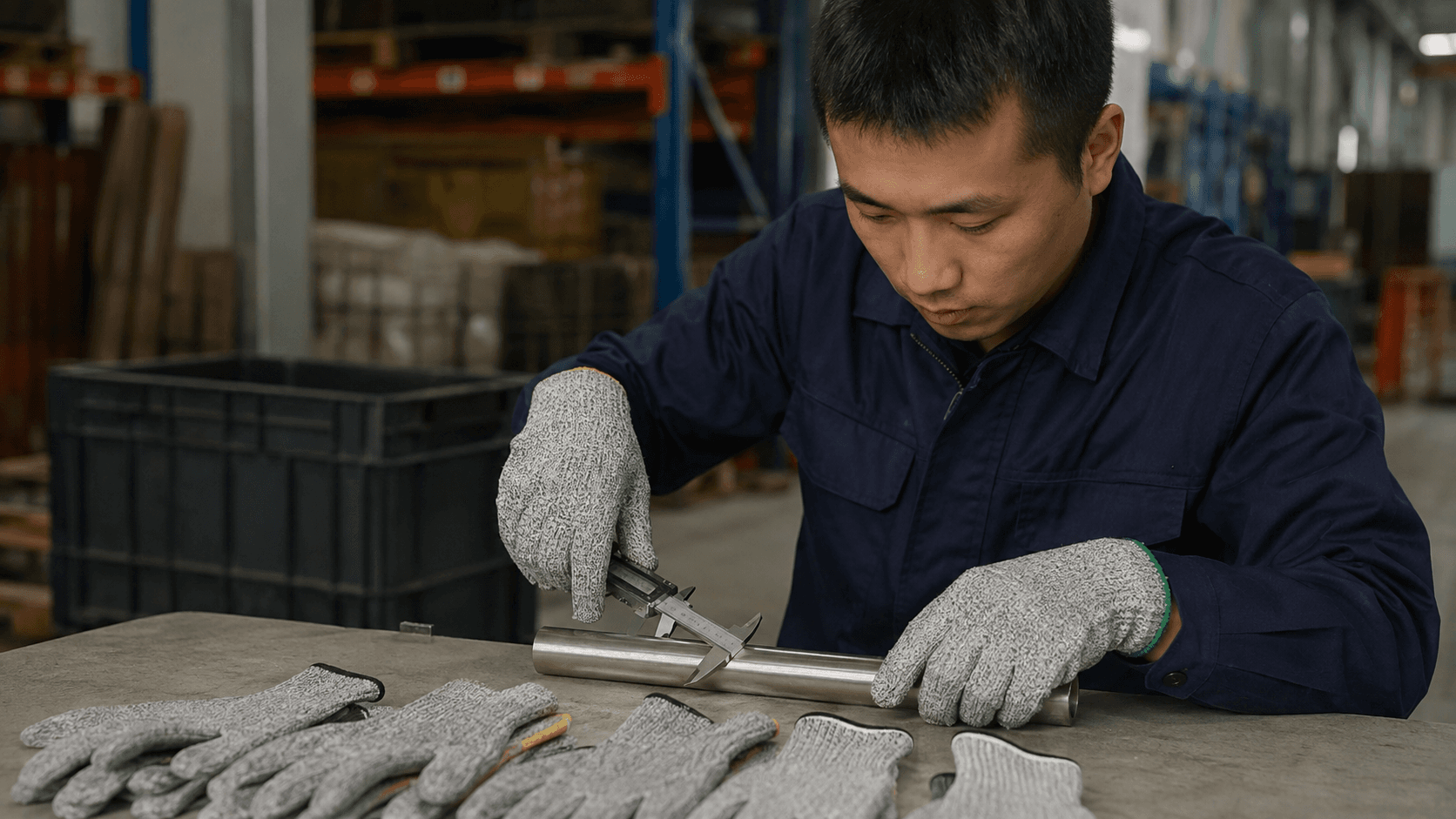
Collect examples of retired gloves through the normal replacement process. Record the model, size, task, issue date where available and reason for retirement. Photograph both hands before cleaning or disposal alters the evidence. Separate wear at the thumb crotch from worn fingertips, damaged palms, contamination and other reasons for replacement.
Look for concentration rather than assuming every retired glove supports reinforcement. A team may complain about short glove life when the actual pattern is widespread coating abrasion or incorrect sizing. A thumb patch addresses neither problem comprehensively. The purchasing question is whether the proposed design changes the relevant failure mode without creating another one.
Ask how the hand contacts the workpiece
Describe the object shape, grip diameter, edge profile and surface condition. Repeatedly handling a broad section and pinching a narrow component can load different areas. Record whether one hand carries most of the load, whether the object rotates in the grip, and whether gloves contact abrasive surfaces while reaching into containers.
Do not reproduce dangerous failure scenarios deliberately. The site team should determine safe trial activities and any additional controls. The Occupational Safety and Health Administration’s hand-protection selection requirement connects glove choice with the work and hazards. Reinforcement is a design feature within that decision, not a substitute for it.
Understand the reinforcement construction
Suppliers may offer a bonded overlay, additional dipped area, sewn patch or modified knitting. These are different designs even when the catalog calls all of them reinforced. Ask for a construction description and detailed images showing the thumb web, palm and side. Identify where the extra material begins and ends relative to the fingers.
The patch should be evaluated in the same orientation as the working hand. A flat photograph can hide a fold, ridge or poorly placed boundary that becomes apparent when the thumb opens. An attractive reinforcement on a sample table may interfere with the actual grip. Compare open-hand and closed-hand positions during review.
Material and attachment are separate questions
Ask what the reinforcement is made from and how it attaches to the glove. If sewn, inspect stitch consistency and exposed thread ends. If bonded or dipped, inspect lifting, unwanted ridges and the transition to surrounding material. Do not infer bond strength or protective performance from appearance alone.
Request relevant factory testing or supplier process evidence when the attachment is important to the application. The method, conditioning, acceptance criterion and sampled model should be identified. A pull demonstration made for a video can illustrate a process, but it does not become a recognized performance test unless its method supports that claim.
Verify protection evidence for the finished model
A reinforced construction is not automatically covered by the documentation for an unreinforced base glove. Ask the manufacturer how the offered model relates to the cited reports, markings and declaration. Record any differences in materials, dimensions and layers that might require review. The buyer should not make that determination solely from a shared catalog family name.
Where the product carries mechanical protection ratings, confirm the applicable test method and exact model identity. The International Safety Equipment Association’s hand-protection overview explains the classification context. Keep a brief reference to the required classification in the RFQ, then rely on the model-specific evidence for the commercial approval.
Distinguish durability from hazard protection
An overlay intended to reduce local wear may not cover every exposed area or every grip position. Do not describe it as puncture-proof, blade-proof or universally more protective. A change in local thickness can also alter dexterity. The purchasing record should state the operational purpose and the boundaries of the supporting evidence.
For detailed protection selection, refer to our cut-resistant glove buyer guide. Keep that assessment distinct from the reinforcement evaluation. The product must satisfy required protection first; a promising wear feature is then compared within the acceptable set of models.
Test fit and dexterity before judging wear
Start with the manufacturer’s size chart and the wearer’s hand dimensions. Confirm that the thumb reaches its intended position without pulling the patch across the web. A glove that is too small can concentrate tension, while excess material can create folds. Reinforcement does not correct a poorly matched size.
Use safe handling tasks that represent the purchase application: controlled pickup, grip release, tool adjustment with equipment isolated, and manipulation of nonhazardous sample components. Record whether the patch restricts thumb spread, creates pressure or interferes with small-object handling. Compare the accepted glove and candidate under the same task conditions.
A useful comparison record
An illustrative trial sheet might include 4 observations: hand closure, thumb movement, tactile control and localized pressure. Score each on a defined 1–5 scale and add written comments. These numbers summarize user feedback; they do not certify protection or establish a statistically proven life improvement.
Include more than one representative hand size and record differences between left and right hands. A patch scaled poorly across the size range may be acceptable in the sample size but awkward in another. Ask for additional sizes before approving a full size curve, especially when the thumb geometry is a key purchasing feature.
Design a meaningful wear comparison
When a safe wearer trial is appropriate, record the work performed and replacement reasons for each candidate. Do not compare one glove used for light sorting with another used for abrasive handling and attribute the difference solely to the patch. Keep task allocation, issue method and replacement criteria as consistent as practical.
Separate elapsed calendar time from time actually used. A glove stored in a locker for several days has not necessarily completed several days of equivalent work. Use the level of detail the operation can maintain reliably. A simple consistent record is more useful than an elaborate form that no one completes.
Send Your Requirements: Use our inquiry form to describe the wear location, accepted glove, handling task and required protection. Attach photographs if available and identify the intended size mix. This gives the supplier a clearer design brief than “make the glove last longer.”
Specify reinforced glove workmanship
Agree what the inspection team should observe before production. Define patch position, coverage, material, attachment, surface transition and acceptable variation. Reference an approved sample and size-specific drawings where appropriate. Avoid a vague instruction such as “strong reinforcement” that leaves the commercial acceptance entirely subjective.
| Inspection point | What to compare | Reason to hold a decision |
|---|---|---|
| Patch position | Accepted sample and drawing | Reinforcement misses the intended contact area |
| Edge condition | Agreed workmanship criteria | Lifting, roughness or an unapproved ridge |
| Size scaling | Accepted examples across sizes | Patch restricts movement in part of the range |
| Left/right consistency | Paired construction | Unequal position or attachment |
| Identity | Labels and technical record | Supplied model differs from the approved offer |
If a measurement is necessary, define the landmarks and method before agreeing a tolerance. An inspector needs to know whether a dimension is measured on a relaxed flat glove or on a specified form. Comparing measurements taken in different states can produce an apparent defect where the product is actually consistent.
Plan factory and shipment checks
Factory follow-up should focus on repeatable placement and attachment. Request process-control evidence relevant to the selected construction, while recognizing that a supplier may protect proprietary settings. Buyers need confirmation of controlled output and acceptable variation, not necessarily unrestricted access to every formulation detail.
Shipment inspection should include multiple sizes and representative cartons under the agreed plan. Inspect both gloves in a pair, flex the thumb area without destructive improvisation, and compare attachment and markings with the retained reference. Record defect location clearly so that the factory can investigate the relevant process.
Respond to a failed attachment consistently
When a patch lifts or a seam opens, identify the lot and affected sizes. Preserve examples and record whether the issue occurred before use, during an approved task, or after an unapproved cleaning process. Those contexts can indicate different causes and should not be merged into a single unexplained complaint count.
Our shipment inspection checklist can help organize containment and follow-up. Agree whether additional sampling, replacement, rework or a fresh approval is appropriate. Do not release a lot on the basis of an attractive replacement photograph that does not address the original discrepancy.
Evaluate the commercial benefit
Compare the complete cost of the accepted reinforced option with the base construction. Include minimum order, size availability, rejected samples, packing and the effect on usable stock. There is no universal percentage premium for thumb reinforcement, and no universal life multiplier that buyers can apply across different tasks.
If a trial provides usable observations, calculate cost per accepted issued pair and review retirement reasons. For illustration, 60 pairs retiring at the thumb and 40 retiring elsewhere in a sample of 100 pairs suggest that the thumb issue deserves investigation. These example counts do not prove that reinforcement will solve 60 percent of failures.
Discuss repair or cleaning only within the product instructions. A field-added patch or unauthorized glue can change the construction and its evidence basis. The Health and Safety Executive’s PPE program guidance supports a structured approach to selection and care; the actual manufacturer’s instructions determine model-specific treatment.
Keep the repeat-order specification current
After approval, retain the base-glove specification as well as reinforcement details. A supplier might preserve the patch while changing the liner or coating, producing a noticeably different glove. The accepted construction should therefore identify all material features important to fit, protection and handling, not only the most visible addition.
Review feedback by application and size rather than combining every return into one average. A particular task may show a local benefit while another shows no improvement. Keep the approved-use scope clear in distributor product data. That makes a claim more useful and prevents a narrow trial observation from becoming an unsupported general sales statement.
Example: decide whether reinforcement deserves a production change
Imagine that a buyer receives several retired gloves from a handling team. Some show thumb-web wear, while others have damaged fingertips or were removed because of contamination. Sort the observations before requesting a new design. A patch proposal should address the thumb issue specifically and should not be promoted as a solution to every replacement reason.
Prepare a drawing showing the affected contact zone and identify the current model. Ask the supplier for an explained candidate construction. If the proposal adds material beyond the observed area, review how that changes movement and contact. A larger patch can create a different fit or handling issue even when its intended purpose is reasonable.
During the safe comparison, ask users to describe thumb movement and grip release as well as wear. Record size and task. If one size creates pressure, ask whether the patch geometry or base fit needs review. Do not average that issue into a favorable overall score from users wearing other sizes.
The final decision can be conditional: accept the candidate for the defined task and reviewed sizes, while holding other applications pending evaluation. That is a useful purchasing outcome when its limits are clear. It does not need to become a universal statement that reinforced gloves last longer in every industry.
Before bulk production, link the patch drawing, construction reference and applicable model documents to the order. Ask the factory how it will distinguish the accepted revision from the unreinforced model at packing. Similar markings or mixed work-in-progress bins can create an identity problem even when the attachment process itself is consistent.
Review the first received lot against the approved reference and maintain task-specific feedback after issue. If the patch performs its intended role but another retirement reason now dominates, that does not automatically mean the reinforcement failed. Use the observations to decide whether the accepted model remains suitable, whether another design feature needs review, or whether issue and care practices need clarification.
FAQ
Does thumb reinforcement raise the glove’s cut rating?
Not automatically. Ratings depend on the relevant test method and documented model construction. An added patch may address local wear without establishing a different classification. Request the evidence for the finished offered model and avoid transferring ratings from a visually similar unreinforced glove without manufacturer confirmation.
Is a thicker thumb patch always preferable?
No. Additional thickness can influence thumb movement, tactile feedback and grip geometry. Evaluate the patch against the actual task and representative hand sizes. The useful construction is the one that addresses the wear pattern while preserving the fit and handling needed for correctly wearing the glove.
Can buyers approve one sample size for the whole range?
That can leave size-scaling problems undiscovered. Review representative sizes when reinforcement position or geometry matters. Record the sample references and any limitations of the approval. A shipment plan should also include relevant sizes so that bulk construction is not judged only against a single medium-size sample.
What information helps a supplier propose a reinforcement?
Provide photographs of retired gloves, the task, workpiece shape, existing model and size, and the replacement reason. State required protection and permitted cleaning. Avoid requesting a design solution without describing the contact pattern; the supplier otherwise has little basis for deciding where additional material should be placed.
How should a claimed life improvement be reported?
Describe the actual trial conditions, comparison models, observations and limits. Distinguish measured use from estimates and avoid universal multipliers. If task allocation or replacement rules differed, explain that difference. A small purchasing trial can guide approval without being presented as broad proof of performance for every workplace.
Conclusion
Work glove thumb reinforcement is most useful when it responds to a documented contact and wear pattern. Identify the local issue, compare construction and fit, verify finished-model evidence and control workmanship through shipment inspection. A clear approval record provides a better repeat-order basis than a promise of extra strength.
Request reinforced-glove options
Explore PPEgen safety gloves and send your requirements. Share the task, wear photographs, protection needs, destination market and quantity. Ask for identified candidates and a comparison sample plan so that the reinforcement decision can be reviewed before bulk production.
BUYER RESOURCES
Continue your PPE sourcing research.
Explore relevant PPE categories and a primary safety reference alongside this guide.Use this source alongside destination-market requirements for the exact product and application.
READY TO DISCUSS YOUR REQUIREMENT?