BUYER'S GUIDE - 11 MIN READ
Wide-Fit Safety Footwear: How to Plan a Bulk Order
Editorial information, sources and corrections
Plan wide-fit safety footwear orders using model-specific fit trials, width information, sock conditions and a controlled size distribution.
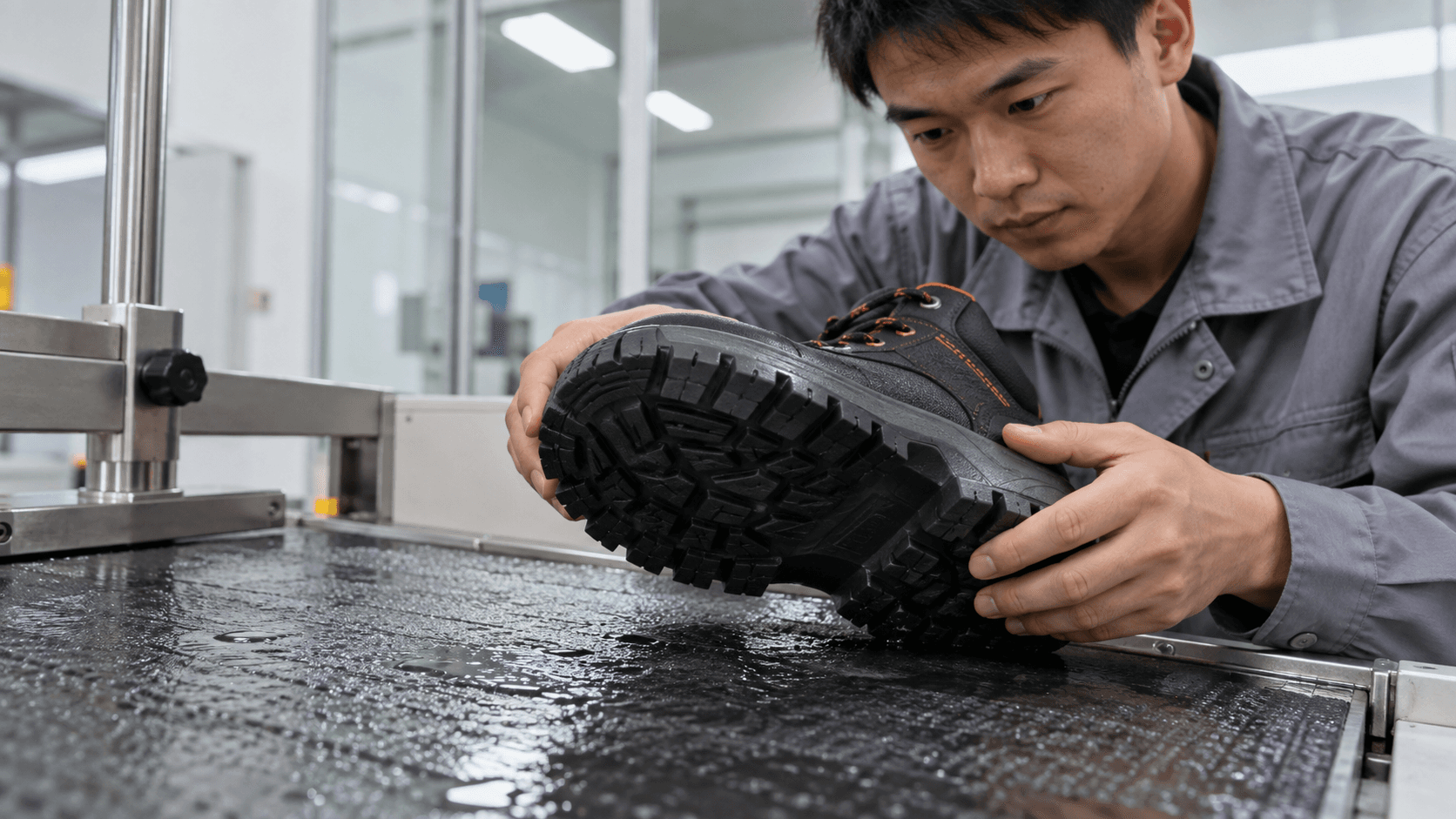
Illustrative image, not evidence of testing or a documented customer project. Procurement guidance does not replace product instructions or competent workplace assessment.
Primary topic: wide fit safety footwear bulk order
Introduction
When planning a bulk order of wide-fit safety footwear, start with an identified model, its fit information and representative wearer trials. A width label is not a universal dimension across manufacturers. Simply ordering a longer size can change length and support without resolving the reason a wearer needs more room.
Industrial buyers and distributors need an assortment that fits users while meeting the required protective specification. Toe-cap shape, last, upper construction, fastening and the intended socks can influence the decision. The model should satisfy the workplace’s protection needs before the team evaluates comfort and size allocation.
This guide explains how to request width information, organize safe trials and convert results into a size curve. It does not diagnose foot conditions or prescribe footwear for a medical need. Those concerns should follow the workplace’s appropriate professional route.
Quick answer: Evaluate wide-fit safety footwear by exact model and representative users, with the intended socks and approved configuration. Review length, width, toe room, heel stability and movement separately. Provide approved fit alternatives where needed. Do not assume a larger size or a wide label guarantees suitable fit across every wearer.
Define the protective requirement first
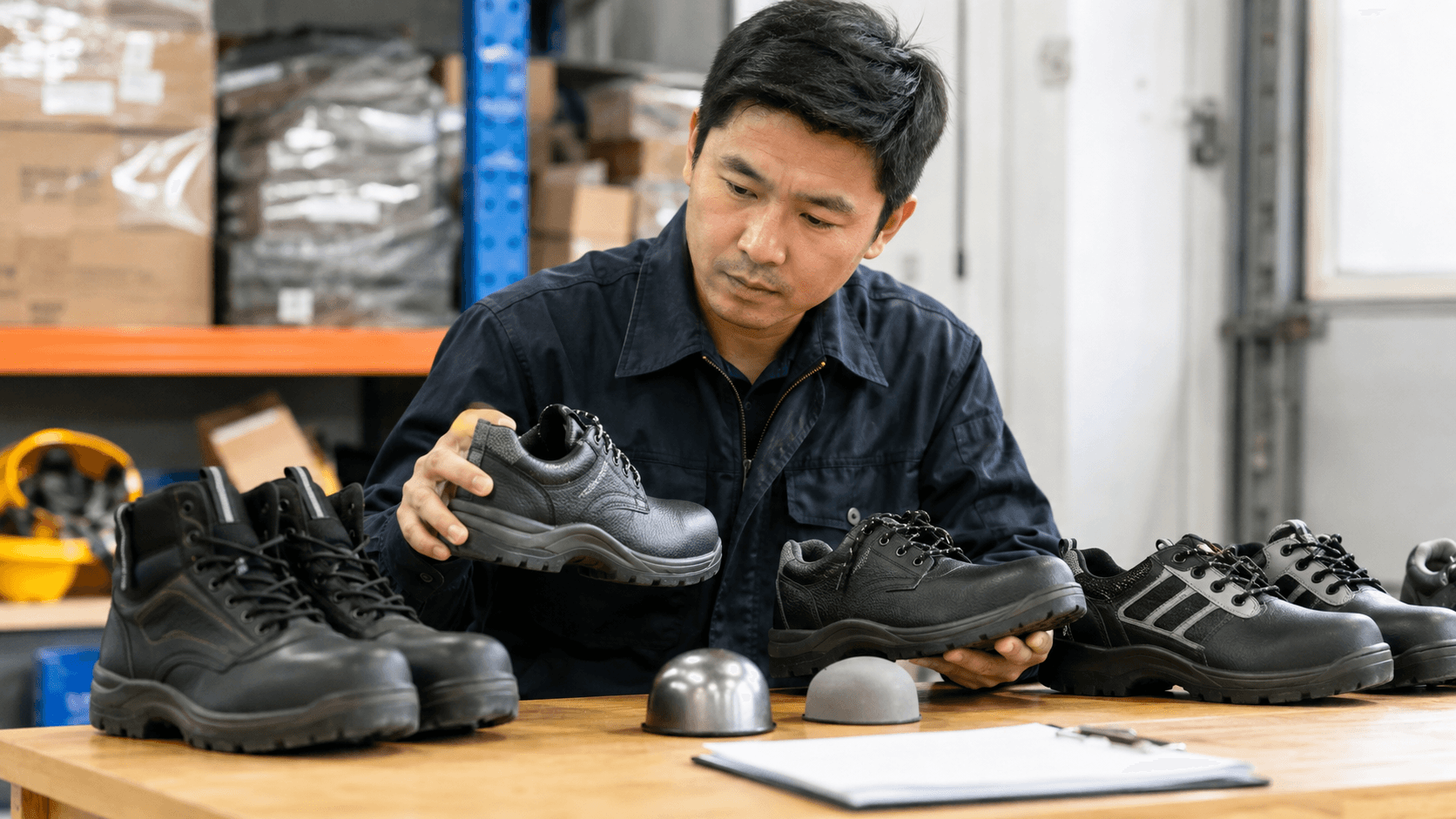
Ask the site technical team to identify the relevant hazards and required footwear features. Do not start with width alone and then overlook protection. A roomy ordinary shoe is not an acceptable substitute for an identified protective model when the task requires specific evidence.
The Occupational Safety and Health Administration’s foot-protection rule provides the workplace context. Destination-market requirements and exact-model evidence should be reviewed separately. A distributor should avoid claiming universal compliance based on a broad safety footwear category.
Record the intended work and environment
Describe walking, standing, stairs and other relevant movements for the approved trial. Include the environment and permitted cleaning or care. If workers require multiple task-specific models, keep their fit decisions separate. A wide-fit choice for one construction may not transfer directly to another boot.
Our safety footwear trial guide offers broader trial structure. Use it alongside model-specific width information. Procurement can organize samples and quantities while the technical team controls hazard suitability and any specialist fit concerns.
Ask what the width description means
Request the manufacturer’s size chart and width or last information. Ask which dimensions or fit range its label describes and whether several width variants share the same length size. Avoid assigning one supplier’s wide designation to another manufacturer’s product as if they were the same measurement system.
Footwear geometry includes more than a single width number. Toe-cap shape, forefoot volume, instep and heel area can influence the experience. A buyer should ask what differs between the standard and wide variants rather than assuming the entire boot is uniformly expanded.
Keep size conversions model-specific
US, UK and EU labeling should be interpreted through the manufacturer’s chart. Do not convert an accepted size solely through a generic internet table. Record the exact offered model, label system and sample size. A private-label size mark must match the accepted product information and intended market.
Our footwear size-conversion guide explains that commercial issue. Wide variants add another dimension to the stock identifier. Keep length size and width reference as separate fields so that warehouse staff do not issue one for the other.
Avoid solving width by adding length
A longer size may create excess movement or alter the position of the foot without providing the right geometry. Whether an alternative is acceptable should be evaluated through the actual model and wearer, not a universal rule. Ask for the appropriate width option or another approved protective model.
Do not instruct workers to modify the upper, toe area or protective components to gain space. Any accessory or alteration needs the manufacturer’s approved basis. Insoles can also affect fit and protective configuration; confirm permitted options rather than assuming a locally purchased insert is interchangeable.
Recognize concerns requiring another route
Persistent discomfort, pain or an individual medical requirement should not be resolved by a supplier’s sales recommendation alone. Use the workplace’s established assessment route. Procurement can record the approved purchasing outcome without collecting unnecessary personal health details or making diagnostic claims.
The Health and Safety Executive’s PPE guidance gives broader suitability context. Exact product instructions and the responsible professionals govern individual decisions. Avoid describing a wide-fit safety boot as treatment for a foot condition unless an appropriate verified basis exists.
Plan a safe fitting session
Provide identified samples in the relevant size and width options. Use the socks expected during normal work and record that condition. Fit both feet and check the manufacturer’s fitting guidance. A brief seated try-on may not reveal how the boot behaves during safe movement.
Evaluate length, forefoot room, toe area, instep comfort and heel stability separately. Include approved walking or movement on a safe surface. Do not expose a wearer to the workplace hazard before the model and fit are accepted. Stop an evaluation if discomfort or another concern makes continuation unsuitable.
Use a repeatable observation sheet
Record user reference as appropriate, sample model, size, width, socks and adjustment. Include accepted, rejected or review-needed status with the reason. Avoid a single comfort score that conceals an important fit failure. Written observations help the supplier propose a meaningful alternative.
For an illustrative session, compare 2 width variants in 3 relevant length sizes and record 5 fit observations. These counts are planning examples, not a minimum sample or a proof of universal fit. Choose the actual plan according to the workforce and technical assessment.
Evaluate footwear with the intended clothing and accessories
Trouser cuffs, socks and approved insoles can affect wearing. Check the intended configuration, especially when a site changes seasonal clothing. A boot accepted with a thin trial sock may feel different with the normal work sock. Keep that difference visible in the approval record.
Review fastening and accessibility. Users should be able to secure the footwear correctly using its intended method. Do not choose an oversized model because it is easier to put on without evaluating stability. A practical issue process should include instruction and an available approved alternative when needed.
Keep slip performance separate from width
Wide fit does not establish traction on the actual floor. The Health and Safety Executive’s footwear procurement guidance addresses floor and sole selection. Review that requirement through the exact model, then assess fit among technically acceptable candidates.
Our safety-footwear slip-resistance checklist provides purchasing context. Do not combine a favorable width trial with an unsupported claim that the model is nonslip in every environment. Protection, fit and floor suitability remain distinct evidence fields.
Send Your Requirements: Tell PPEgen your required protection, destination market, fit concerns and intended socks or approved accessories. Request standard and wide identified samples where available. Include the expected quantity and size range so that the quotation can address both fit and stock planning.
Convert trial results into an order distribution
Use accepted fit outcomes to estimate quantity by model, length and width. Keep untested or unresolved allocations separate. A total order of 500 pairs is incomplete if the warehouse needs several width variants. Record the size curve with enough detail to reproduce the accepted distribution.
For illustration, 100 approved allocations could include 70 standard-width and 30 wide-width pairs across several length sizes. That example is not a market ratio or a recommendation for your workforce. Actual distribution should come from usable trial or issue data, with any estimate explicitly labeled.
Include exchange and replenishment arrangements
Define how unused incorrectly allocated stock is handled and whether exchanges are commercially available. Keep worn returns separate from unused size exchanges. A realistic process can reduce pressure to keep unsuitable footwear. Record supplier terms before buying rather than assuming every size can be exchanged later.
Plan replenishment by the actual approved SKU. If wide variants have different lead times or minimum orders, include those conditions. Avoid substituting a standard-width model during a shortage without the accepted alternative process. A similar length label does not resolve the original fit need.
Write a precise RFQ
Identify the protective model requirements, width variants, size chart, sample plan and packing units. Ask suppliers to state what differs between variants and which exact reports apply. Request current instructions and approved accessory information. A broad offer for comfortable wide boots is insufficient for technical approval.
| Order field | Buyer record | Supplier clarification |
|---|---|---|
| Model | Required protective configuration | Offered reference and evidence |
| Length | Accepted labeling and chart | Size range and conversions |
| Width | Named variant and fit information | Geometry or last description |
| Quantity | Pairs by length and width | Minimums and availability |
| Packing | SKU and carton segregation | Labels and count hierarchy |
Normalize prices on the same basis, including width variant, packing and delivery. A quotation with fewer accepted sizes may look cheaper while failing the order requirement. Compare the usable assortment and replenishment conditions rather than one headline unit price.
Inspect the delivered width variants
Shipment inspection should check model, length and width identity, pair consistency, markings and visible workmanship. Compare the accepted reference and agreed dimensions where applicable. Verify carton labels and the physical size distribution. Two boots with matching length marks may still be a mismatched width pair.
Review factory testing documents for the exact protective construction separately. A visual inspection does not prove every protective characteristic. Our quality-control guide supports the release record. Keep held or unidentified variants separate until their status is resolved.
Retain fit feedback after issue
Track exchanges, pressure complaints, slipping and size confusion by model and width. Do not combine every return into an unexplained quality total. A concentrated issue in one variant may require a new sample review or clearer inventory labels rather than rejection of the entire range.
Review significant changes in the supplied model before repeat orders. A changed last, upper, insole or toe-cap configuration may affect fit. Require notification and compare the revised product with the accepted reference. Past approval belongs to the identified construction, not every later item with a similar name.
Example: separate a width requirement from an inventory shortage
Consider a site where users frequently exchange boots for a longer size. Ask whether the exchange addresses length, width, instep pressure or another concern. Do not assume every longer-size exchange demonstrates the same fit need. Use the actual model and appropriate fitting process to investigate.
Provide identified width alternatives where available and record the normal wearing configuration. If the accepted wide variant solves the relevant fit concern, keep its length and width references distinct. A warehouse should not convert that result into a rule that anyone needing width receives the next length size.
Create a small approved allocation record and use it to plan stock. If the supplier’s wide minimum order exceeds initial demand, discuss replenishment and exchange conditions. The technical fit decision and commercial order quantity are related but separate. Do not approve an unsuitable variant merely because it is available in smaller quantities.
At receipt, check both boots in representative pairs for the exact ordered identifiers. A mismatch can be easy to miss when the visible length label is correct. Keep cartons separated by the accepted SKU and ensure the inventory system records width as well as length where the model requires it.
When stock runs short, use the approved alternative process. A standard-width boot with the same protection evidence may still fail the original fit need. The responsible team should decide what another identified model requires for approval. Stores availability alone should not override the documented fit outcome.
Review exchanges after issue and label the reason clearly. A repeated pressure complaint differs from a carton-label error or an unused size exchange. That distinction helps purchasing decide whether to change the model, adjust the distribution or improve stock identification. A wide-fit range becomes commercially useful when accepted fit can be reproduced and supplied, rather than when the catalog simply offers another width adjective.
FAQ
Does wide mean the same thing across manufacturers?
No universal equivalence should be assumed. Request each model’s size and width information and compare identified samples. Width labels may describe different fit systems or geometry. Keep the accepted manufacturer reference in the order instead of converting a broad wide designation into an unsupported dimensional claim.
Can a worker choose a longer size to gain width?
Evaluate the actual fit rather than using that as a general solution. Added length can change stability and foot position without resolving the relevant geometry. Request an appropriate width variant or another approved protective model, and use the workplace’s fitting or professional assessment route where needed.
Should trials use the normal work socks?
Yes, use the intended wearing configuration and record it. Sock differences can influence fit and make sample comparisons unreliable. Include approved insoles or accessories where relevant, and check the exact model instructions. Do not approve a configuration through a trial that silently omits its normal components.
How should a wide-fit size curve be calculated?
Use accepted model, length and width allocations from reliable trial or issue records. State estimates and unresolved cases separately. Include replenishment and exchange arrangements. A generic standard-to-wide percentage is not evidence of the correct distribution for a particular workforce or customer market.
What bulk packing error is easy to miss?
A pair can share the same length mark while containing different width variants. Inspect exact model and width identity on both boots where applicable. Confirm carton labels and physical distribution against the approved order so that receiving counts reflect usable matched pairs rather than total pieces alone.
Conclusion
Wide fit safety footwear bulk order planning requires exact model information and representative fit outcomes. Separate length, width and protective capability, evaluate the intended configuration and order a traceable distribution. Clear sample and receiving records make the approved assortment easier to maintain through repeat purchases.
Request wide-fit footwear samples
Explore PPEgen safety footwear and ask for a quote. Share protection requirements, fit concerns, target market and quantities by size where known. Request model-specific width information and samples before approving the full bulk order.
BUYER RESOURCES
Continue your PPE sourcing research.
Explore relevant PPE categories and a primary safety reference alongside this guide.Use this source alongside destination-market requirements for the exact product and application.
READY TO DISCUSS YOUR REQUIREMENT?